


Listen to the article
Singapore Authorities Disable Access to Six Deceptive Foreign-Operated Websites
Singapore’s Ministry of Home Affairs (MHA) has identified six deceptive websites operated by foreign entities that could potentially be used to conduct hostile information campaigns against the city-state. The announcement came via a joint press release with the Infocomm Media Development Authority (IMDA) on April 23, 2026.
Following an investigation of MHA’s findings, IMDA has directed Internet Access Service Providers to disable public access to these websites, which had disguised themselves as legitimate Singapore news platforms by using Singapore-related terms in their domain names and publishing content styled as local news.
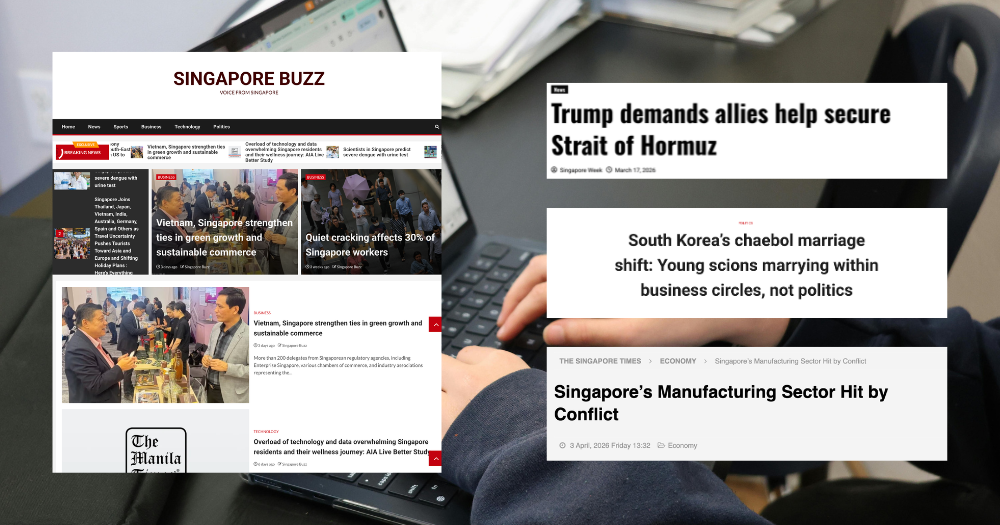
The six websites—singaporeheadline.com, singaporeweek.com, singapore24hour.com, nanyangweekly.com, singaporebuzz.com, and sgtimes.com—have been linked to a broader network of sites previously identified by international analysts as sources of misinformation and deliberate disinformation.
According to authorities, five of these websites are associated with a network of inauthentic news platforms previously flagged by Google’s Threat Analysis Group and Mandiant. These five sites were all created on March 28, 2021, and underwent significant enhancements in June 2025, including the addition of search bars and “trending now” highlights to better mimic legitimate news outlets.
The websites employed various tactics to appear authentic, such as prominently featuring Singapore-related terminology in their domain names and content. For example, nanyangweekly.com and singaporebuzz.com featured sub-headers titled “Singapore News” and “voice from Singapore” respectively, while others explicitly claimed to provide Singapore news.
In a particularly concerning development, four of the five websites—nanyangweekly.com, singapore24hour.com, singaporeheadline.com, and singaporeweek.com—published General Election-related news during Singapore’s 10-day campaign period in the 2025 election. Most showed little to no activity before the writ of election was issued, only becoming active once the election was officially called.
“Most of the Singapore-related content on the five inauthentic websites are assessed to have been taken from mainstream media outlets such as Channel NewsAsia, The Straits Times, and Mothership, as well as from foreign media outlets such as Bloomberg and Business Insider, but attributed to themselves,” the joint statement revealed, highlighting how such practices can mislead readers.
The sixth website, sgtimes.com, also presented itself as a Singapore mainstream news website with a sub-header reading “Singapore News and Travel.” It even published an article on July 25, 2025, claiming to be a local mainstream media outlet with high monthly traffic.
Security experts note that this approach is consistent with tactics used by malicious foreign actors worldwide. “We have observed overseas examples where such foreign actors have created and used inauthentic news websites to propagate false narratives and sway the target population’s sentiments to advance their own interests,” the authorities stated.
The potential consequences of such hostile information campaigns are severe, potentially inciting social tension, exploiting societal fault lines, manipulating elections, and undermining public faith in government institutions.
This is not Singapore’s first encounter with such threats. In October 2024, authorities used the Broadcasting Act to take down 10 inauthentic websites established by foreign actors. The same legislation is now being applied to disable public access to these six newly identified platforms.
Media analysts point out that such deceptive websites represent a growing global challenge as foreign entities increasingly employ sophisticated digital methods to influence public opinion in targeted countries. The timing of these websites’ activation around Singapore’s general election highlights the strategic nature of such operations.
The MHA and IMDA have urged Singaporeans to remain vigilant when accessing online content and to be wary of fake websites and the threat they pose to the nation’s information ecosystem and social cohesion.
Fact Checker
Verify the accuracy of this article using The Disinformation Commission analysis and real-time sources.

9 Comments
This is a concerning development. Fake news websites posing as legitimate local news sources can be very misleading. It’s good to see Singapore taking proactive measures to disable these deceptive platforms and protect their citizens from potential hostile misinformation campaigns.
I’m curious to learn more about the broader network of sites these fake Singapore news platforms are linked to. What other countries or regions have been targeted by this disinformation effort? Understanding the scope of the problem will be key to addressing it effectively.
It’s troubling to see how foreign entities are actively trying to sow discord and undermine public trust through the use of fake news websites. Singapore’s response in swiftly disabling these platforms is a commendable step, but the battle against disinformation is far from over.
The fact that these fake news sites were linked to a broader network of platforms previously flagged for misinformation and disinformation is concerning. This coordinated effort to undermine trust in local media sources is a serious threat that requires vigilance and a comprehensive response.
Kudos to the Singaporean authorities for swiftly investigating and taking action against these foreign-operated fake news sites. Tackling the spread of online misinformation is crucial for maintaining an informed and resilient society.
It’s worrying to see how sophisticated these foreign disinformation campaigns have become, using domain names and content styles to deliberately mislead the public. This serves as a reminder of the importance of verifying news sources and being critical consumers of online information.
You’re absolutely right. In today’s digital landscape, it’s crucial for everyone to develop strong media literacy skills to identify and avoid falling for manipulative fake news tactics.
This news serves as a stark reminder of the importance of media literacy and fact-checking, particularly when it comes to online sources that may appear legitimate at first glance. Kudos to the Singaporean authorities for their swift and decisive action.
While it’s good that Singapore has taken action to disable these deceptive websites, I wonder what other steps they’re taking to address the root causes of this problem and prevent similar foreign-backed disinformation campaigns from emerging in the future.