


Listen to the article
Senate Republicans pushed their immigration funding plan forward early Thursday through a marathon overnight session, adopting a budget blueprint that allocates billions of dollars to Immigration and Customs Enforcement (ICE) and Border Patrol while effectively cutting congressional Democrats out of the appropriations process.
The budget resolution marks the first major step in initiating the budget reconciliation process, a move Republicans embraced after Democrats refused to fund immigration enforcement agencies without implementing significant reforms. Despite general Republican consensus on the approach, Senators Rand Paul of Kentucky and Lisa Murkowski of Alaska broke ranks, voting against the blueprint.
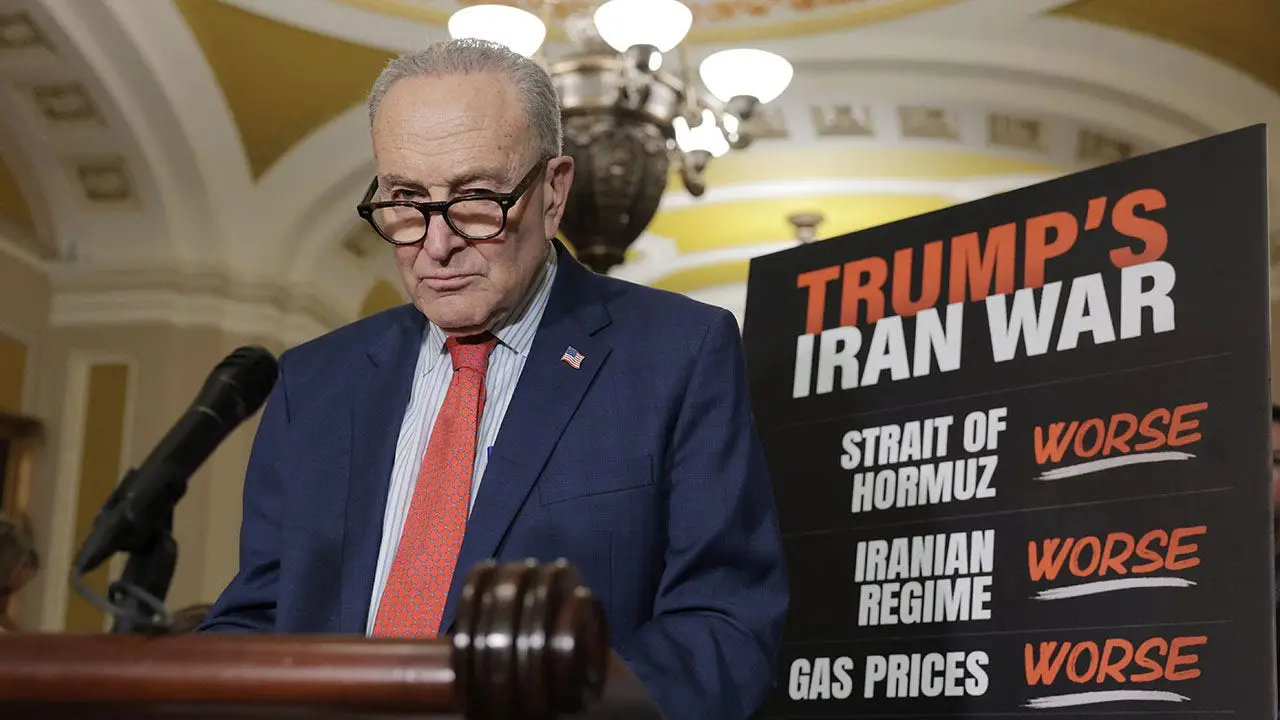
Senate Minority Leader Chuck Schumer criticized the Republican initiative, arguing that Americans need relief from high costs rather than additional spending on immigration enforcement. “America is crying out for relief from high costs, and you’re here adding $140 billion to an agency that nobody — two groups — Border Patrol and ICE, that nobody respects in this country,” Schumer said during floor debate.
In response, Senate Majority Whip John Barrasso defended the funding plan, shifting blame to Democrats. “Today’s Democrats are a rogue and radical party,” Barrasso stated. “You deserve better than reckless Democrat hostage-taking. You deserve the tools and support from Congress necessary to carry out the mission Congress has given you. Our country depends on you.”
The Republican plan aims to fund both ICE and Customs and Border Protection through the remainder of President Donald Trump’s term. GOP lawmakers want to front-load these agencies with over $70 billion, citing concerns that Democrats would obstruct future funding for immigration enforcement agencies.
Throughout the night, lawmakers moved through numerous amendment votes, with Democrats proposing several additions designed to highlight economic and affordability issues. These Democratic amendments consistently failed along party lines, maintaining the Republican focus on immigration enforcement.
The session was not without internal Republican drama. Senator John Kennedy of Louisiana, who has advocated for broadening the scope of the reconciliation package despite leadership’s preference for a narrower immigration focus, attempted to include additional provisions. One such amendment was a version of the Safeguarding American Voter Eligibility (SAVE) America Act.
“If you don’t want to vote for it, don’t,” Kennedy urged his colleagues. “All I ask you is to think about it, to trust our Rules committee, to follow your heart, but take your brain with you. Because the American people, both Democrats and Republicans and independents, are questioning our elections.” His amendment ultimately failed to gain sufficient support.
The budget resolution’s adoption doesn’t immediately activate the reconciliation process. The House of Representatives must now either adopt the same blueprint or modify it. If the House makes changes, the resolution would return to the Senate, potentially triggering another extended voting session.
Some Republicans have expressed concerns about the broader implications of using the reconciliation process for immigration enforcement funding. Senator Katie Britt of Alabama told Fox News Digital that while she understood “the need to fund these portions of this agency,” she was “disappointed that we are where we are.”
“I’m really disheartened, because I think it fundamentally changes the way that we move forward with appropriations, and not for the better,” Britt added. “And I’m not for that at all.”
This move represents a significant shift in congressional budgeting tactics and highlights the growing partisan divide over immigration policy. By pursuing reconciliation, Republicans are attempting to secure long-term funding for immigration enforcement priorities while sidestepping Democratic opposition, but the strategy raises questions about future appropriations processes and potential retaliation when control of Congress changes hands.
Fact Checker
Verify the accuracy of this article using The Disinformation Commission analysis and real-time sources.

14 Comments
This proposal seems to double down on enforcement without addressing underlying immigration reform. I worry it could escalate tensions without solving the problem. Perhaps a more comprehensive approach is needed.
I share your concern. Piecemeal solutions often fail to address the root issues. A more holistic strategy may be required.
Curious to see how this impacts the mining and energy industries, which rely on cross-border supply chains and labor. Robust border enforcement could disrupt operations, but some may see it as necessary for security.
That’s a good observation. The trickle-down effects on industries like mining and energy are an important consideration here.
This seems like a political maneuver more than a practical solution. Increased border spending may score points with certain voters, but it doesn’t necessarily address the complex challenges of immigration reform.
I agree. Sensible immigration policy requires nuance and compromise, not just partisan posturing.
From a mining and energy perspective, I hope policymakers can find ways to facilitate the legal movement of workers and resources across borders without compromising security. Overly restrictive measures could disrupt critical supply chains.
Well said. Balancing security and economic needs is crucial, especially for industries that rely on cross-border operations.
The mining and energy sectors likely have a vested interest in ensuring the free flow of people and goods across borders. I wonder how they will engage with policymakers on this issue.
Good point. These industries should make their voices heard to ensure their concerns are factored into the policy decisions.
This is a contentious issue with strong opinions on both sides. Increased border security funding is a priority for some, while others see it as misguided. It will be interesting to see how this plays out politically.
You raise a fair point. These funding decisions often get caught up in partisan debates rather than focusing on practical solutions.
While immigration enforcement is a complex issue, I hope policymakers can find ways to balance security needs with support for legal cross-border economic activity. Overreach could harm industries that are crucial to American competitiveness.
Well said. Striking the right balance is key, as overly restrictive policies could have unintended consequences for the economy.