


Listen to the article
Senate Republicans Navigate Immigration Funding Marathon Amid Democratic Opposition
Senate Republicans are advancing toward a multi-year funding plan for federal immigration operations, but first must endure a lengthy series of votes that Democrats plan to use as political leverage against them.
The Senate has officially begun a “vote-a-rama” on the Republican budget resolution, which aims to secure funding for Immigration and Customs Enforcement (ICE) and Border Patrol through the remainder of President Donald Trump’s term. Before the resolution can be adopted, lawmakers must process numerous amendments from Senate Democrats and some Republicans.
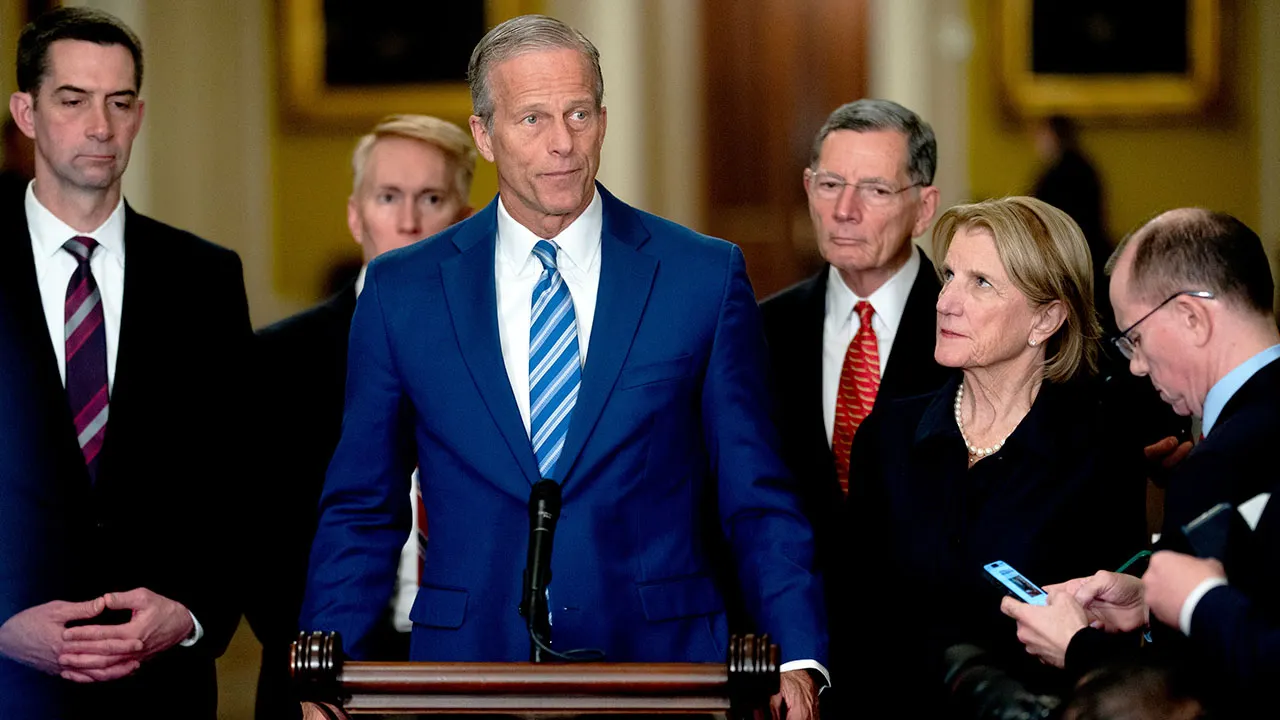
Senate Majority Leader John Thune (R-S.D.) indicated he would not prevent amendments from his own party from reaching the floor. “We’ll see what our colleagues come up with, but we’re talking to them and their offices about strategy and the best way to move forward in order to ultimately succeed,” Thune said, emphasizing the goal of passing the measure in both chambers and securing presidential approval.
The Republican strategy emerged after months of resistance to using budget reconciliation. The shift came in response to congressional Democrats’ refusal to fund ICE and Customs and Border Protection without implementing stricter immigration enforcement reforms, including warrant requirements and rules requiring agents to remove their masks during operations.
Senate Republicans unveiled their budget resolution Tuesday, aiming to meet President Trump’s June 1 deadline for final passage. The measure directs the Senate Judiciary Committee and the Homeland Security and Governmental Affairs Committee to each develop legislation providing $70 billion in funding for immigration agencies. In total, Republicans are targeting approximately $80 billion for immigration enforcement over the next three and a half years.
Senate Minority Leader Chuck Schumer (D-N.Y.) and his caucus are using the amendment process to highlight contrasts between the parties and attack Republican priorities, including the war in Iran, economic affordability issues, and other elements of Trump’s agenda.
“We are for reducing costs for the American people — whether it’s housing, healthcare, electric bills, groceries or childcare,” Schumer stated Wednesday. “And they are funding a rogue police force that is not even popular with the American people. And we’re going to keep at it.”
Democrats have prepared several amendments focused on economic relief, including proposals to force rebates for small businesses affected by Trump’s tariffs, address rising grocery costs, and renew the push to extend expired Obamacare enhanced premium tax credits. The expiration of these credits last year contributed to the longest full government shutdown in U.S. history.
Some Republicans unhappy with the limited focus of their party’s budget reconciliation push have vowed to force votes on broader economic issues. They also plan to address a provision set to expire in July that prohibits Medicaid funding from going to abortion providers, adding another layer of complexity to the process.
The political maneuvering highlights the deep divisions between the parties on immigration enforcement and federal spending priorities. Republicans view stronger border security and immigration enforcement as essential national priorities, while Democrats argue for more focus on cost-of-living issues affecting average Americans.
Once the Senate completes its amendment process and adopts the budget resolution, the measure will move to the House of Representatives. After House adoption, Congress will begin crafting the final reconciliation package, a process that allows Republicans to bypass Democratic input due to reconciliation’s special procedural rules.
The contentious process underscores the ongoing partisan divide over immigration policy, a signature issue of President Trump’s administration, as both parties position themselves ahead of upcoming elections while addressing fundamental questions about border security and federal spending priorities.
Fact Checker
Verify the accuracy of this article using The Disinformation Commission analysis and real-time sources.

18 Comments
This marathon voting session highlights the deep partisan divisions on immigration policy. I hope the Senate can find common ground and pass a funding resolution that serves the best interests of the American people.
Effective border security requires nuanced, evidence-based policymaking, not political grandstanding.
This sounds like a high-stakes political battle over immigration policy. I appreciate the Senate taking the time to carefully consider all the amendments and perspectives before finalizing the funding resolution.
It’s crucial that any new border agency funding is tied to clear, accountable policies that uphold human rights and the rule of law.
Multiyear funding for border operations is an important issue, but I hope the Senate can find a balanced approach that addresses security needs while also protecting civil liberties and due process.
Transparency and oversight will be key as this process moves forward.
Securing long-term funding for federal immigration operations is a challenging task given the polarized political climate. I’m curious to see if the Republican strategy can withstand the onslaught of Democratic amendments.
Hopefully, the final resolution will balance security needs with respect for human rights and civil liberties.
This voting marathon on border agency funding highlights the deep ideological divisions in Congress. I hope the Senate can find a way to move past partisan gridlock and deliver a pragmatic, balanced solution.
Effective border management requires bipartisan cooperation and a focus on practical, humane policies.
Securing long-term funding for border agencies is a complex and sensitive issue. I’m curious to hear more about the Republican strategy and how they plan to navigate the upcoming voting marathon amid Democratic opposition.
It will be interesting to see if they can find a compromise that addresses concerns on both sides of the aisle.
Multiyear funding for border operations is a significant policy decision with far-reaching implications. I’m eager to see how the Senate navigates this marathon voting session and the resulting compromise, if any.
Constructive dialogue and evidence-based policymaking should guide this process, not partisan grandstanding.
The Senate’s vote-a-rama on border agency funding showcases the complexity of this issue. I hope both parties can work together to find a pragmatic solution that enhances security while upholding American values.
Compromise and good-faith negotiations will be crucial in this high-stakes political battle.
The Republican strategy of using the budget reconciliation process to secure long-term border funding is an interesting tactic. I’m curious to see how the Democrats respond and what compromises might emerge.
Robust public debate on these complex issues is healthy for our democracy.