


Listen to the article
Members of Congress reacted swiftly Wednesday to a court-ordered congressional map in Virginia, where a new redistricting plan could potentially give Democrats a crucial advantage in their uphill battle to regain control of the U.S. House of Representatives in 2024.
The Virginia Supreme Court approved the new map after the state’s bipartisan redistricting commission failed to reach an agreement last year. The revised boundaries are expected to strengthen Democratic prospects in the competitive 2nd Congressional District, currently held by Republican Rep. Jen Kiggans.
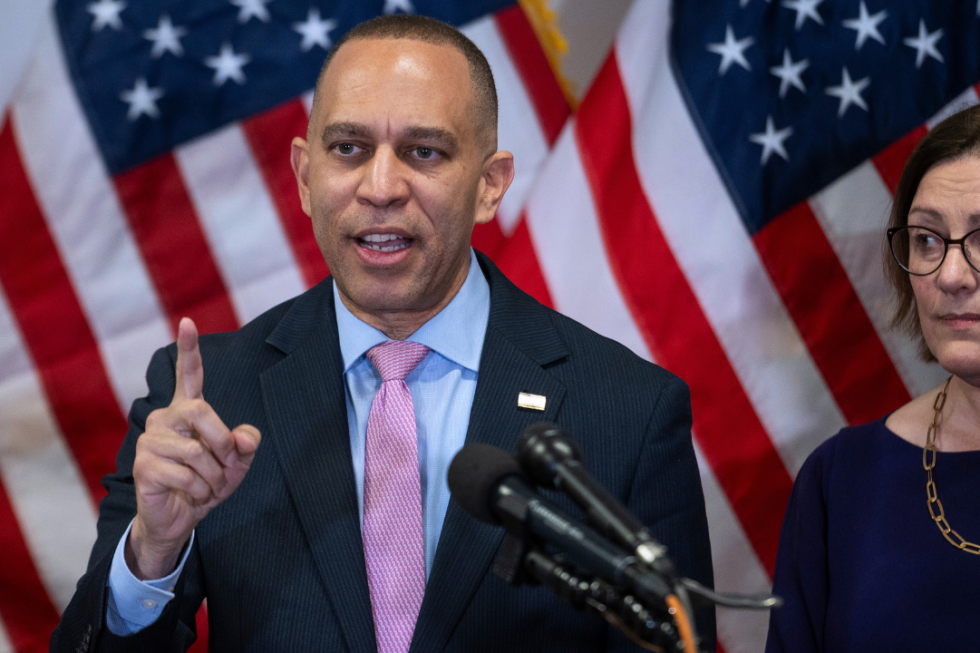
Democratic Congressional Campaign Committee Chair Suzan DelBene (D-Wash.) welcomed the decision, calling it “a victory for fair representation” in Virginia. “These new maps better reflect the diverse communities across the commonwealth and create a more level playing field for voters to make their voices heard,” DelBene said in a statement.
The redistricting outcome holds particular significance as Democrats need to flip just five seats nationwide to retake the House majority they lost in the 2022 midterm elections. Virginia’s 2nd District, which includes Virginia Beach and parts of the Hampton Roads region, has been one of the most competitive battlegrounds in recent election cycles.
Rep. Kiggans, who narrowly defeated Democratic incumbent Elaine Luria by just over two percentage points in 2022, now faces a more challenging electoral landscape. Political analysts estimate the new map shifts the district from one that favored Republicans by about three percentage points to one that leans slightly Democratic.
“This is a nakedly partisan power grab disguised as redistricting reform,” said National Republican Congressional Committee spokesperson Jack Pandol. “Democrats couldn’t win on their failed policies, so they’re attempting to rig the map in their favor.”
The redrawn Virginia map represents one of several redistricting battles playing out across the country that could significantly impact the 2024 congressional landscape. States including New York, North Carolina, and Alabama have also seen court challenges to their congressional district boundaries.
Dr. Rebecca Green, election law professor at William & Mary Law School, explained the significance of these redistricting decisions. “In a closely divided Congress, even small changes to district boundaries in a handful of states can potentially determine which party controls the legislative agenda,” Green said. “Virginia’s case is particularly interesting because it came through a court-ordered process after a bipartisan commission deadlocked.”
Virginia’s redistricting saga began when the state established an independent commission through a 2020 constitutional amendment aimed at reducing partisan gerrymandering. However, the commission’s Democratic and Republican members failed to reach consensus on new maps following the 2020 Census, forcing the state Supreme Court to intervene.
The court appointed two special masters, one nominated by Democrats and one by Republicans, to draw the new boundaries. Their final product received unanimous approval from the Virginia Supreme Court justices.
Some political observers note that the new map not only affects the 2nd District but also makes subtle changes to other competitive districts in the state. The 7th District, currently held by Democratic Rep. Abigail Spanberger, who has announced she’s running for governor in 2025, sees slight adjustments that maintain its competitive nature.
Virginia Governor Glenn Youngkin, a Republican, expressed disappointment with the court’s decision. “Virginians deserve districts that keep communities together and ensure fair representation, not ones drawn to advantage one political party,” Youngkin said at a press conference in Richmond.
The redistricting change comes as both parties are intensifying their focus on Virginia, a once-reliable Republican state that has trended Democratic in recent presidential elections but saw Republicans make significant gains in 2021 state elections.
Political strategists from both parties acknowledge that control of the House in 2024 may hinge on results in a small number of competitive districts like Virginia’s 2nd. National party organizations have already earmarked millions for advertising and get-out-the-vote efforts in these battleground regions.
“Every district matters when the margin is this tight,” said Kyle Kondik, managing editor of Sabato’s Crystal Ball at the University of Virginia Center for Politics. “Virginia’s redistricting outcome gives Democrats a slight edge in one key district, but the overall House landscape remains highly competitive for both parties heading into 2024.”
Fact Checker
Verify the accuracy of this article using The Disinformation Commission analysis and real-time sources.

15 Comments
The cost guidance is better than expected. If they deliver, the stock could rerate.
Exploration results look promising, but permitting will be the key risk.
Exploration results look promising, but permitting will be the key risk.
Good point. Watching costs and grades closely.
Nice to see insider buying—usually a good signal in this space.
Good point. Watching costs and grades closely.
Nice to see insider buying—usually a good signal in this space.
Good point. Watching costs and grades closely.
Uranium names keep pushing higher—supply still tight into 2026.
Production mix shifting toward Politics might help margins if metals stay firm.
Good point. Watching costs and grades closely.
Good point. Watching costs and grades closely.
Nice to see insider buying—usually a good signal in this space.
Good point. Watching costs and grades closely.
Good point. Watching costs and grades closely.