


Listen to the article
Kennedy Center Reveals Severe Infrastructure Damage Amid Renovation Controversy
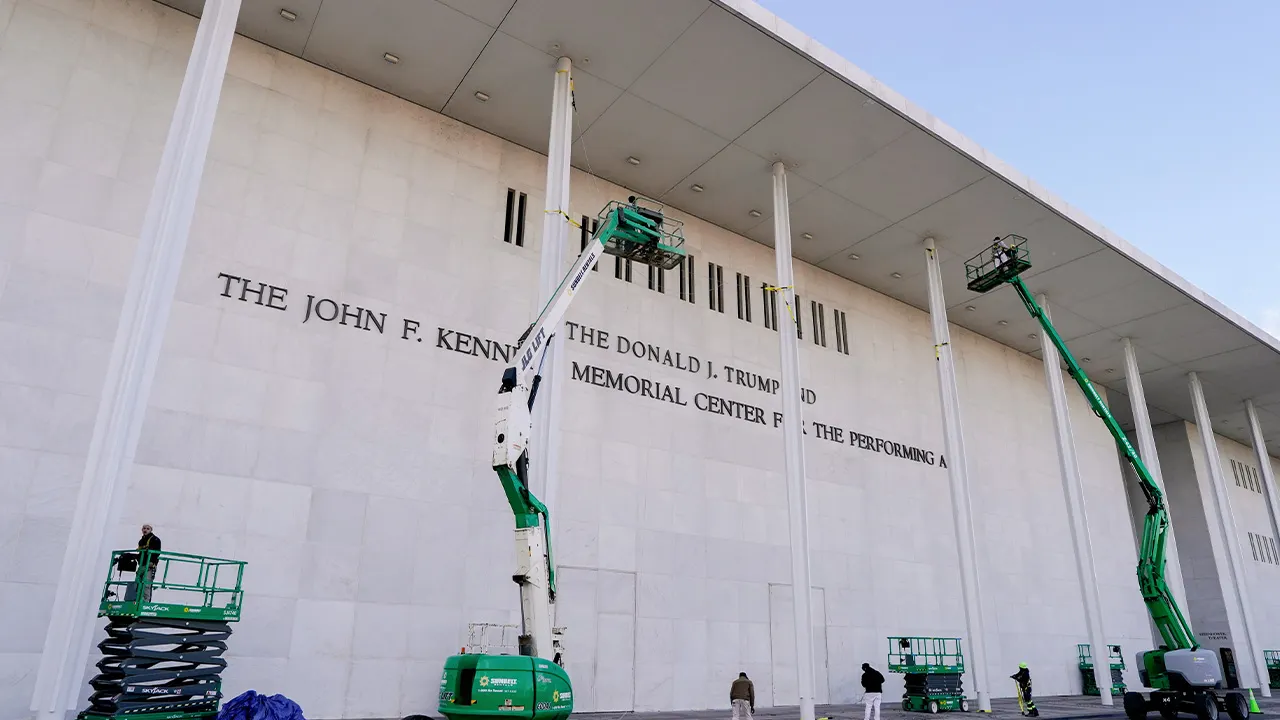
Peeling concrete, exposed steel rebar, and electrical equipment streaked with rust are just some of the alarming structural issues plaguing the Trump Kennedy Center, according to newly released documentation detailing the venue’s deteriorating condition.
Officials at the iconic Washington, D.C. performing arts center have released extensive evidence of what they describe as “decades of deferred maintenance and critical infrastructure needs” to justify a proposed $257 million renovation plan that would temporarily close the facility for up to two years.
The newly disclosed materials provide an unprecedented look at the building’s hidden problems, including photographs showing water-damaged electrical systems, rusted infrastructure, and concrete sections where internal steel supports are visibly exposed. Project documents describe 2,000-pound soffit panels that have reached “end-of-life” and now “present a public safety risk,” alongside “hundreds of structural failure points” throughout the facility.
“We are financially stable yet the building is still physically in trouble,” said Roma Daravi, Vice President of Public Relations, in a previous statement. The center’s iconic white marble exterior has suffered long-term damage, while electrical rooms beneath entrances show extensive water infiltration.
Matt Floca, Executive Director of the Trump Kennedy Center, emphasized that the decision to close the building entirely during renovations stems from the scope of necessary work. “So the recommendation was just natural: you shut the building down, temporarily, and you make this investment, and then you reopen,” Floca explained.
President Donald Trump, who now serves as chairman of the center’s board following recent leadership changes, has similarly argued that a complete closure is necessary to ensure quality repairs. “If we don’t close, the quality of construction will not be nearly as good,” Trump stated.
The renovation proposal has sparked debate among lawmakers and preservationists. According to March 16 meeting minutes, Democratic Rep. Joyce Beatty acknowledged “no opposition for the need for repair” but “strongly opposes voting on a closure,” arguing there had not been “enough time to review, study, and discuss” the proposal.
Meanwhile, the National Trust for Historic Preservation has filed a lawsuit arguing that major alterations could affect the building’s historic integrity. Floca addressed these concerns during a press conference Wednesday, assuring that key memorial elements would remain intact: “We’re maintaining the JFK bust where it is. The memorial at large will stay the same. All of the quotes and everything on the marble on the exterior building, none of that’s changing.”
To demonstrate the extent of the damage, officials have been conducting bipartisan tours for lawmakers, donors and key stakeholders. These tours, which began earlier this month during Congress’s recess, included staff from the offices of Senate Minority Leader Chuck Schumer and House Democratic Leader Hakeem Jeffries, as well as representatives from both parties in Congress and Washington Mayor Muriel Bowser’s office.
When asked about visitors’ reactions to seeing the facility’s condition firsthand, Floca noted there has been “surprise across the board — ‘How did we get here, right?'”
The physical deterioration documented in the renovation plans contrasts sharply with the center’s recent financial successes. In December, officials reported that the Kennedy Center Honors raised a record $23 million, nearly doubling the previous year’s total. These fundraising gains followed leadership changes that gave Trump a more direct role in the institution.
Congress has already appropriated approximately $257 million for the renovation through legislation signed into law last year. If plans proceed as currently outlined, renovations would begin after July 4, 2026.
“This is a once-in-a-lifetime opportunity for the center,” Floca said Wednesday. “All of these improvements that we need to make are real, are needed. And we have the timeframe to do it. I’m incredibly excited about it.”
The deterioration issues raise broader questions about maintenance funding for national cultural institutions and the challenges of preserving historic buildings that serve as both functional venues and national monuments. As the debate continues, the Trump Kennedy Center’s leadership remains focused on convincing stakeholders that the extensive closure is necessary to address what they characterize as potentially dangerous infrastructure failures that threaten the venue’s long-term viability.
Fact Checker
Verify the accuracy of this article using The Disinformation Commission analysis and real-time sources.

10 Comments
It’s disheartening to see such neglect of an important cultural landmark like the Kennedy Center. While the political dynamics are interesting, the main concern should be ensuring public safety and restoring the facility to a state of good repair. Transparency around the issues is a positive step, and the planned renovations seem necessary, if costly.
Agreed. Maintaining critical infrastructure, whether for performing arts or industrial operations, requires consistent attention and investment. Hopefully this serves as a wake-up call to properly fund upkeep for other high-profile public assets.
This is an important wake-up call about the need for vigilant infrastructure maintenance, even for high-profile public venues. While the political angle is interesting, the core issue here is ensuring the Kennedy Center remains safe and functional for performers and patrons. Glad to see they are taking decisive action.
Agree, the politics are less relevant than the practical need to address these structural problems before they escalate. Transparency around the extent of the damage is the right call – better to confront it head-on than let it fester.
Wow, that’s quite concerning to hear about the deterioration at the Kennedy Center. It’s crucial that critical infrastructure is properly maintained, especially for such an iconic and important cultural venue. I’m glad they are addressing these issues now before they become even more severe.
Agreed. Deferred maintenance can really take a toll on buildings over time. Glad they’re being transparent about the issues and investing in the needed renovations.
As someone with an interest in mining and energy infrastructure, I can appreciate the challenges of maintaining aging facilities. The Kennedy Center’s issues seem to go beyond typical wear and tear though. I’m curious to learn more about the root causes and whether any preventative measures could have been taken earlier to avoid this level of deterioration.
Good point. Facilities like this often have complex systems that require diligent upkeep. Investigating the underlying causes could yield valuable lessons for managing similar large-scale public venues going forward.
It’s disappointing to see such neglect of a landmark like the Kennedy Center, regardless of who was in charge when the problems developed. Proper upkeep and timely repairs are essential for preserving our cultural heritage. Hopefully the upcoming renovations can address these structural issues effectively.
Absolutely. Landmark facilities like this shouldn’t be allowed to deteriorate to the point of creating safety risks. The $257 million price tag is steep, but necessary to restore the Kennedy Center to its former glory.