


Listen to the article
Oshkosh Reverses Decision on Surveillance System After Police Chief Raises Concerns
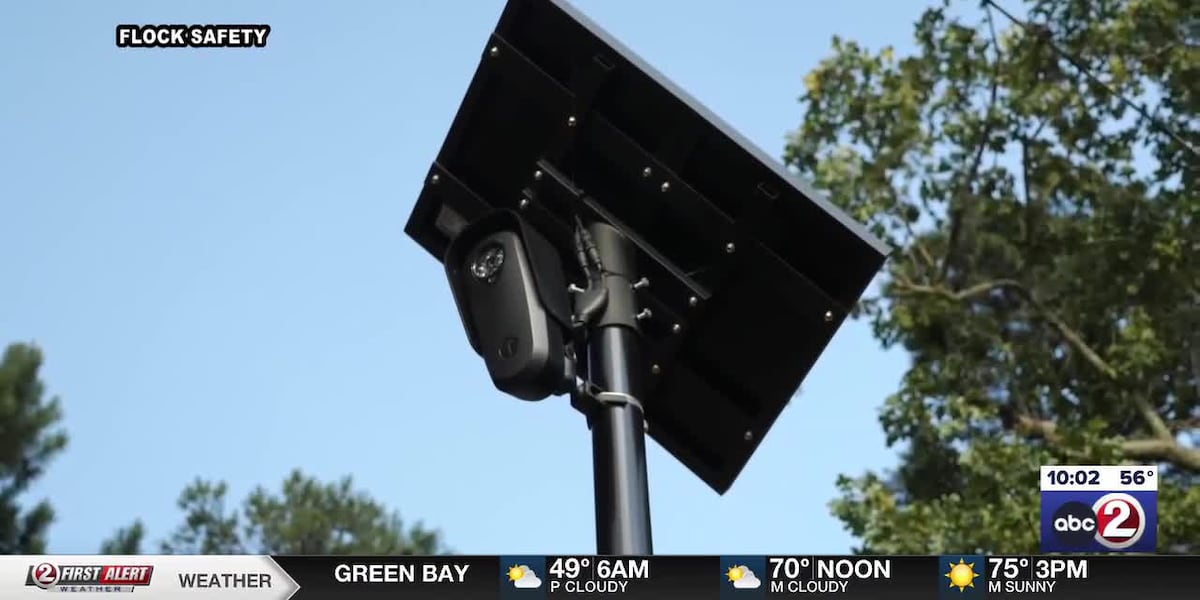
In a dramatic reversal, the Oshkosh City Council voted unanimously Wednesday to rescind its contract renewal with Flock Safety, just one day after approving the controversial surveillance system for another year.
The abrupt policy change came after Oshkosh Police Chief Dean Smith withdrew his support for the license plate reading technology, citing misrepresentations made by Flock representatives during Tuesday’s council meeting.
“I know that you trust me to give you my best recommendations that are in the best interest of the city,” Smith told council members. “With the information I have available to me, I will not betray that trust.”
At issue was a statement made by Flock Safety representatives during Tuesday’s meeting when they claimed their license plate reading systems did not create heat maps to track vehicles. Oshkosh police later determined this claim to be false, prompting Smith’s intervention.
Council members who had voted for renewal the previous night offered apologies to constituents during Wednesday’s session. Deputy Mayor Karl Buelow expressed regret over his initial support, saying, “I mentioned yesterday how it’s not just jellybeans on each side of a balance that helps me make my decision, and clearly I didn’t have enough jellybeans on the right side.”
Councilmember Joe Stephenson voiced stronger concerns about the company’s credibility. “I don’t know how I can make a decision or discern what’s right and what’s wrong, or even the capabilities of the system if you lie to me,” he said.
Prior to Wednesday’s vote, Flock Safety issued a statement characterizing the situation as a misunderstanding rather than a misrepresentation. The company expressed disappointment that “one small misconception stated during a two-hour meeting” had resulted in the contract termination.
In their statement, Flock attempted to clarify the disputed information: “To be explicitly clear about the misunderstanding in question, our representative was asked if the Flock system can ‘create a pattern or heat map of an individual’s movement.’ Our representative understood the question as asking if people can be tracked using the Flock system, to which the answer is categorically ‘no’.”
The company acknowledged that their system does include a feature called a “heat map,” but claimed it only shows where point-in-time images have been captured of a vehicle over a defined 30-day period, rather than tracking individuals’ movements.
Flock also noted that the system had recently “played a key role in the capture of the Most Wanted murder suspect in Wisconsin,” highlighting the potential public safety implications of removing the technology.
The reversal was welcomed by dozens of community members who attended the meeting. Many had criticized the previous day’s vote as rushed and inadequately researched.
Anthony Wallace, an Oshkosh resident, shared his initial frustration after Tuesday’s vote: “I walked away from it, and I said to my wife on the drive home ‘if this is the best you can get from civic engagement, then what’s the point?'” Another resident, Megan Hart, acknowledged the council’s willingness to reconsider, saying, “We don’t always know everything we’re looking at, and it’s not a weakness to rely on others’ expertise.”
The controversy highlights growing tensions nationwide over the deployment of surveillance technologies in public spaces, with privacy advocates raising concerns about potential overreach while law enforcement agencies cite crime-solving capabilities.
Chief Smith acknowledged that removing the technology would create new challenges for his department. “We’re going to end up probably not as successful at apprehending folks, just because we don’t have the information we had in the past,” Smith said. “It will take more time.”
According to Smith, all Flock cameras are expected to be removed from locations throughout Oshkosh before the beginning of summer.
The sudden reversal demonstrates the complex balancing act local governments face when implementing surveillance technologies—weighing public safety benefits against transparency concerns and potential privacy implications for residents.
Fact Checker
Verify the accuracy of this article using The Disinformation Commission analysis and real-time sources.

5 Comments
This situation highlights the need for thorough vetting and independent verification when evaluating security and surveillance solutions. Oversight from the police chief was crucial in uncovering the discrepancies.
Hopefully this incident will prompt other cities to take a closer look at the claims and capabilities of surveillance tech vendors before committing to long-term contracts.
While surveillance tools can provide valuable public safety benefits, it’s important that their implementation is transparent and subject to community input. The Oshkosh council made the right call here.
Transparency and accountability are critical when implementing new surveillance technologies. Kudos to the Oshkosh council for reversing course and cancelling the contract after discovering misrepresentations by the vendor.
It’s encouraging to see elected officials willing to admit mistakes and prioritize the trust of their constituents. This sets a good example for other municipalities considering surveillance systems.