


Listen to the article
U.S. Military Conducts Lethal Strike Against Narco-Trafficking Vessel in Caribbean
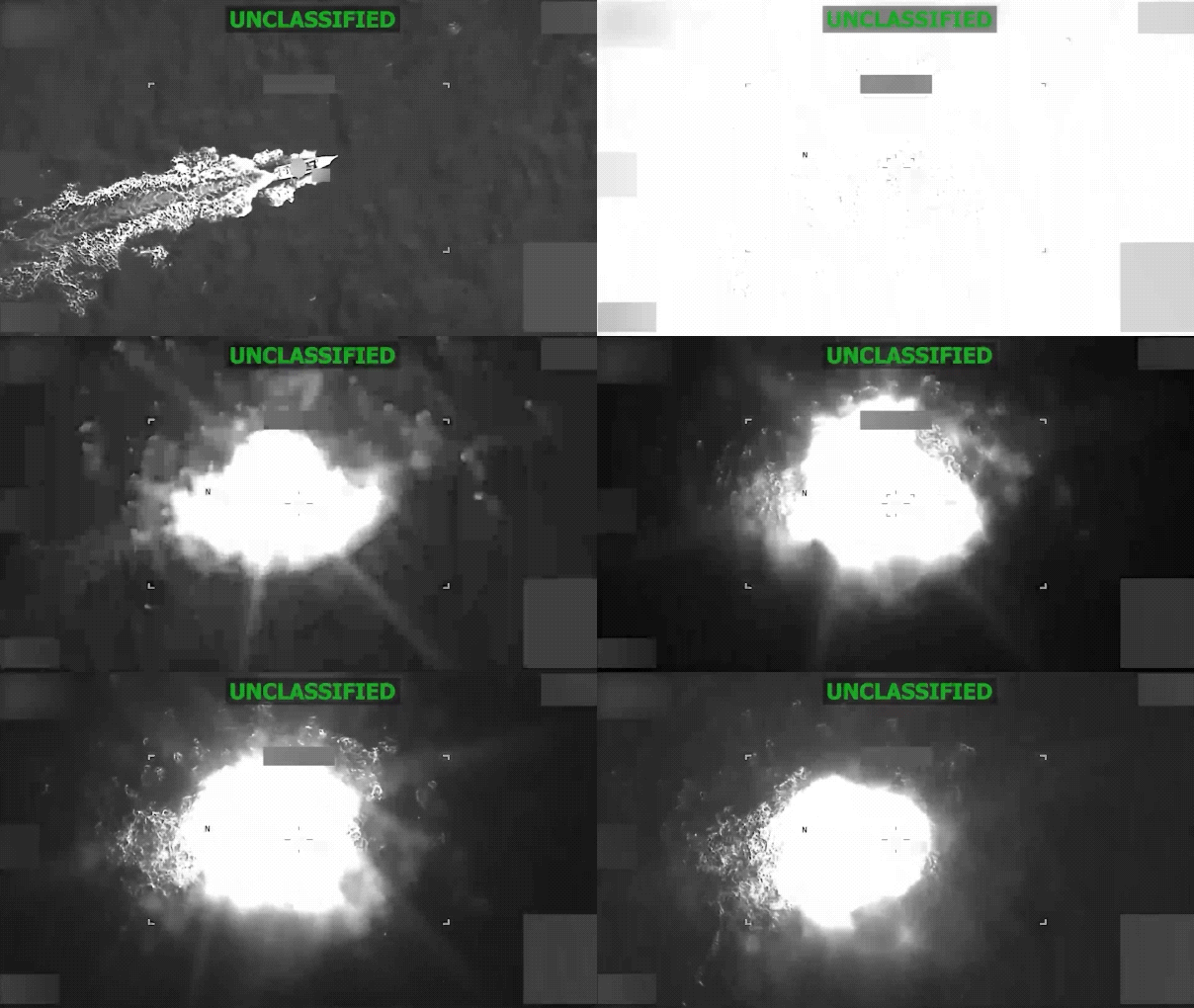
The U.S. military carried out another deadly strike against a vessel allegedly involved in narco-trafficking operations in the Caribbean, killing three people identified as “narco-terrorists” by authorities.
According to a statement released by U.S. Southern Command (SOUTHCOM) on social media, the operation took place on April 19 under the direction of SOUTHCOM commander General Francis L. Donovan. Joint Task Force Southern Spear conducted what was described as a “lethal kinetic strike” on a vessel reportedly operated by organizations designated as terrorist groups.
“Intelligence confirmed the vessel was transiting along known narco-trafficking routes in the Caribbean and was engaged in narco-trafficking operations,” SOUTHCOM stated. The command confirmed that three male individuals were killed during the operation, while no U.S. military personnel were harmed.
The strike represents the latest in a series of similar operations targeting suspected drug trafficking vessels in the region. The Trump administration has significantly ramped up these military interventions, having carried out dozens of deadly strikes against vessels allegedly operated by what officials term “narco-terrorists.”
These operations reflect an intensified approach to combating drug trafficking in the Caribbean and Eastern Pacific, regions that continue to serve as major transit zones for illicit substances destined for the United States. The Caribbean, in particular, has seen a resurgence as a key corridor for drug movement in recent years after enforcement efforts had previously pushed much trafficking activity to Pacific routes.
The aggressive military strategy represents a departure from previous administrations’ approaches to maritime narcotics interdiction, which typically emphasized Coast Guard operations and international cooperation rather than direct military strikes. Critics have raised questions about the escalation of lethal force in counter-narcotics operations, while supporters argue such measures are necessary to disrupt sophisticated trafficking networks linked to terrorist organizations.
General Donovan, who was confirmed as SOUTHCOM commander earlier this year following Senate Armed Services Committee hearings in January, has overseen an expansion of these operations. As the head of U.S. Southern Command, Donovan is responsible for military operations and cooperation in Central and South America and the Caribbean.
The Caribbean strike coincided with a separate U.S. military action in an entirely different theater of operations. On the same day, amid escalating tensions with Iran, U.S. forces intercepted an Iranian-flagged cargo ship in the north Arabian Sea. According to U.S. Central Command (CENTCOM), the guided-missile destroyer USS Spruance intercepted the vessel M/V Touska as it traveled toward Bandar Abbas, Iran.
CENTCOM reported that American forces issued multiple warnings to the Iranian vessel over a six-hour period, informing it that it was violating a U.S. blockade. After the crew allegedly failed to comply, the USS Spruance fired several rounds from its 5-inch MK 45 gun into the ship’s engine room, disabling its propulsion. U.S. Marines from the 31st Marine Expeditionary Unit subsequently boarded the vessel, which remains in American custody.
These simultaneous operations in disparate regions highlight the global reach of U.S. military forces and the Trump administration’s willingness to employ direct military action across different theaters to address perceived security threats, whether from drug trafficking organizations in the Western Hemisphere or geopolitical adversaries in the Middle East.
The increasing frequency of such strikes signals a continued emphasis on military solutions to transnational challenges like drug trafficking, though questions remain about their long-term effectiveness in disrupting sophisticated criminal networks that have demonstrated resilience and adaptability in the face of enforcement efforts.
Fact Checker
Verify the accuracy of this article using The Disinformation Commission analysis and real-time sources.

11 Comments
This is a concerning incident. While taking action against drug trafficking is important, the use of lethal force raises ethical questions. I hope the military carefully evaluated all options to minimize casualties.
Agreed, it’s a complex issue with valid concerns on both sides. Transparency and accountability will be key in evaluating the necessity and proportionality of this strike.
This strike is part of a broader trend of increased military action against suspected drug traffickers in the region. While the threat is real, I worry about mission creep and unintended consequences.
That’s a valid concern. The long-term effectiveness and sustainability of this approach should be carefully evaluated, along with potential alternatives.
The ‘narco-terrorist’ designation is troubling and seems to be used to justify increasingly aggressive military tactics. I wonder if there were opportunities for de-escalation or capture that were overlooked.
That’s a fair point. The language used can shape public perception and justify harsher measures. A more nuanced understanding of the situation would be helpful.
Drug trafficking is a serious problem, but using lethal force should always be an absolute last resort. I hope the military can find ways to disrupt these operations while minimizing loss of life.
Absolutely. Avoiding civilian casualties and preserving human rights should be the top priorities, even when dealing with serious criminal activity.
It’s important to get the full facts before rushing to judgment. While the use of lethal force is always troubling, there may have been extenuating circumstances that justified this action. More transparency would help inform the public debate.
Tackling drug cartels and organized crime is vital, but the human rights implications of these strikes cannot be overlooked. I’d like to see more emphasis on disrupting trafficking networks through non-lethal means.
Drug trafficking is a complex global issue with no easy solutions. I hope the military and policymakers are taking a comprehensive, evidence-based approach that prioritizes human rights and minimizing harm to civilian populations.