


Listen to the article
Virginia Governor Spanberger Signs National Popular Vote Bill Amid Republican Criticism
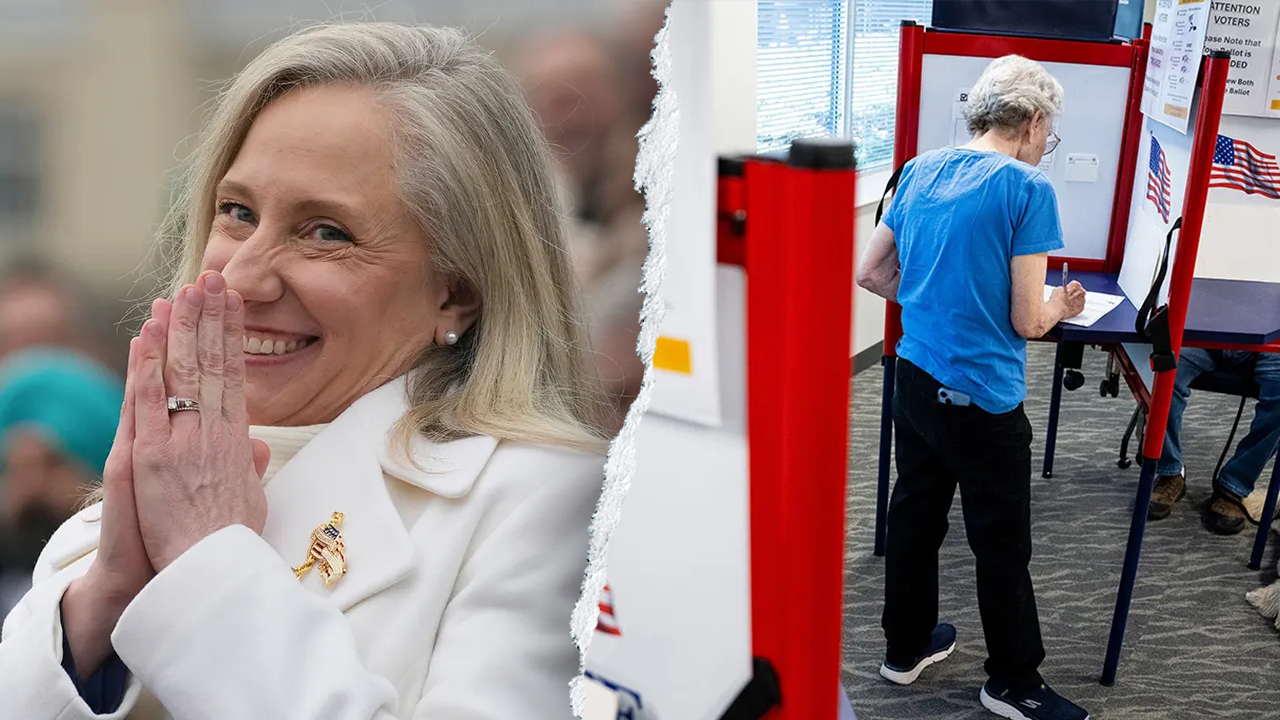
Virginia Governor Abigail Spanberger has ignited controversy by signing legislation that would award the state’s presidential electoral votes to the winner of the national popular vote, drawing sharp criticism from Republicans who claim the move undermines the state’s electoral sovereignty.
The bill adds Virginia to the National Popular Vote Interstate Compact, an agreement among states to allocate their electoral votes to whichever presidential candidate wins the most votes nationwide, regardless of the results within each individual state. With Virginia’s 13 electoral votes now in the compact, the agreement has reached 222 electoral votes—still 48 short of the 270 threshold required for implementation.
“All of Virginia’s Electoral College votes will go to the winner of the national popular vote—no matter who wins the popular vote in our Commonwealth,” the Virginia Republican Party posted on social media, calling the legislation “an unconstitutional assault on our democracy.”
The compact operates with a conditional trigger mechanism that keeps the law dormant until participating states collectively control at least 270 electoral votes—a majority of the Electoral College. Only when that threshold is reached would the compact take effect, fundamentally altering how America selects its president.
Progressive voting rights organizations have praised Spanberger’s decision. Christina Harvey, Executive Director of Stand Up America, called it “an important step forward for representative democracy,” adding that “the presidency should be won by the candidate who receives the most votes nationwide—not just the right combination of battleground states.”
Patrick Rosenstiel, spokesperson for National Popular Vote, the organization spearheading the compact, expressed gratitude to Spanberger and the Virginia Legislature, saying their support “builds critical momentum for our movement.” The group noted that similar bills have been introduced in several battleground states, including Wisconsin, Arizona, Michigan, Pennsylvania, and Nevada.
The signing comes at a politically sensitive time for Spanberger, who was recently selected to deliver the Democratic response to President Donald Trump’s State of the Union address. Critics have accused the governor of abandoning her centrist campaign positions in favor of more progressive policies since taking office.
This latest move follows accusations from former Virginia Governor Glenn Youngkin that Spanberger has engaged in “illegal and unconstitutional” gerrymandering through her push to redraw Virginia’s congressional maps. Youngkin claimed the redistricting effort would give Democrats 10 of the state’s 11 congressional seats if approved. Virginians will vote on this redistricting referendum on April 21.
During the same bill-signing session, Spanberger approved hundreds of bills passed by the Democratic-controlled legislature. She also indicated support for new gun ownership restrictions, including an “assault weapons” ban, and measures limiting law enforcement cooperation with immigration enforcement—though these bills came with proposed amendments.
The National Popular Vote Interstate Compact has gained momentum in recent years, particularly among Democrats frustrated by presidential elections where candidates won the Electoral College despite losing the popular vote. Supporters argue the compact would ensure every vote carries equal weight regardless of state boundaries, while opponents contend it undermines the federal system established by the Constitution.
If eventually implemented, the compact would represent one of the most significant changes to presidential elections since the founding of the republic, effectively circumventing the Electoral College system without requiring a constitutional amendment.
As the debate continues, the compact’s progress will likely depend on whether it can gain traction in the remaining swing states needed to reach the crucial 270 electoral vote threshold—and whether it can withstand the inevitable legal challenges should it approach activation.
Fact Checker
Verify the accuracy of this article using The Disinformation Commission analysis and real-time sources.

15 Comments
The National Popular Vote Compact is a bold and controversial idea that aims to reshape how presidential elections are decided. While I appreciate the intent to make every vote matter equally, I have concerns about the potential unintended consequences and constitutional issues. This will be an interesting debate to follow.
I’m somewhat skeptical of this proposal, as I believe the Electoral College system was intentionally designed to balance the interests of states and prevent a few highly populated areas from dominating the outcome. That said, I can understand the appeal of making every vote count equally across the country.
Reasonable people can disagree on the merits of the Electoral College versus a national popular vote. This is a complex issue that deserves thoughtful, nuanced discussion rather than partisan grandstanding.
This proposal is certainly controversial and raises valid concerns about the role of the Electoral College. While I appreciate the intent to make every vote matter equally, I have reservations about the potential unintended consequences and constitutional challenges. It will be interesting to see how this debate evolves.
Agreed. This is a complex issue that deserves careful, impartial analysis rather than partisan rhetoric. The legal and practical implications are significant and will likely be the focus of intense discussion in the coming months.
This proposal is certainly controversial and raises interesting constitutional questions. I can see the arguments on both sides – proponents argue it makes every vote matter equally, while critics say it undermines the intent of the Electoral College. Curious to see how this plays out legally and politically.
The National Popular Vote Compact is a complex issue with valid concerns on both sides. It will be important to carefully examine the legal and practical implications as this debate continues.
This proposal is certainly thought-provoking and speaks to the ongoing debate about the role of the Electoral College. I can see merits to both sides of the argument – the compact aims to make every vote count equally, but the Electoral College was designed with specific purposes. It will be interesting to see how this legal and political battle unfolds.
Agreed. This is a complex issue that deserves a measured, impartial analysis rather than knee-jerk partisan reactions. The constitutional implications are significant and will likely be the focus of intense debate in the coming months.
The National Popular Vote Compact is a bold and controversial idea that raises valid concerns about the integrity of the Electoral College system. While I appreciate the goal of making every vote count equally, I’m not convinced this is the right solution. I’ll be following this debate closely.
As someone who believes in the principles of democracy, I’m intrigued by the goal of the National Popular Vote Compact to ensure that every vote carries equal weight nationwide. However, the potential constitutional issues give me pause. I’ll be following this debate closely to better understand the full implications.
Interesting proposal, but I share the concerns about its constitutionality. The Electoral College system was intentionally designed to balance the interests of states, and this plan could have significant ramifications. I’ll be watching closely to see how the legal challenges play out.
Agreed. This is a complex issue that deserves careful, impartial analysis rather than partisan posturing. The constitutional implications are significant and will likely be the focus of intense debate.
As a supporter of democratic principles, I’m intrigued by the goal of ensuring that every vote carries equal weight nationwide. However, the constitutional questions around this proposal give me pause. I’ll be following this debate closely to better understand the full implications.
This is a complex issue with valid arguments on both sides. On one hand, the National Popular Vote Compact seems like a way to ensure that every citizen’s vote carries equal weight. On the other, the Electoral College was designed with specific purposes that this proposal could undermine. I’ll be curious to see how the legal and political debates unfold.