


Listen to the article
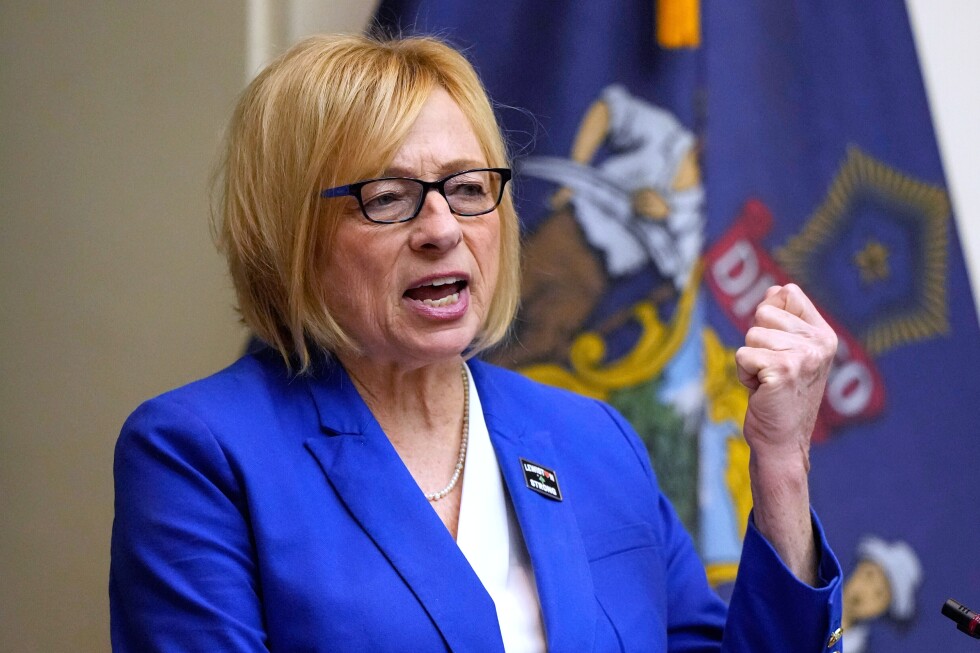
Maine Governor Janet Mills unexpectedly suspended her U.S. Senate campaign Thursday, citing financial constraints just weeks before the Democratic primary in what has become one of the nation’s most closely watched Senate races.
“While I have the drive and passion, commitment and experience, and above all else – the fight – to continue on, I very simply do not have the one thing that political campaigns unfortunately require today: the financial resources,” Mills said in a statement announcing her withdrawal.
The decision marks a surprising turn in a race where Mills, a 78-year-old two-term governor, was initially considered a Democratic star recruit. She had secured endorsements from Senate Minority Leader Chuck Schumer and prominent progressive advocacy groups hoping to unseat Republican incumbent Susan Collins and help Democrats regain control of the Senate.
Despite her established political credentials in Maine, Mills struggled to build momentum against her primary opponent, Graham Platner, a 41-year-old first-time candidate who has managed to maintain strong popularity despite significant controversies.
Platner has faced scrutiny over past inflammatory online comments and a tattoo widely recognized as a Nazi symbol that he claims to have gotten during a night of drinking while on military leave in Croatia. He has since disavowed the comments and says the tattoo has been modified to no longer reflect the offensive imagery.
The primary battle between Mills and Platner reflected broader tensions within the Democratic Party over electoral strategy and generational leadership. Age emerged as a noteworthy factor, with Mills at 78 and incumbent Republican Senator Collins at 73, compared to Platner’s relative youth at 41.
Platner’s campaign has gathered significant momentum through a populist message that has resonated with Maine voters. His candidacy has drawn support from prominent progressive voices, including Vermont Senator Bernie Sanders and Democratic Senators Elizabeth Warren of Massachusetts, Ruben Gallego of Arizona, and Martin Heinrich of New Mexico.
Political analysts note that the Maine contest illustrates a wider debate within Democratic circles about the most effective approach to defeating Republicans and regaining influence in Washington, where the GOP currently controls both the White House and Congress under President Donald Trump’s administration.
Mills had positioned herself as the experienced candidate best equipped to stand up to Trump. She frequently referenced her confrontations with the former president, including when she told him “she would see him in court” – a reference to Maine officials’ lawsuit against the Trump administration over federal funding and transgender athletes in sports.
The timing of Mills’ withdrawal is particularly notable as many political observers had initially expected Platner to be the one who might exit the race, given the controversies surrounding his past. However, his willingness to address these issues directly, coupled with his populist messaging, has apparently strengthened his position with Maine voters.
Maine’s Senate race remains one of the most competitive in the 2026 electoral cycle, with Democrats viewing Collins’ seat as a potential pickup opportunity in their quest to regain control of the upper chamber. Collins, who has represented Maine in the Senate since 1997, has built a reputation as a moderate Republican willing to break with her party on certain issues, though her support for Supreme Court nominations during the Trump administration damaged some of her bipartisan credentials.
With Mills’ departure, Platner now becomes the presumptive Democratic nominee who will likely face Collins in the November general election, setting up what promises to be one of the most closely watched Senate contests in the country.
Fact Checker
Verify the accuracy of this article using The Disinformation Commission analysis and real-time sources.

12 Comments
While disappointing to see Gov. Mills step aside, the decision seems pragmatic given the financial hurdles. Hopefully this clears the way for a substantive policy debate between the remaining candidates.
Agreed, the focus should be on the candidates’ visions and qualifications rather than just fundraising prowess. Maine voters deserve a robust discussion of the issues.
Curious to learn more about this first-time candidate Graham Platner and the controversies he’s faced. The Senate race in Maine is shaping up to be quite fascinating.
Yes, Platner’s background warrants further scrutiny. Voters will need to weigh the pros and cons carefully before deciding who to support in the primary.
The financial constraints cited by Gov. Mills are a reminder of the challenges even seasoned politicians can face in today’s campaign environment. Will be watching closely to see how this race unfolds without her involvement.
It’s unfortunate that money plays such an outsized role in elections these days. Hopefully the focus can remain on the candidates’ platforms and qualifications rather than just fundraising.
Interesting that a seasoned politician like Gov. Mills struggled to gain traction against a first-time candidate like Platner. Speaks to the unpredictable nature of today’s political landscape.
Absolutely, the political landscape is constantly shifting. Voters seem to be seeking new faces and fresh perspectives, which could work in Platner’s favor.
The Maine Senate race was expected to be a key battleground, so Gov. Mills’ withdrawal is a significant development. Will be interesting to see how this impacts the broader balance of power in the Senate.
Absolutely, this development could have ripple effects beyond just Maine. The Senate majority hangs in the balance, so every seat counts.
Surprising to see Gov. Mills drop out of the Senate race, given her political experience and backing from Democratic leaders. Will be interesting to see how this impacts the primary and general election dynamics in Maine.
Agreed, her withdrawal is a bit of a curveball. Curious to see if this opens up opportunities for other candidates or if it solidifies Platner’s path to the nomination.