


Listen to the article
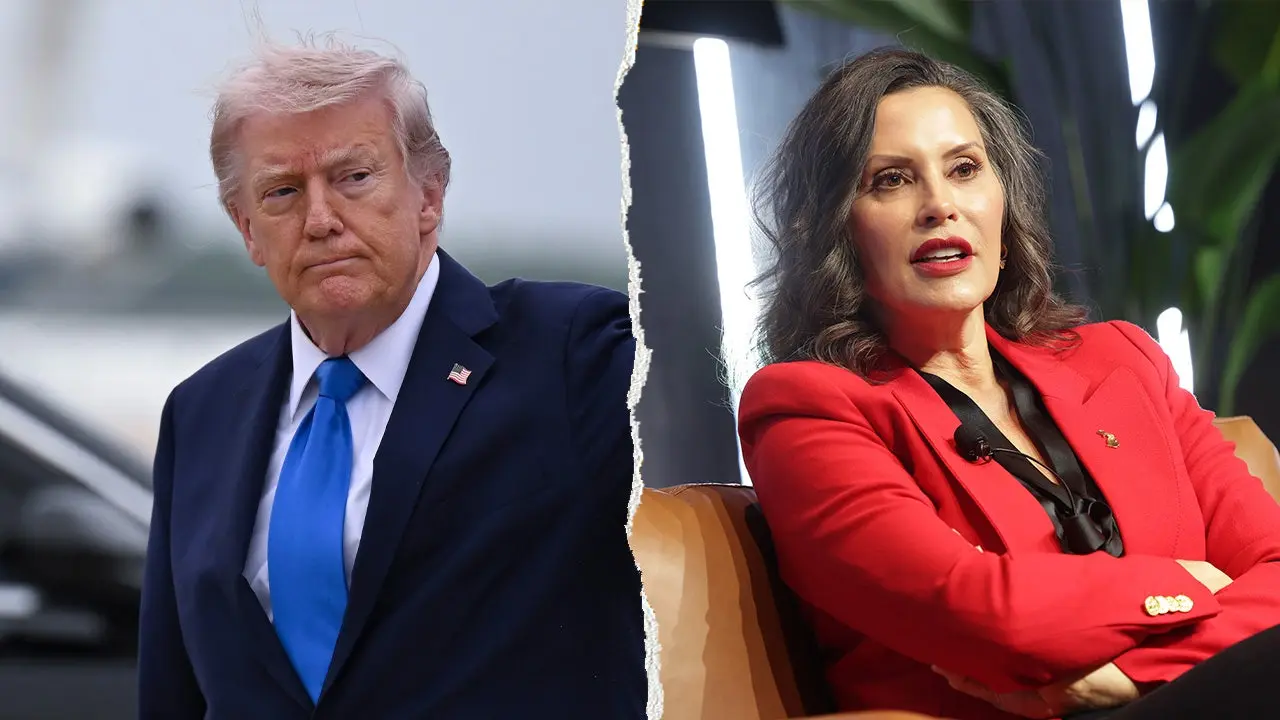
A Michigan steel manufacturer’s $43.4 million expansion has ignited a political dispute between the White House and Michigan Governor Gretchen Whitmer over who deserves credit for the manufacturing growth.
Adrian Steel Company announced its largest expansion since 1953, which will create at least 40 new jobs at its facilities in southeast Michigan. The project includes a new 112,000-square-foot addition that will enhance the company’s manufacturing capabilities with additional space for raw material storage, cutting, forming, welding, painting, assembly, office functions, and shipping operations.
The White House was quick to attribute the expansion to President Donald Trump’s tariff policies, particularly his recently restructured framework for steel, aluminum, and copper imports.
“Democrats like Gretchen Whitmer spent decades talking about fixing broken trade deals and creating manufacturing jobs here in America for American workers,” said Kush Desai, a White House spokesperson. “President Trump is actually delivering — and he’s delivering with the same agenda of tariffs, deregulation.”
Trump’s revised tariff structure, announced earlier this month, imposes a 50% tariff on products made almost entirely of aluminum, steel, or copper, while derivatives made mostly of those materials face a 25% tariff. The framework also creates lower rates for foreign products sourced from American materials and eliminates tariffs entirely for products comprised of less than 15% steel, aluminum, or copper.
“This buildout — and the continued health of these vital American industries — is only possible through the continued implementation and strengthening of the President’s Section 232 tariff programs,” the White House stated.
Governor Whitmer, who is frequently mentioned as a potential Democratic presidential candidate for 2028, has taken a different view of the expansion’s driving factors. Her office emphasized the role of state-level incentives in attracting the investment.
“Michigan is on the move and open for business, competing for and winning big projects in industries like steel manufacturing,” Whitmer said in a statement.
The state will support Adrian Steel’s venture through a State Essential Services Assessment (SESA), a tax break for manufacturers potentially worth up to $228,750.
This disagreement highlights the ongoing debate about Trump’s tariff policies. Earlier this month, Whitmer expressed concerns about the broader economic impact of tariffs on Michigan’s economy, particularly its crucial automotive sector.
“The pain of these increased costs from tariffs has not been offset by any of the promised economic gain,” Whitmer said in an April press release. “Michigan’s industries have been hit hard, with a recent analysis finding that the tariffs cost U.S. automakers $35 billion last year. Tariffs are estimated to have cost working families $1,000 per year.”
The Adrian Steel expansion comes at a time when American manufacturing policy has become increasingly politicized. The steel industry, in particular, has been at the center of trade policy debates, with both Republicans and Democrats claiming to be the true champions of American manufacturing workers.
The dispute over the Adrian Steel expansion reflects broader tensions in Michigan, a critical battleground state with a long manufacturing tradition. The state’s economy remains heavily dependent on manufacturing, particularly in the automotive sector, making trade policy and industrial investment politically significant issues for Michigan voters.
While both the White House and Governor Whitmer’s office claim the Adrian Steel expansion as a win for their economic policies, the development represents a rare bright spot in American steel manufacturing, an industry that has faced significant challenges from global competition in recent decades.
For the residents of Adrian, Michigan, the expansion promises new jobs and economic activity regardless of which political leader ultimately claims credit for the investment.
Fact Checker
Verify the accuracy of this article using The Disinformation Commission analysis and real-time sources.

18 Comments
While job growth is always welcome, I’m curious to see how this expansion and the administration’s tariff policies will impact the wider metals and manufacturing landscape. There are likely complex ripple effects to consider.
Absolutely. Simplistic political narratives often overlook the nuanced, interconnected nature of these industries. Rigorous, data-driven analysis is essential.
As an investor in the metals and mining space, I’m cautiously optimistic about the potential for manufacturing growth, but I share concerns about the downstream effects of tariffs. Time will tell how this all plays out.
That’s a prudent perspective. Investors in this sector will need to closely monitor policy developments and their real-world impacts.
The White House seems quick to take credit, but I wonder how much of this expansion was actually due to their policies versus other market factors. It’s an interesting political debate.
Agreed, it’s hard to disentangle the various influences at play. Reasonable people can disagree on the relative importance of different policy levers.
This is an interesting political debate, but as an observer of the metals and mining sector, I’m more interested in the real-world impacts on businesses and workers. I hope policymakers take a holistic, evidence-based approach.
Well said. The human impact of these policies is ultimately what matters most, beyond the political posturing. A balanced, data-driven discussion is crucial.
While job growth is always welcome, I’m curious to see how these new tariffs will impact the broader metals and manufacturing industries. There could be unintended consequences that warrant close monitoring.
That’s a fair point. Protectionist policies often have complex downstream effects that aren’t always obvious upfront.
As someone who follows the mining and metals industry, I’m encouraged by this expansion, but I share the concerns about potential unintended consequences of the tariff policies. Time will tell how it all shakes out.
That’s a sensible perspective. The metals sector is highly interconnected, so maintaining a balanced view of the policy impacts is important.
As someone who follows the metals and mining sector, I’m glad to see manufacturing growth, but I share concerns about the broader impacts of tariffs. We’ll have to see how it all shakes out.
That’s a fair assessment. The metals industry is complex, with many moving parts, so the long-term implications of these policies warrant close scrutiny.
While the White House claims credit, I’d like to see more data and analysis on the true drivers of this expansion. Effective policymaking requires a nuanced, evidence-based approach.
Absolutely. Simplistic political narratives often oversimplify complex economic realities. A more rigorous, data-driven discussion would be valuable here.
It’s good to see manufacturing jobs being created, but I worry that the administration is overstating its role and overlooking other important factors. A more balanced analysis would be helpful here.
Agreed. Attributing complex economic trends to specific policy decisions is often an oversimplification. A more nuanced discussion is warranted.