


Listen to the article
Fetterman Reveals Rift with Shapiro in Memoir, Details Clash Over Clemency
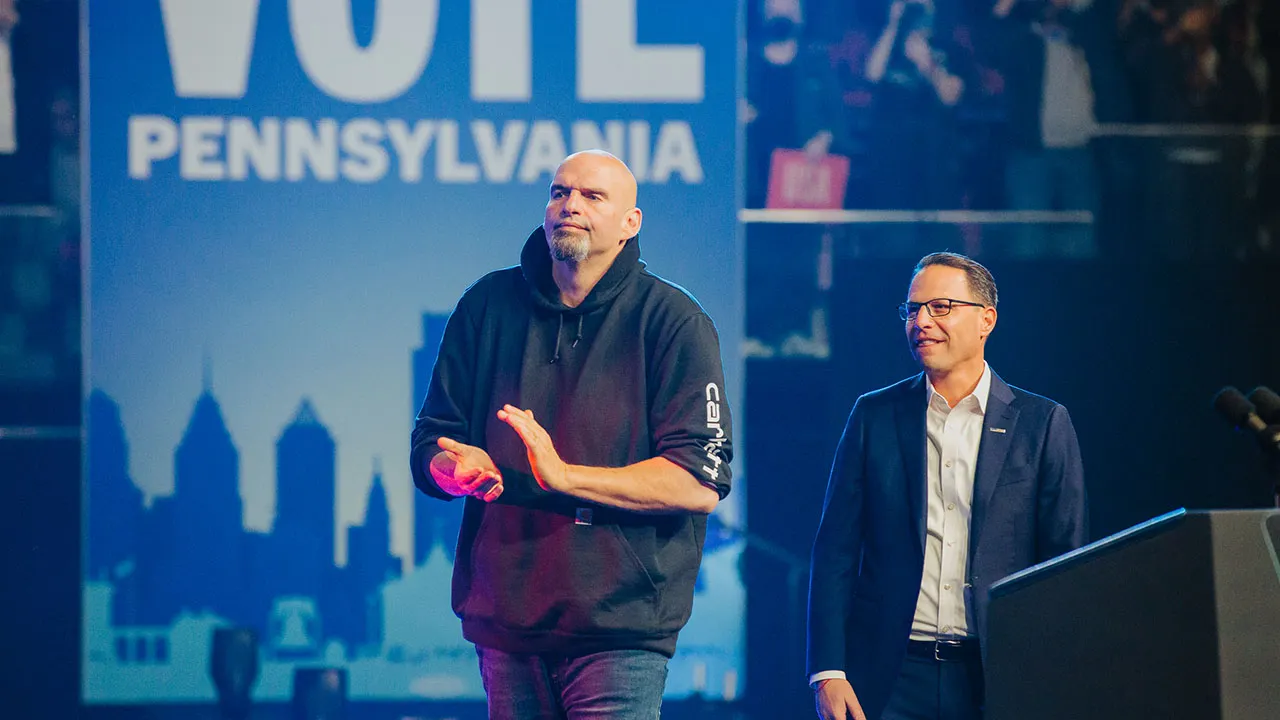
Sen. John Fetterman of Pennsylvania has unveiled the origins of his fractured relationship with Gov. Josh Shapiro in his newly published memoir “Unfettered,” detailing a heated exchange during their time serving together on the state’s Board of Pardons.
In the book, Fetterman recounts a tense moment when, as Pennsylvania’s lieutenant governor, he directed a profane outburst at Shapiro during a Zoom hearing after what Fetterman described as “a very long-winded and unnecessary” speech by Shapiro justifying his vote against commuting the sentences of Lee and Dennis Horton. The brothers had been convicted of second-degree murder following a fatal robbery and shooting in 1993.
The confrontation escalated in a private meeting where Fetterman allegedly threatened to challenge Shapiro in the 2022 gubernatorial primary. “I told him there were two tracks—that one and the one in which he ran for governor and I ran for the Senate (which was the one I preferred),” Fetterman writes. “I had no interest in friction, only in what I felt was justice.”
The dispute centered on fundamental differences in their approaches to criminal justice reform. Fetterman, a longtime advocate for second chances in the criminal justice system, portrays himself as taking principled stands on clemency cases while suggesting Shapiro’s positions were influenced by political calculations.
“I truly believed with all my heart that nobody I ever supported for a pardon was a danger to society. I was willing to stake my political career on it,” Fetterman explains in the memoir. “He was far more cautious, and at a certain point, I began to think that what was influencing him was not mere caution but political ambition.”
The senator describes a particularly contentious meeting where Shapiro voted against parole in 12 of 15 cases, causing Fetterman to break his reading glasses in frustration. “I believe what drove him to delay and deny applications was not the facts of a given case as much as a fear that someone whose sentence he’d commuted would go on to commit terrible violence on the outside,” Fetterman writes.
Despite the tension, the Board of Pardons ultimately voted to commute the Horton brothers’ sentences in December 2020. Fetterman later invited Dennis Horton to be his guest at the 2023 State of the Union address, underscoring his commitment to the clemency cases he championed.
The disagreement over clemency policy reflects broader tensions within the Democratic Party regarding criminal justice reform. While progressives like Fetterman have pushed for more aggressive reforms and second chances for incarcerated individuals, moderates often express concerns about public safety implications and potential political vulnerabilities.
Fetterman’s memoir also reveals attempts at reconciliation, with Shapiro’s representatives reportedly reaching out to the senator. “He wanted me to retract things I had said and to deny the rumors about the private meeting taking place,” Fetterman writes. “That wasn’t going to happen.”
Despite their strained relationship, Fetterman expresses respect for Shapiro’s accomplishments. “I sincerely wish him the best,” he writes. “He is a credit to the state and may one day be a credit to the country. I remember fondly the days when we were nobodies trying to climb the ladder. Even if we no longer speak.”
The revelations come as Fetterman has also made headlines for his willingness to break with Democratic Party orthodoxy on certain issues, including his stated openness to working with the Trump administration and his strong support for Israel—positions that have sometimes put him at odds with more progressive members of his party.
Shapiro’s office has not yet publicly responded to the claims in Fetterman’s memoir. The governor, who has been mentioned as a potential future presidential contender, has maintained a moderate profile as Pennsylvania’s chief executive since winning the 2022 gubernatorial race.
Fact Checker
Verify the accuracy of this article using The Disinformation Commission analysis and real-time sources.

13 Comments
The tensions between Fetterman and Shapiro seem to stem from fundamental differences in their approaches to criminal justice. This is an important issue that deserves robust public debate.
This memoir offers an insider’s perspective on the tensions and power dynamics within state government. It’s a timely and important contribution to the public discourse on criminal justice policy.
I’m curious to hear more about the specific policy differences between Fetterman and Shapiro and how they informed their respective approaches to the Horton case.
The clash between Fetterman and Shapiro over the parole board and clemency decisions reflects the broader debate around criminal justice reform and the balance between public safety and rehabilitation.
The dispute over the Horton brothers’ sentences highlights the challenges in balancing public safety, criminal justice reform, and individual cases. Fetterman seems to have taken a more progressive approach while Shapiro was more cautious.
It will be interesting to see how this plays out going forward, especially if Fetterman does decide to challenge Shapiro in a gubernatorial primary.
Interesting to see the tensions between Fetterman and Shapiro over the parole board and clemency decisions. Sounds like a complex and contentious issue with reasonable arguments on both sides.
I wonder if the disagreement was more about policy differences or personal tensions. Either way, it’s good to see elected officials willing to openly discuss their differences.
The Fetterman-Shapiro dispute highlights the challenges in finding the right balance between compassion and accountability in the criminal justice system. It’s a complex issue that deserves nuanced discussion.
Fetterman’s memoir provides a rare glimpse into the inner workings of state government and the personal dynamics between elected officials. It’s a valuable contribution to understanding the complexities of policymaking.
While the specific details of the Horton case are concerning, it’s encouraging to see Fetterman and Shapiro engaging in open and honest dialogue about their disagreements.
Fetterman’s memoir provides a rare glimpse into the behind-the-scenes dynamics of state government and the personal conflicts that can arise between elected officials. It’s a valuable contribution to our understanding of the policymaking process.
I’m curious to see how this ongoing dispute between Fetterman and Shapiro will impact the political landscape in Pennsylvania going forward.