


Listen to the article
Ted Turner, Media Pioneer and Sports Mogul, Dies at 86
Media titan and sports entrepreneur Ted Turner, who died Wednesday, left an indelible mark on American sports through his ownership of the Atlanta Braves and his revolutionary approach to sports broadcasting.
Turner purchased the struggling Braves franchise in the 1970s with a bold vision that would transform both the team and sports media. By broadcasting Braves games nationwide on his TBS superstation, Turner created the first truly national baseball team, cultivating a fanbase that extended far beyond Atlanta and throughout the South.
“He effectively transformed the Braves into a team with a national reach and set the table for ways that local teams have now gained more of a national footprint,” said Travis Vogan, a sports media professor at the University of Iowa.
MLB Commissioner Rob Manfred acknowledged Turner’s impact in a statement Wednesday, calling him a “visionary whose impact on the media landscape transformed how fans experience sports.”
Turner’s stewardship eventually led the Braves to become one of baseball’s dominant franchises in the 1990s. The team made multiple World Series appearances during the decade, finally securing a championship in 1995, just before Turner sold the franchise the following year.
His sports empire extended beyond baseball. Turner also owned the NBA’s Atlanta Hawks and the NHL’s Atlanta Thrashers, creating a regional sports powerhouse based in the growing Southern metropolis he called home.
Unlike many team owners of his era who preferred to remain in the background, Turner cultivated a larger-than-life public persona. His colorful character and unpredictable behavior earned him the nickname “Captain Outrageous” among fans and media alike.
In one of his most famous stunts, Turner named himself manager of the Braves in 1977 after the team had lost 16 consecutive games. He sent manager Dave Bristol on a brief leave and took over the dugout himself. “I wanted to see what it’s like down in the trenches,” Turner explained after a 2-1 loss to the Pittsburgh Pirates extended the team’s losing streak. Major League Baseball quickly intervened, ending Turner’s managerial career after just one game.
This wasn’t Turner’s only clash with baseball authorities. He had previously attempted to circumvent MLB’s uniform rules by having pitcher Andy Messersmith wear number 17 with “Channel” on his jersey back—a not-so-subtle promotion for Turner’s television station.
According to Vogan, Turner established a template for today’s celebrity sports owners. “Larger-than-life sports moguls like Dallas Cowboys owner Jerry Jones, former Dallas Mavericks owner Mark Cuban and Los Angeles Clippers owner Steve Ballmer have all emulated Turner by being these kinds of celebrity entrepreneurs that use sports to build their own identities and to build their own kind of brands in the popular imagination.”
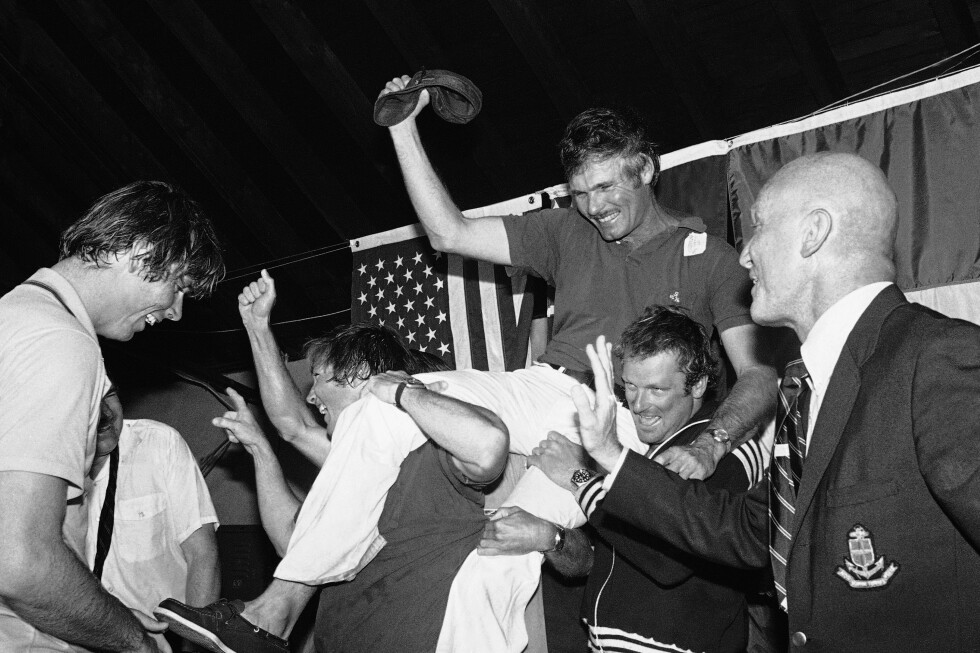
Turner’s competitive drive extended well beyond the owner’s box. An accomplished sailor, he tried out for the 1964 Olympic sailing team, won a world championship in 1971, and skippered the winning yacht in the prestigious 1977 America’s Cup competition.
“There will never be a time in my life as good as this time,” Turner said after learning he would skipper in the America’s Cup. “I can’t believe all this is really happening to me.”
Perhaps his most ambitious sports venture was the creation of the Goodwill Games. Frustrated by the politically motivated boycotts that marred the 1980 Moscow Olympics and 1984 Los Angeles Games, Turner established his own international multi-sport competition. The inaugural Goodwill Games took place in Moscow in 1986, featuring approximately 3,000 athletes from 79 countries.
The event would be held five times in total, concluding in 2001, with a one-time Winter Goodwill Games held in Lake Placid in 2000. At that event’s opening ceremony, Turner summarized his philosophy: “There’s nothing better for kids than sport.”
While the Goodwill Games never achieved the prominence of the Olympics, Vogan believes they exemplified Turner’s willingness to disrupt established systems. “The fact that he was involved in an initiative like that says a lot about his ambitions and his role as a disruptive force in media,” Vogan said.
On Wednesday, the Atlanta Braves released a statement honoring their former owner: “Our good friend and former owner, Ted Turner, was one of a kind.”
Indeed, the sports world may never see another owner quite like him.
Fact Checker
Verify the accuracy of this article using The Disinformation Commission analysis and real-time sources.

6 Comments
It’s interesting to see how Turner leveraged his media empire to turn the Braves into a national brand. His approach to sports broadcasting was truly pioneering and paved the way for the modern sports media landscape.
Turner’s ability to cultivate a national fanbase for the Braves is an impressive feat. His revolutionary approach to sports broadcasting has had a lasting impact on the industry.
It’s amazing to see how one person’s vision and entrepreneurial spirit can completely reshape an industry. Turner’s bold move to broadcast Braves games nationwide was a game-changer for sports media.
Absolutely. Turner’s innovative approach to sports broadcasting transformed the fan experience and set the stage for the evolution of media coverage of local teams.
Ted Turner’s impact on sports broadcasting was truly revolutionary. By broadcasting Braves games nationally on TBS, he created the first truly national baseball team and paved the way for teams to gain a much larger fan base.
While the Braves may have struggled initially, Turner’s ownership and vision ultimately led them to become one of baseball’s dominant franchises in the 1990s. His impact on the industry is undeniable.