


Listen to the article
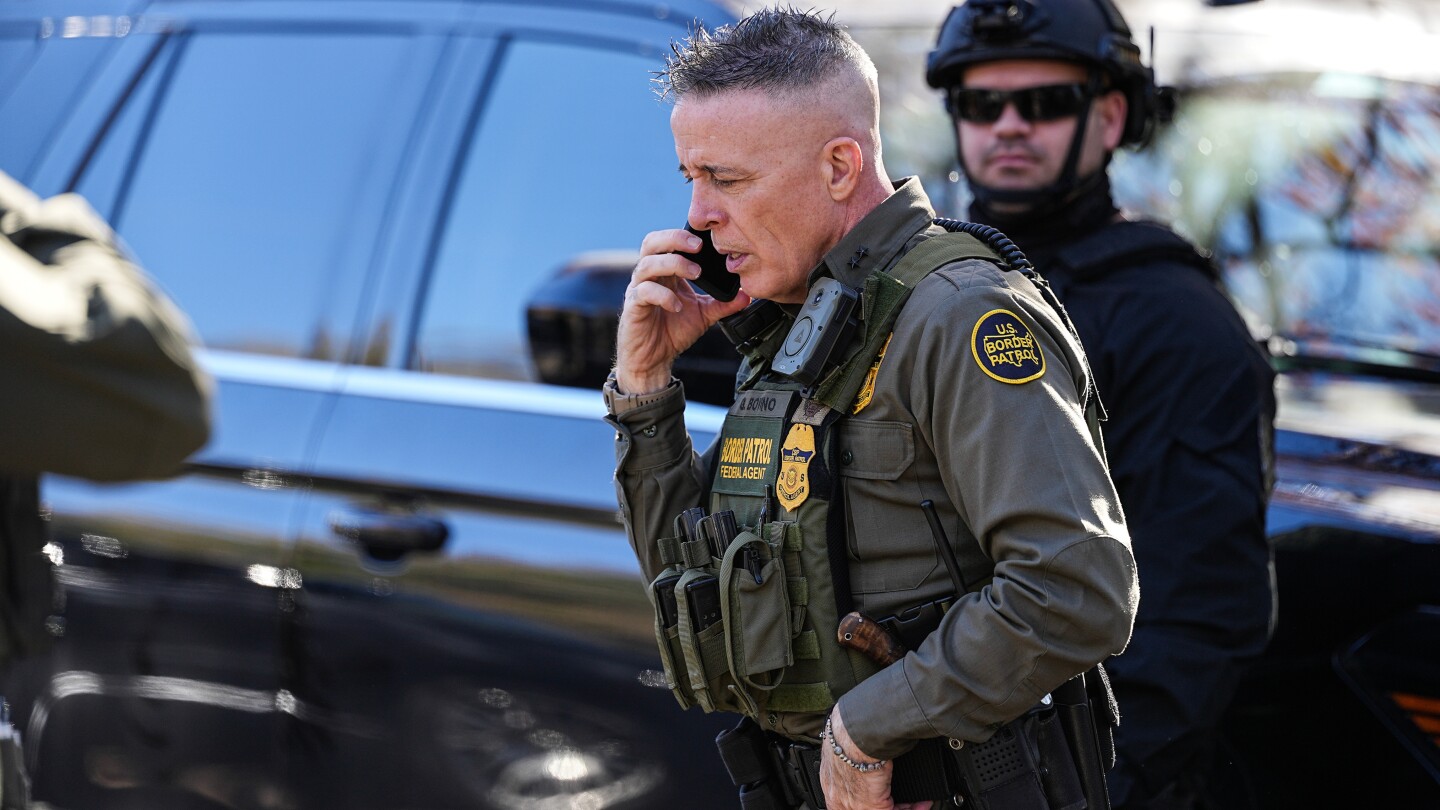
Federal immigration authorities are expanding their enforcement operations in North Carolina, with operations in Raleigh set to begin as early as Tuesday, according to the city’s Mayor Janet Cowell. This development comes as Customs and Border Protection agents continue operations in Charlotte, where more than 130 people were arrested over the weekend.
Mayor Cowell indicated Monday that she had limited information about the scope or duration of the planned operation in Raleigh. In her statement, the Democratic mayor emphasized that crime rates in the city had decreased compared to the previous year and reaffirmed the administration’s commitment to public safety.
“I ask Raleigh to remember our values and maintain peace and respect through any upcoming challenges,” Cowell stated.
The Department of Homeland Security has justified its focus on North Carolina by citing what it describes as “sanctuary policies” that limit cooperation between local law enforcement and federal immigration officials. According to DHS, approximately 1,400 detainer requests across North Carolina have gone unheeded since October 2020, which the agency claims has put public safety at risk.
These enforcement actions in North Carolina follow similar immigration crackdowns by the Trump administration in Democratic strongholds like Los Angeles and Chicago. However, some observers note that the political dynamics in North Carolina are more complex than in these deeply blue cities and states.
Charlotte, a city of approximately 950,000 residents, has become the initial target in North Carolina despite local opposition and data showing declining crime rates. Residents have reported encounters with immigration agents near churches, apartment complexes, and stores throughout the city.
Tricia McLaughlin, Homeland Security Assistant Secretary, confirmed that Border Patrol officers had arrested “over 130 illegal aliens who have all broken” immigration laws. The agency claimed those arrested had records including gang membership, aggravated assault, shoplifting, and other offenses, though specifics about convictions versus charges were not provided.
The enforcement operation has drawn sharp criticism from state and local leaders. North Carolina Governor Josh Stein expressed concern about the methods being employed.
“We’ve seen masked, heavily armed agents in paramilitary garb driving unmarked cars, targeting American citizens based on their skin color,” Stein said in a video statement released Sunday. “This is not making us safer. It’s stoking fear and dividing our community.”
Charlotte Mayor Vi Lyles similarly expressed being “deeply concerned” about videos of the crackdown while acknowledging protesters’ peaceful response. “To everyone in Charlotte who is feeling anxious or fearful: You are not alone. Your city stands with you,” she stated Monday.
The operations in Charlotte have highlighted the ongoing debate around immigration enforcement in a state with evolving demographics. Charlotte has transformed into a Democratic stronghold in recent years, with a growing population fueled by economic expansion. The racially diverse city includes more than 150,000 foreign-born residents, according to official figures.
The relationship between North Carolina counties and federal immigration authorities has been contentious. In Mecklenburg County, which includes Charlotte, Sheriff Garry McFadden had previously refused to honor ICE detainers until state legislation effectively mandated compliance last year. Republicans overrode then-Governor Roy Cooper’s veto to enact this requirement.
Republican House Speaker Destin Hall attributed the federal presence in Charlotte to McFadden’s past policies, stating on social media: “They’re stepping in to clean up his mess and restore safety to the city.”
The political divide over these operations remains stark. State GOP Chairman Jason Simmons claimed Monday that “Democrats at all levels are choosing to protect criminal illegals over North Carolina citizens,” highlighting the polarized rhetoric surrounding immigration enforcement.
Some legal experts suggest the administration’s strategy may be deliberate in targeting a politically mixed state rather than exclusively focusing on strongly Democratic regions. Rick Su, a professor at the University of North Carolina School of Law, noted that in North Carolina, the administration faces “enough opposition, but it’s a weaker version” than what it encountered in cities like Chicago.
“They’re not interested in just deporting people. They’re interested in the show,” Su observed.
As operations expand to Raleigh, residents and officials across North Carolina remain on alert for what may unfold in the coming days.
Fact Checker
Verify the accuracy of this article using The Disinformation Commission analysis and real-time sources.

9 Comments
Curious to see how this unfolds and what the real-world impacts will be on local communities and businesses. Effective immigration enforcement requires nuance to balance public safety, civil liberties, and economic interests.
The mining and energy sectors will be watching this situation closely, as immigration enforcement can impact labor availability and supply chains. Hoping for a measured, evidence-based approach from all parties involved.
This is a high-stakes situation that could reverberate through the economy, especially in sectors like mining and energy that rely on immigrant labor. Hoping for a balanced, evidence-based approach from all sides.
Enforcement actions like these often have unintended consequences. I hope local leaders and federal authorities can find common ground to address public safety concerns while respecting civil rights. Nuance and compromise will be key.
It’s important to get reliable data on the impacts of sanctuary policies. Objective analysis, not political rhetoric, should inform the policy response.
This is a complex issue with valid concerns on both sides. Curious to see how the mayor and local leaders respond to the federal crackdown. Effective immigration policy requires nuance and compromise.
It’s important to get the facts straight on detainer requests and sanctuary policies. Objective data should drive these decisions, not political agendas.
Interesting to see the expansion of federal immigration enforcement in North Carolina. I wonder how this will impact local communities and the economy. Curious to hear more details on the scope and rationale behind these actions.
Sanctuary policies are a sensitive topic. Hopefully this can be handled in a balanced way that maintains public safety while respecting civil liberties.