


Listen to the article
In a striking example of how mid-decade redistricting affects communities, Kansas City’s historically Black 18th and Vine district and the predominantly white town of Boonville, Missouri, find themselves unexpectedly linked in a newly redrawn congressional map that could alter their political futures.
The 18th and Vine neighborhood, celebrated for its Negro Leagues Baseball Museum and rich cultural heritage, sits approximately 100 miles west of Boonville, a rural community of 7,800 people known for its connection to the popular Katy Trail. Despite their vastly different demographics, economies, and needs, these communities have been thrust together in Missouri’s latest redistricting effort.
This controversial redrawing came in September when Missouri Republicans, responding to former President Donald Trump’s call to create another winnable GOP seat, passed a new congressional map. The redesign significantly altered Democratic U.S. Representative Emanuel Cleaver’s Kansas City district, removing portions of his urban base and stretching it into Republican-heavy rural areas.
Missouri’s action follows a nationwide trend of mid-decade redistricting battles. Texas Republicans have already tilted five seats toward their party, while California voters approved a new map aimed at boosting Democrats. These partisan efforts reflect an intensifying struggle to maximize territorial advantages ahead of the 2026 elections.
For residents of 18th and Vine, the stakes feel personal. Robert Sylvan, an 81-year-old Kansas City resident who attends Cleaver’s church, worries “the whole set of dynamics that impact us” could be fundamentally changed. Cleaver, raised in public housing and a former Methodist pastor, has championed the district for decades, securing millions in federal funding for urban renewal projects.
“Naturally, 18th and Vine is kind of his baby,” said Bob Kendrick, president of the Negro Leagues Baseball Museum. “I don’t want it to be forgotten.”
The demographic differences between the newly joined communities are stark. In 18th and Vine, more than 64% of residents are Black, compared to less than 11% in Boonville. This redistricting could potentially reduce Missouri’s representatives of color from two out of eight House seats to just one, creating a significant disparity in a state where non-Hispanic white people constitute 62% of the population but would hold 88% of its congressional seats.
“We could potentially have folk representing us who have no interaction and have never had any interaction with people of color and have no idea of what goes on in the urban context,” warned Emanuel Cleaver III, the congressman’s son.
The communities also face different challenges that shape their political priorities. In 18th and Vine, residents are nearly twice as likely to lack health insurance compared to Boonville residents, though Boonville has been without a hospital since 2020. Public transportation runs every 15 minutes in the urban district but requires advance scheduling in Boonville. Kansas City leaders advocate for stricter gun laws to combat violence, while rural Republicans like state Representative Tim Taylor have fought to expand gun rights.
Political divisions are equally pronounced. Trump won 67% of Boonville’s vote compared to just 14% in 18th and Vine.
Taylor, who represents Boonville in the state legislature, acknowledges the disconnect. “Where he lives, things are different than they are here,” he said of Cleaver, noting that farmers previously in Cleaver’s district “didn’t feel he understood them or came around much.”
For 18th and Vine, Cleaver’s advocacy has been transformative. Since 1989, first as city councilman and mayor, then as congressman, he has helped secure over $100 million for neighborhood revitalization. Recently, he obtained $15.5 million in federal funding to renovate the nation’s oldest Black-owned housing cooperative.
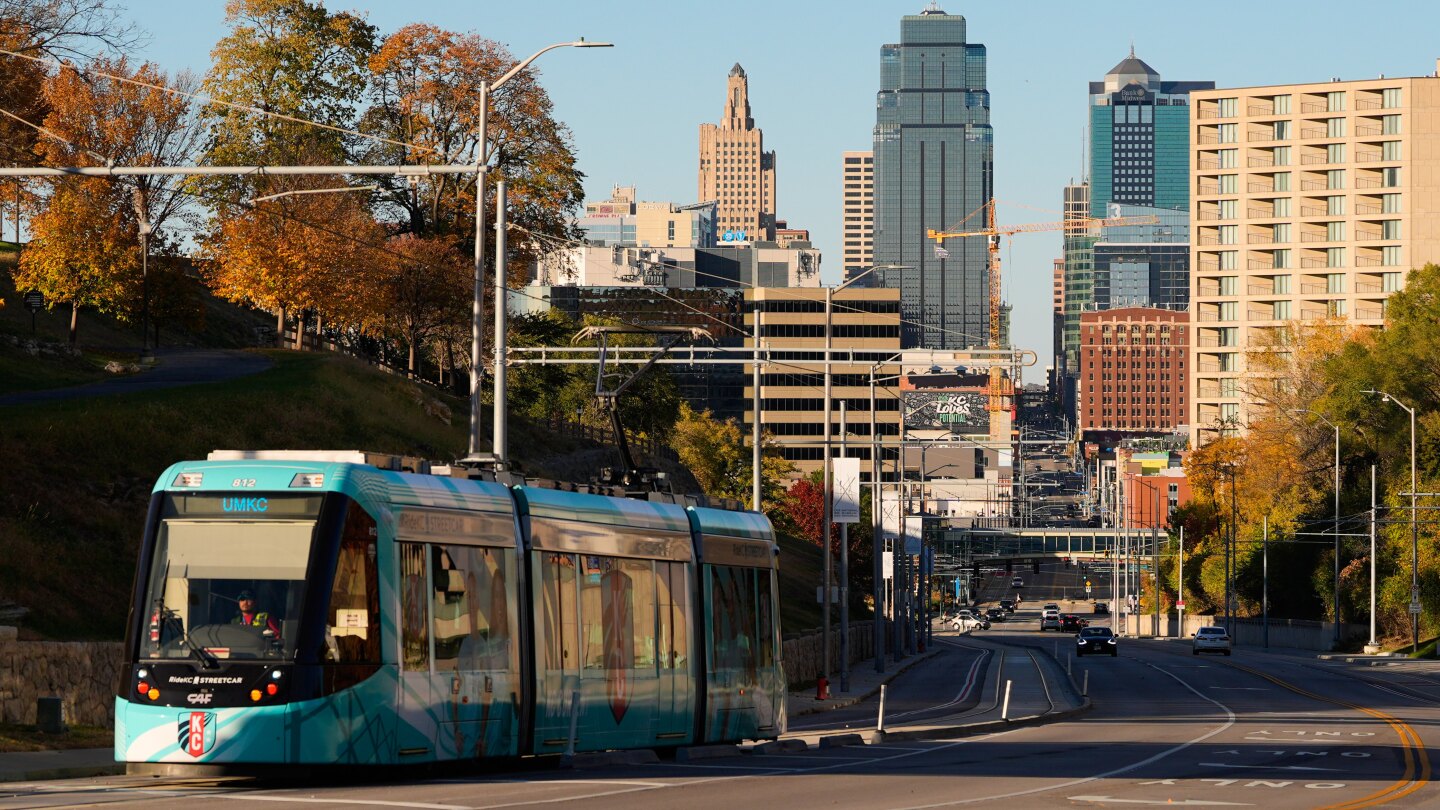
The district now features jazz venues, a dance company, an arts center, and an MLB Urban Youth Academy. The Negro Leagues Baseball Museum hopes to raise $35 million to triple its exhibit space, while city officials are studying a streetcar extension that would rely heavily on federal funding.
Meanwhile, Boonville has its own federal funding priorities, particularly the restoration of a 1932 railroad bridge that would enhance the popular Katy Trail. Last year, the city unsuccessfully applied for a $236,000 federal planning grant for the project.
“The Katy Bridge is like the Eiffel Tower of Missouri if it would only be fixed,” said Annie Harmon, who runs a downtown Boonville store. The trail has already received $30 million in federal funds over the years, supporting a vital economic resource for rural communities.
As the 2026 election approaches, both communities face uncertainty about how their distinct needs will be prioritized by potential new representation. So far, no Republican challenger to Cleaver from Kansas City has emerged.
For Cleaver, who has watched his district’s boundaries redrawn along racial lines, the development is disheartening. “I feel more skeptical about the society’s direction than I did when I was a kid growing up in public housing,” he said during a recent interview at his son’s church.
The redistricting battle playing out in Missouri reflects a larger national question: In an increasingly polarized political landscape, can representatives effectively serve communities with dramatically different demographics, economies, and needs?
Fact Checker
Verify the accuracy of this article using The Disinformation Commission analysis and real-time sources.

10 Comments
The article raises valid concerns about how mid-decade redistricting can disrupt long-standing political dynamics. It will be crucial for Missouri’s leaders to be transparent and inclusive as they navigate this process.
Absolutely. Redistricting should be driven by data and democratic principles, not partisan maneuvering. Engaging affected communities throughout the process is key to ensuring fair and equitable outcomes.
This highlights the challenges of balancing urban and rural interests in the redistricting process. Hopefully, lawmakers can find a fair solution that preserves the unique identities and needs of communities like the 18th and Vine district and Boonville.
Agreed. Maintaining political representation for minority communities is especially important during redistricting. The process should aim to empower, not dilute, the voices of diverse populations.
This article highlights the delicate nature of redistricting and the potential for unintended consequences. It will be crucial for Missouri’s lawmakers to carefully consider the impact on diverse communities as they redraw the congressional map.
I agree. Redistricting should be a transparent and collaborative process that prioritizes the fair representation of all citizens. Hopefully, the concerns raised in this article will prompt meaningful dialogue and compromise among Missouri’s political leaders.
Redistricting is a complex issue with far-reaching consequences. It’s important that the process in Missouri balances the needs of urban and rural areas, as well as minority and majority populations, to the greatest extent possible.
You make a good point. Redistricting should aim to preserve the political voice of all constituents, regardless of their demographics or geographic location. Achieving that balance is no easy task, but it’s essential for a healthy democracy.
Redistricting is always a sensitive topic, with communities on both ends of the process often feeling their needs are overlooked. It will be interesting to see how this impacts the political dynamics in Missouri’s redrawn districts.
You’re right, redistricting can create unexpected alliances between diverse communities. It will be crucial for local leaders to find common ground and advocate for the best interests of all their constituents.