


Listen to the article
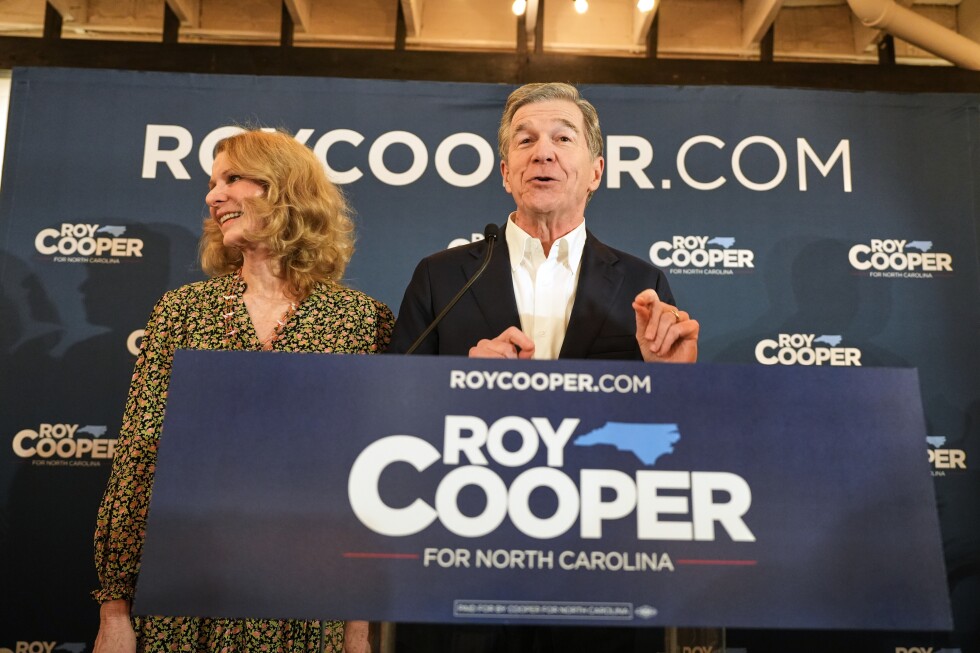
North Carolina faces a pivotal Senate race this year as outgoing Democratic Governor Roy Cooper challenges Republican Michael Whatley in a contest that could determine control of the U.S. Senate.
The state presents a curious political contradiction. While North Carolina has regularly elected Democrats to the governor’s mansion for over a century, it has been remarkably resistant to sending Democrats to the Senate. In fact, the last Democrat to win a Senate race in North Carolina was in 2008, the same year Barack Obama carried the state in his presidential bid.
Both Cooper and Whatley sailed through their respective party primaries this week, setting up a high-stakes battle that political analysts expect will attract hundreds of millions of dollars in campaign spending. For Democrats, North Carolina represents a critical opportunity in their quest to gain the four seats needed to secure a Senate majority.
Cooper brings considerable political experience to the race, having never lost a campaign across four decades of public service as a state legislator, attorney general, and two-term governor. His campaign is positioning him as an independent voice for North Carolina.
“Look, I’m going to be a strong, independent senator for North Carolina,” Cooper said Wednesday, emphasizing that he would work with former President Trump when policies aligned with the state’s interests.
Whatley, by contrast, is leaning heavily into his connection with Trump, who handpicked him to serve as Republican National Committee chairman before endorsing his Senate bid.
“His leadership has changed our country, and I am proud to stand with him in the fight to secure our border, to strengthen our economy and put America first,” Whatley declared, making clear he sees the Trump alliance as an asset rather than a liability.
The Republican candidate faces challenges of his own, particularly his relative obscurity among voters. Though well-connected in political circles as a former staffer, lobbyist, and party leader, Whatley is a first-time candidate without the broad name recognition Cooper enjoys.
“It’s one thing to be the party guy, and it’s another to be the guy on the ballot yourself,” observed former Republican Governor Pat McCrory, who narrowly lost to Cooper in 2016. “We’re going to see find out whether he has it or not.”
This perception was echoed by Democratic primary voter Martha Goodson, 71, who expressed skepticism about Whatley’s ties to North Carolina. “I’m just very hesitant about people that I haven’t seen be thoroughly invested in North Carolina,” she said. “I don’t know that I had heard his name before it came up for this.”
The Republican campaign strategy appears focused on undermining Cooper’s record as governor, targeting his handling of immigration issues, COVID-19 policies, and crime. They’ve highlighted Cooper’s veto of legislation that would have required sheriffs to cooperate with federal immigration authorities seeking to detain inmates believed to be in the country illegally.
“Roy Cooper chose criminal illegal aliens over North Carolina communities,” Whatley asserted during his nomination acceptance speech.
Republicans have also emphasized last summer’s fatal stabbing of Ukrainian refugee Iryna Zarutska on a Charlotte light-rail train. The murder suspect had more than a dozen prior arrests before the incident, which Trump highlighted during his State of the Union address.
Cooper’s campaign is countering with an emphasis on economic issues, particularly healthcare costs. He points to his success in persuading the Republican-controlled state legislature to expand Medicaid coverage, an achievement that gained bipartisan support. The healthcare issue has renewed relevance after Republicans refused to extend pandemic-era subsidies for insurance plans purchased through the Affordable Care Act.
On immigration and crime, Cooper is attempting to strike a moderate tone, saying Wednesday that he wants “secure borders” and would “insist on federal resources to deport violent criminals” while fighting violent crime. However, he criticized the current administration for “losing focus” on these priorities.
Notably, Cooper has refrained from harsh personal attacks on Trump, likely recognizing that his previous gubernatorial victories included support from some Trump voters. Instead, he criticizes specific policies he claims hurt working and middle-class North Carolinians, then connects Whatley to that agenda.
For Whatley, embracing Trump appears to be not just a strategy but a necessity. “I don’t think he has any choice but to bring him in,” McCrory said. “The president hand-selected him.”
This approach resonates with Republican voters like Kevin Cattell, 71, who wants representatives who “support and see the value and the vision that President Trump is putting forward.”
McCrory understands the power of Trump’s endorsement from personal experience. In 2022, he unsuccessfully sought the Republican Senate nomination against Ted Budd, who had Trump’s backing. Once Trump endorsed Budd, McCrory recalled, “I might as well have been at the beach.”
As November approaches, this contest will test whether Cooper’s proven electoral success in state races can translate to the federal level, breaking the long drought for Senate Democrats in North Carolina.
Fact Checker
Verify the accuracy of this article using The Disinformation Commission analysis and real-time sources.

19 Comments
It’s remarkable that North Carolina has elected so many Democratic governors but consistently sent Republicans to the Senate. This race will reveal a lot about the state’s political dynamics and voting patterns.
As someone with a keen interest in mining and energy issues, I’ll be watching this race closely. The next Senator from North Carolina could have a big influence on policies that impact those sectors.
Good point. The Senate race could have important implications for the mining, energy, and natural resource industries in North Carolina and beyond.
This Senate race is shaping up to be a real clash of political styles and brands. Cooper’s independent-minded approach versus the Republican nominee’s more partisan platform. It should make for a lively and hard-fought campaign.
Absolutely. The contrasting styles and messages of the candidates will be a key factor in how North Carolina voters respond. It could come down to which vision resonates more with the electorate.
The Senate race in North Carolina will be a crucial test for both parties. It will be interesting to see if Cooper can break the mold and give Democrats a much-needed win in a traditionally Republican-leaning state.
As a longtime governor, Cooper certainly has the experience and name recognition to mount a credible Senate campaign. But the historical trends in North Carolina are working against him. This race will be a real test of his political skills.
Given North Carolina’s history, Cooper faces an uphill battle. But his experience and ability to appeal to independent voters make him a formidable candidate. This race will be one to watch closely.
Given the state’s history, it’s going to be an uphill battle for Cooper to win the Senate seat. But his track record as governor and ability to appeal to independent voters make him a formidable candidate.
That’s a fair assessment. Cooper’s governorship has been relatively successful, so he may have a better shot than past Democratic Senate candidates in North Carolina.
The Senate race in North Carolina will be a fascinating proxy battle between the Democratic and Republican parties as they fight for control of the chamber. Voters will have a clear choice between Cooper’s independent brand and the GOP nominee.
Absolutely, this race could have major national implications. North Carolina is a battleground state, so the outcome here could tip the balance of power in the Senate.
The influx of campaign cash into this Senate race is concerning. Hopefully the candidates can keep the focus on substantive issues and avoid getting bogged down in negative attacks. North Carolinians deserve a thoughtful, issue-focused campaign.
I agree, the flood of money is always worrying. But if the candidates can rise above the partisan fray, this could be a valuable opportunity for North Carolina voters to have a meaningful debate about the state’s future.
I’m curious to see how Cooper positions himself on key energy and natural resource issues like mining, fossil fuels, and renewables. Those topics could play a big role in a state with a strong manufacturing and energy base.
An interesting race to watch. North Carolina’s political landscape is certainly unique, with Democrats dominating the governor’s office but struggling in Senate elections. It will be fascinating to see if Cooper can defy history and pull off a win.
Agreed, North Carolina is a political anomaly. Curious to see if Cooper’s personal popularity and independent brand can help him overcome the state’s Republican lean in Senate races.
The prospect of hundreds of millions in campaign spending for this Senate race is staggering. I hope the candidates can keep the focus on the substantive issues that matter most to North Carolinians.
Yes, the money in politics is truly overwhelming these days. Hopefully the candidates can rise above the partisan fray and offer voters a clear vision for the state’s future.