


Listen to the article
Pro-Palestine March Organizers Refute Police Commissioner’s Claims About Targeting Synagogues
Organizers of London’s pro-Palestine marches have sharply criticized Metropolitan Police Commissioner Mark Rowley for what they describe as “dangerous misinformation” regarding the intentions behind their demonstrations calling for a ceasefire in Gaza.
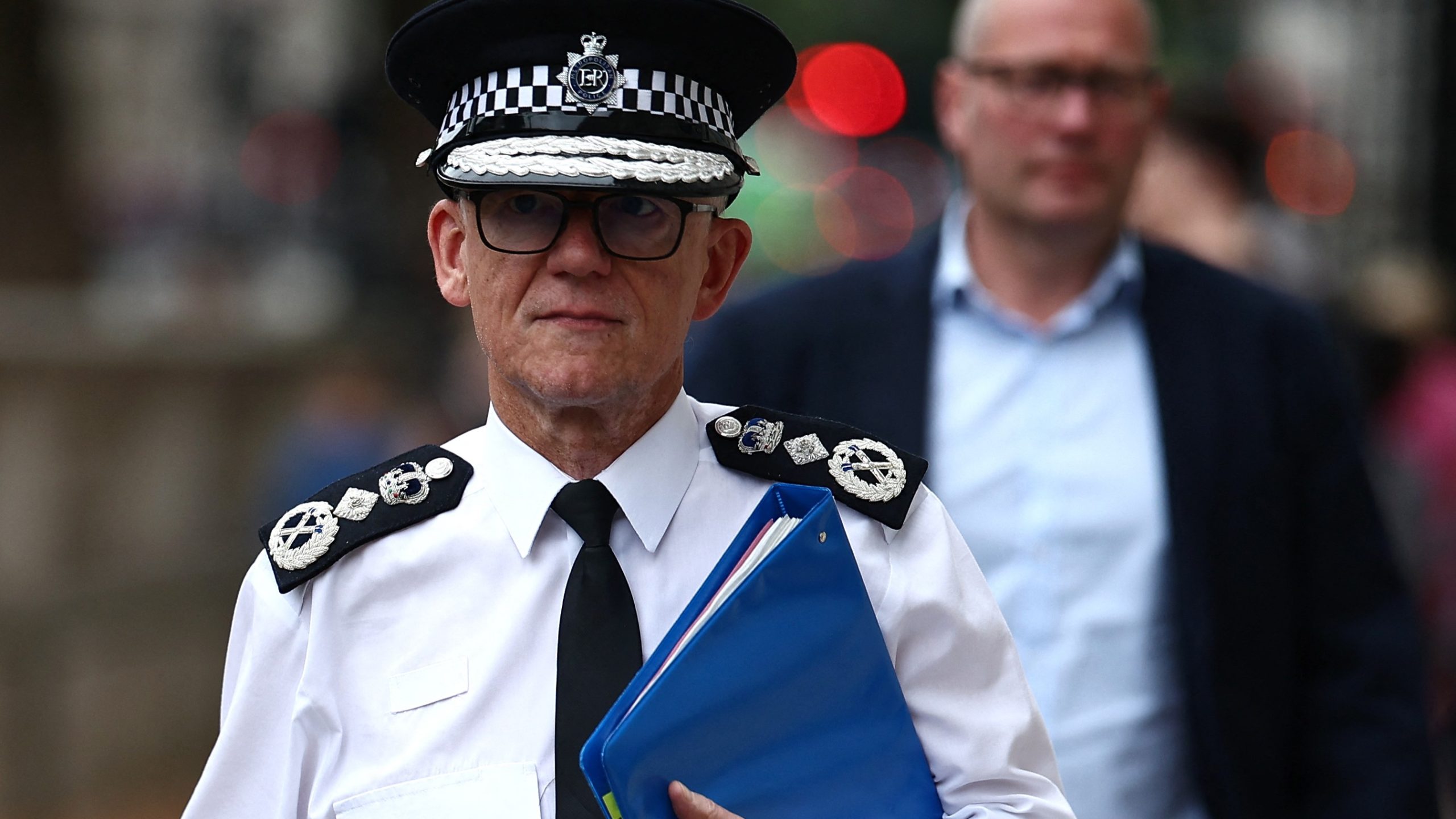
The controversy erupted after Rowley, speaking on Good Morning Britain on Friday, expressed concerns about protest organizers’ intentions. “I’m really troubled by what we have seen. Many of these marches set out with an intent to march near synagogues, and every single time we have put conditions on to prevent that,” Rowley stated. “Even that intent causes me concern that they repeatedly ask to do such things.”
His comments came amid questioning about police efforts to protect London’s Jewish community following a stabbing incident in Golders Green, a predominantly Jewish area of the city, where two people were injured.
Leaders from the Palestine solidarity movement promptly rejected these characterizations. Ryvka Bernard, deputy director of the Palestine Solidarity Campaign (PSC), called Rowley’s comments “dishonest and frankly dangerous” at a time when police should be focused on protecting vulnerable communities.
“We have repeatedly rejected any conflation of Jewish people with the horrific actions and policies of the state of Israel,” Bernard said. “None of our marches or proposed march routes has ever targeted a synagogue or even directly passed one along its route, and the Met Police knows that.”
Lindsey German, convener of the Stop the War Coalition, echoed this sentiment, stating that Rowley’s claims were “simply untrue.” She referenced a January dispute when organizers were blocked from assembling near BBC headquarters because of a synagogue located several hundred yards away, despite proposals for multiple compromises including altered timing and routes to avoid disrupting worshippers.
That incident resulted in organizers being forced to hold a static demonstration near Parliament, with some protest leaders arrested for attempting to lay wreaths for Palestinian children at the BBC headquarters.
The debate intensifies amid calls from Jonathan Hall, the UK’s independent reviewer of terrorism legislation, for a “moratorium” on pro-Palestine marches following recent antisemitic attacks in London. “It pains me to say this, but I think we may have reached a point where we need to have a moratorium on the sorts of marches that have been happening,” Hall told Times Radio.
However, prominent Jewish voices have cautioned against linking the demonstrations with isolated violent incidents. Rabbi Herschel Gluck, president of the Shomrim neighborhood patrol group in North and East London, rejected any connection between the pro-Palestine marches and Wednesday’s stabbing attack in Golders Green.
“It is certainly not the marches that caused the tragic stabbing attacks on Wednesday in Golders Green,” Gluck told Middle East Eye. He argued that banning the marches would be counterproductive, noting the significant Jewish participation in these demonstrations. “There are many Jews who participate in the marches. Pro rata, there are more Jews than any other community.”
Gluck praised ground-level police engagement with the Jewish community but suggested political pressure was influencing broader responses to the marches. He accused politicians across parties of exploiting antisemitism concerns to distract from pressing issues like economic challenges and global security concerns.
“They are just using the situation for their own ends and not really caring for the Jewish community. They are using the conflict to create more conflict,” Gluck said, calling on political leaders to acknowledge the diverse range of Jewish voices, including those critical of Israel’s actions in Gaza.
Since Israel’s military campaign in Gaza began in 2023, London has seen regular large-scale demonstrations, sometimes drawing hundreds of thousands of participants. These events have sparked ongoing debates about the balance between public order, community relations, and freedom of expression in British society.
Activists argue that Rowley’s comments risk damaging the trust between protest organizers and authorities while reinforcing misleading narratives that equate pro-Palestinian activism with antisemitism. Despite the controversy, organizers confirm the planned march for May 16 will proceed as scheduled, with continued emphasis on peaceful protest and opposition to all forms of racism.
Fact Checker
Verify the accuracy of this article using The Disinformation Commission analysis and real-time sources.

13 Comments
Protecting vulnerable communities is understandable, but the alleged mischaracterization of the protest organizers’ intentions is concerning. I hope the facts can be objectively established to build mutual understanding.
Absolutely, an evidence-based approach is vital when dealing with sensitive political issues. Transparency and open dialogue, rather than unsubstantiated claims, should guide the response.
Protecting the Jewish community during heightened tensions is understandable, but the police chief’s claims about the protest organizers’ intentions seem questionable. More clarity and evidence is needed.
Absolutely, maintaining security while respecting the right to protest peacefully is a delicate balance. Transparent investigations and dialogue could help address concerns on all sides.
It’s concerning to hear allegations of misinformation from the police chief regarding these protests. Open dialogue and transparency are crucial for addressing complex issues around the Israeli-Palestinian conflict.
I agree, factual reporting and avoiding inflammatory rhetoric is key. Both sides should aim for nuanced, good-faith discussions to find constructive solutions.
This seems like a complex situation involving competing claims and concerns. I’m curious to learn more about the specific evidence behind the allegations of misinformation from the police chief.
The accusation of misinformation against the police chief is quite serious. Maintaining public trust in law enforcement is crucial, so a thorough, impartial investigation seems warranted here.
The allegations of misinformation are troubling, as public trust in authorities is essential during protests and community tensions. I hope an impartial investigation can shed light on the facts and intentions involved.
Agreed, maintaining objectivity and avoiding inflammatory rhetoric is crucial. Constructive dialogue between all stakeholders is needed to address this delicate issue responsibly.
The allegations of misinformation are concerning, as public trust in authorities is critical during sensitive political protests. I hope an impartial review can shed light on the facts and intentions behind these events.
This seems like a complex situation with tensions on multiple fronts. I’m curious to learn more about the protest organizers’ perspectives and whether the police chief’s claims are well-substantiated.
Agreed, getting a full picture from various stakeholders is important before drawing conclusions. Constructive dialogue, not inflammatory rhetoric, is needed to address this delicate issue.