


Listen to the article
In a notable misstep that highlights the intersection of journalism ethics and immigration rhetoric, the Providence Journal has published a factually incorrect letter to the editor regarding the controversial Iryna Zarutska mural project, adding another layer of complexity to an already contentious local issue.
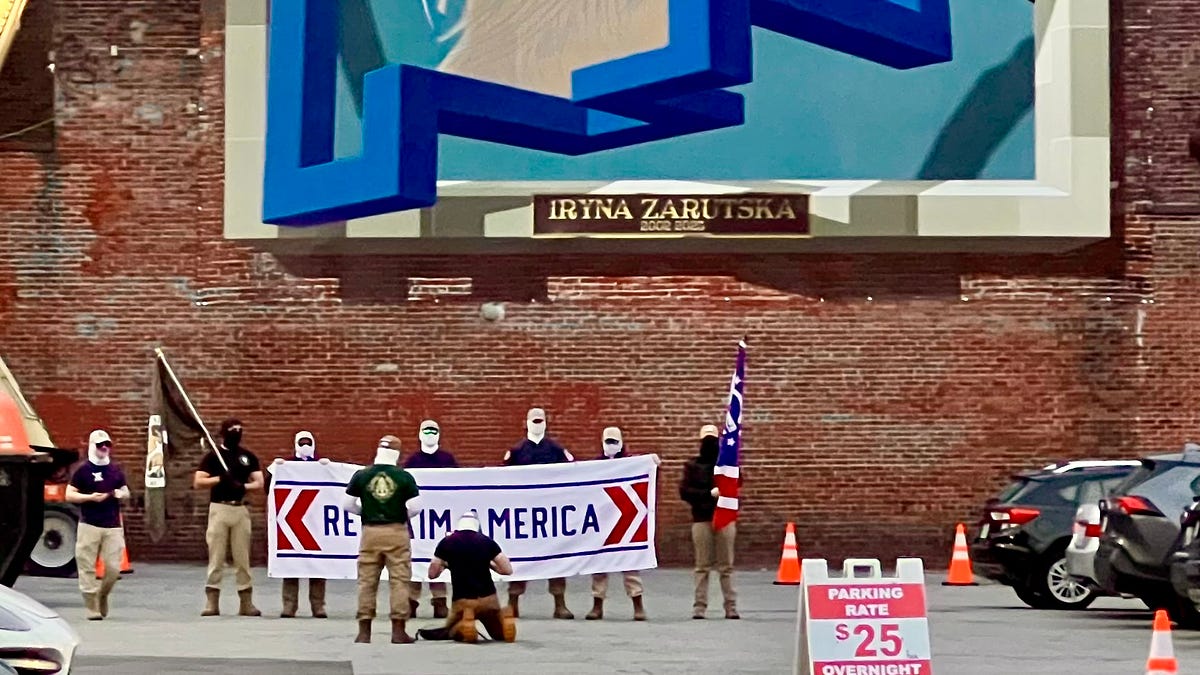
The mural controversy, which has now largely subsided, began when a downtown building owned by The Dark Lady, an LGBTQIA-friendly establishment, became the site of a planned mural depicting Zarutska. The project was eventually discontinued, with the bar owners issuing a public apology. A smaller alternative version of the mural has since been completed on the wall of Opa, a Lebanese restaurant on Atwells Avenue.
While several publications including the Boston Art Review and The Providence Eye have provided thorough coverage of the controversy, a recent development in the Providence Journal has raised fresh concerns about journalistic standards and the spread of misinformation.
On April 25, 2026, the newspaper published a letter from Charlestown resident James Mageau, who expressed outrage over the halting of the original mural. Critically, Mageau’s letter included the false claim that Elon Musk was funding murals depicting “victims attacked by undocumented immigrants.”
This assertion is demonstrably false. According to a fact-check published by the Charlotte Observer, Zarutska’s killer was born and raised in Charlotte, North Carolina – not an immigrant as implied in Mageau’s letter. The misinformation appears to mirror claims made by President Trump during his 2026 State of the Union address, where he incorrectly stated that Zarutska’s killer “came in through open borders.”
The error raises significant concerns about editorial oversight at the Providence Journal, which operates under the ownership of media conglomerate USA Today Co. (formerly Gannett). While understaffing may have contributed to the oversight, publishing such a claim without editorial correction represents a serious journalistic lapse.
The timing is particularly problematic, occurring amid what Human Rights Watch describes as an unprecedented acceleration of anti-immigrant policies under the current administration. Unfounded claims about immigrant violence can exacerbate xenophobia despite substantial evidence to the contrary.
Research from the American Immigration Council consistently shows that immigrants – including undocumented individuals – have lower rates of felony arrests than U.S.-born citizens. Studies have also linked growing immigrant populations to reductions in both violent and property crime nationwide. Additionally, sanctuary cities show no evidence of higher crime rates than non-sanctuary jurisdictions.
The Providence Journal’s decision to publish the letter uncorrected runs counter to best practices in opinion journalism. As Los Angeles Times letters editor Paul Thornton articulated in a 2013 essay on climate denial, “Simply put, I do my best to keep errors of fact off the letters page; when one does run, a correction is published.”
At minimum, media ethics would dictate adding an editorial note correcting the factual error in Mageau’s letter. The incident serves as a reminder of the media’s responsibility to prevent the spread of harmful misinformation, particularly when it targets vulnerable communities.
The Zarutska mural controversy and its aftermath highlight the complex interplay between art, politics, and media in an increasingly polarized national environment, where even local artistic expressions can become flashpoints for broader cultural and political tensions.
Fact Checker
Verify the accuracy of this article using The Disinformation Commission analysis and real-time sources.

5 Comments
Interesting development regarding the mural controversy. Fact-checking is crucial to prevent the spread of misinformation, especially on divisive local issues. The Providence Journal should be vigilant in monitoring their letters page to uphold journalistic integrity.
I agree, the media plays a vital role in providing accurate, unbiased information to the public. Fact-checking should be a top priority, especially on sensitive topics.
Public discourse can quickly become polarized, so it’s critical that news outlets like the Providence Journal uphold high standards of accuracy and impartiality. Fact-checking should be a non-negotiable practice, especially when it comes to contentious local issues.
The mural project seems to have stirred up quite a debate in the community. It’s important that the media reports the facts objectively, without fueling further controversy through the publication of misinformation. Kudos to Phil Eil for bringing this issue to light.
Absolutely. Maintaining journalistic integrity is essential, even when covering local stories that may be politically or socially charged. The Providence Journal should take this as a learning opportunity.