


Listen to the article
Misinformation Floods Social Media Following Japan Earthquake
False information about Japan’s recent 7.7-magnitude earthquake has proliferated across social media platforms, prompting Communications Minister Yoshimasa Hayashi to issue a public warning against the spread of earthquake-related misinformation.
“I hope everyone will confirm information about natural disasters with what is provided by the central and local governments and media organizations,” Hayashi stated, highlighting growing concerns about the reliability of disaster information circulating online.
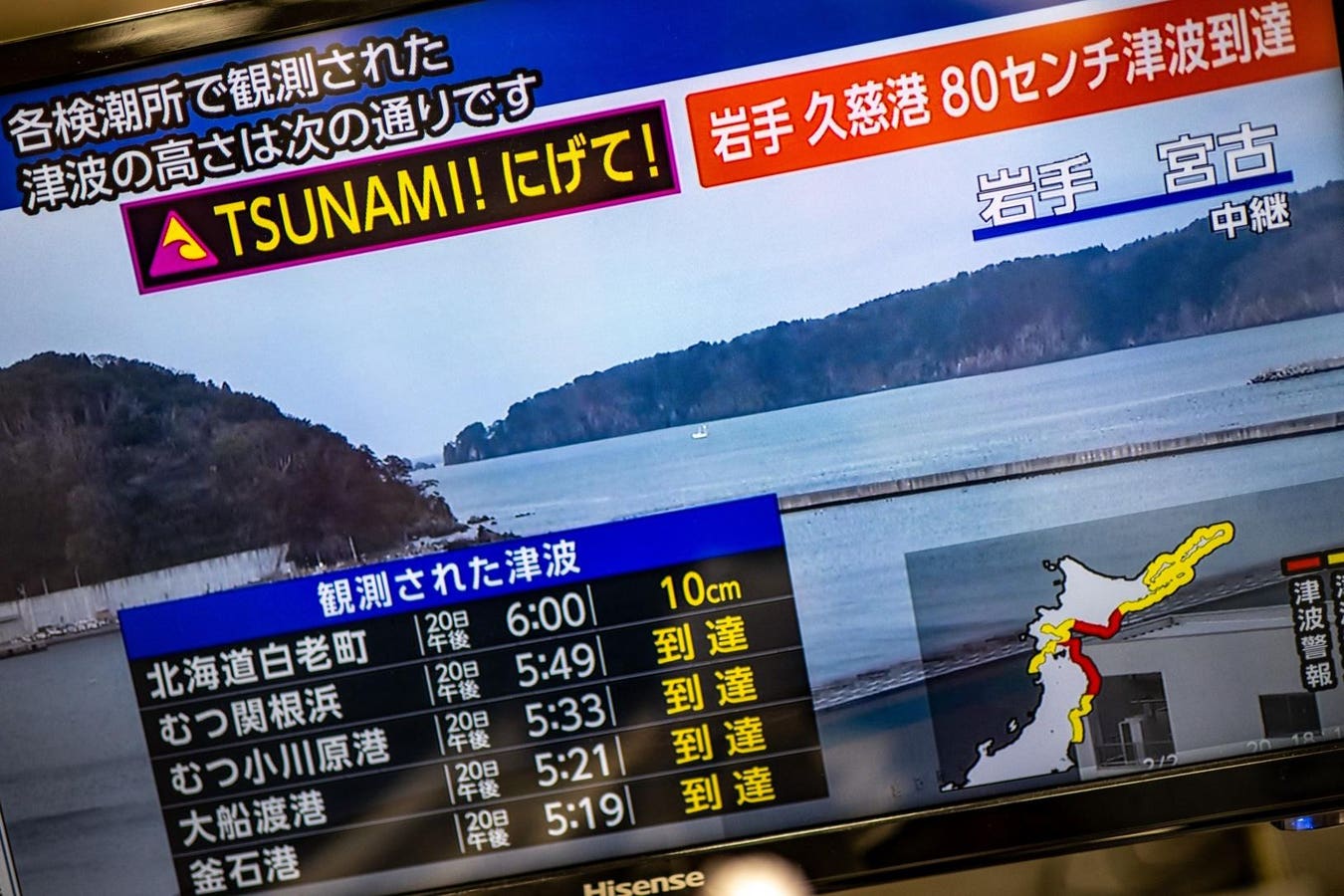
The powerful earthquake struck off the coast of Japan’s Tohoku region on April 20, with tremors felt as far as Tokyo, approximately 330 miles south of the epicenter. The seismic event triggered tsunami warnings that were later downgraded after waves reached only about two-and-a-half feet in height.
In the aftermath, social media and video platforms became flooded with misleading content. Numerous YouTube videos purported to show footage from the April 20 earthquake but actually contained scenes from previous, more destructive seismic events, including the New Year’s Day 2024 Noto Peninsula earthquake and the catastrophic 2011 Great East Japan Earthquake that caused widespread devastation.
One YouTube video description dramatically claimed: “Civilians screamed in videos posted to social media after entire homes were flattened during a 7.5 magnitude earthquake in Japan.” Many of these posts featured either recycled footage from past disasters or appeared to be entirely AI-generated content designed to garner views and engagement.
Digital forensic analysts noted that many of these misleading posts originated outside Japan, particularly from content creators in South Asia, China, and various European countries. These creators often employed automatic translation tools to convert their content into Japanese, giving their posts an appearance of local authenticity despite their foreign origin.
Perhaps most concerning among the misinformation narratives was a conspiracy theory claiming the earthquake had been artificially triggered. According to Jiji Press, over 6,000 social media posts promoted this baseless theory, with one post alone garnering more than 50,000 views.
Many conspiracy theorists specifically targeted the Chikyu deep-sea drilling vessel operated by the Japan Agency for Marine-Earth Science and Technology (JAMSTEC), falsely asserting that its activities had somehow triggered the seismic event. This accusation forced JAMSTEC to release an official statement categorically denying any connection between their research activities and the earthquake.
“Drilling by a research vessel does not affect the movement of the entire earth,” the agency clarified, addressing the scientifically impossible claim that their operations could trigger tectonic plate movements of such magnitude.
This incident marks just the latest chapter in Japan’s ongoing battle with earthquake-related misinformation. Following the Noto earthquake earlier in 2024, similar conspiracy theories circulated widely, with one post on X (formerly Twitter) referring to Japanese people as “sheep who see this as a coincidence” for not believing in artificially created earthquakes.
Some posts combined multiple conspiracy theories, with one stating: “No wonder they do as they please with cancer drugs, antihypertensives, vaccines, artificial earthquakes, chemtrails (though I’m somewhat skeptical). They treat us like foolish experimental yellow monkeys.”
Academic research has documented this phenomenon. Two years ago, researchers analyzed the spread of earthquake conspiracy theories and found that while these narratives predictably spike during periods of seismic activity, “conspiracy theorists remained relatively active in propagating their theories even during quiet periods without earthquakes.”
Japan’s vulnerability to seismic events makes accurate information particularly crucial during emergencies. The country sits on the Pacific “Ring of Fire,” experiencing approximately 1,500 earthquakes annually. The spread of misinformation during natural disasters has become a significant public safety concern, potentially interfering with emergency response efforts and causing unnecessary panic.
Social media platforms continue to grapple with the challenge of rapidly identifying and limiting the spread of disaster-related misinformation, especially when AI-generated content can now be produced and distributed at unprecedented speed and scale.
Fact Checker
Verify the accuracy of this article using The Disinformation Commission analysis and real-time sources.

12 Comments
This is a stark reminder of the real-world consequences that misinformation can have, especially around critical events like natural disasters. We must all be more vigilant about verifying information before sharing it online.
Well said. Fact-checking and relying on official sources is the best way to ensure we have accurate, reliable information during crises.
The proliferation of false earthquake footage on social media is really troubling. It’s crucial that the public heeds the government’s warning and turns to authoritative sources for updates and safety information.
Absolutely. Spreading unverified content, even if unintentional, can have serious consequences and undermine public safety efforts.
Misinformation during disasters is so concerning. It’s critical we rely on official sources and reputable media for accurate, up-to-date information. The spread of false earthquake footage is especially troubling and can cause unnecessary panic.
Agreed. Verifying information from trusted government and news channels is the best way to stay informed during emergencies.
This highlights the importance of media literacy and being cautious about online content, especially during crises. We should all do our part to combat the spread of misinformation by checking sources and correcting false claims when we see them.
Absolutely. Staying vigilant and encouraging others to rely on authoritative sources is crucial to prevent the amplification of misinformation.
It’s disappointing to see social media platforms being used to spread false information about natural disasters. The authorities are right to warn the public against these kinds of misleading videos and posts.
I agree. Social media companies need to do more to proactively identify and remove this type of harmful content, especially during emergencies.
This is a concerning trend that highlights the need for better media literacy education. People need to be more discerning about the information they encounter online, especially during emergencies.
You’re right. Equipping the public with the skills to identify and counter misinformation should be a top priority for policymakers and tech companies.