


Listen to the article
Problem: Misinformation and stigma prevent uptake of HPV vaccines and screening. Solution: A comic book
In a novel approach to public health education, researchers are turning to comic books to combat the persistent problem of HPV vaccine hesitancy and screening avoidance that continues to hamper cancer prevention efforts worldwide.
Human papillomavirus (HPV) remains one of the most common sexually transmitted infections globally, with certain high-risk strains known to cause several types of cancer, including cervical, anal, and oropharyngeal cancers. Despite the availability of effective vaccines and screening methods, uptake rates continue to fall below public health targets in many regions, largely due to misinformation, cultural taboos, and stigma surrounding sexually transmitted infections.
Dr. Rima Rudd, a health literacy expert at Harvard T.H. Chan School of Public Health who was not involved in the comic book project, explains: “Health information is often presented in ways that are difficult for the average person to understand. When we’re dealing with sensitive topics like HPV, which involves sexual health, the communication barriers become even more significant.”
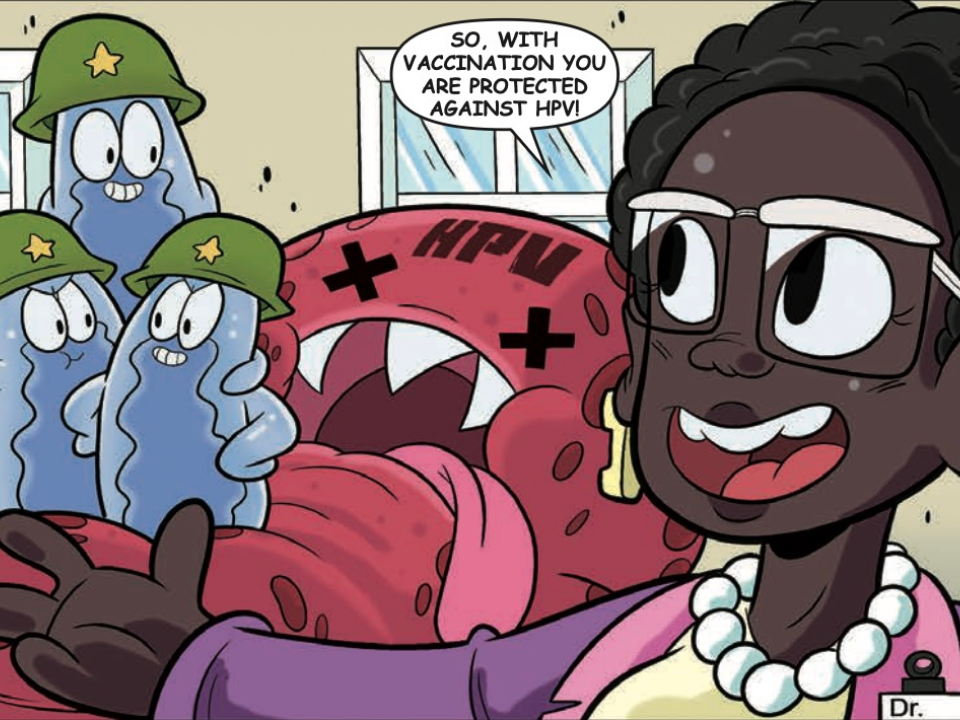
The comic book initiative, developed by a multidisciplinary team of oncologists, public health specialists, and graphic artists, aims to present factual information about HPV prevention in an accessible, non-threatening format. Titled “Protection: Understanding HPV,” the illustrated narrative follows several characters navigating decisions about vaccination and screening while addressing common myths and misconceptions.
“Visual storytelling has a unique power to connect with people across different educational backgrounds and literacy levels,” says Dr. Maria Gonzalez, lead researcher on the project. “Our preliminary research shows that information retention is significantly higher when health concepts are presented through relatable characters and storylines rather than traditional pamphlets or clinical discussions.”
The comic specifically addresses several persistent myths that have hindered vaccine acceptance, including unfounded concerns about vaccine safety, misconceptions about who should receive the vaccine, and the stigma associated with a virus transmitted through sexual contact.
In regions where HPV vaccination rates remain stubbornly low, the economic and health implications are substantial. The World Health Organization estimates that HPV causes approximately 630,000 new cancer cases worldwide each year, with cervical cancer alone claiming over 340,000 lives annually—most in lower and middle-income countries where screening programs are limited.
Market analysts note that vaccine hesitancy represents a significant challenge for pharmaceutical companies like Merck and GlaxoSmithKline, manufacturers of the widely used HPV vaccines Gardasil and Cervarix. Despite proven safety records and effectiveness, these companies continue to face challenges in certain markets where misinformation has gained traction.
The comic book approach represents part of a broader shift in public health communication, moving away from purely clinical presentations of information toward more engaging, culturally sensitive approaches. Initial pilot testing in several communities shows promising results, with participants demonstrating improved understanding of HPV risks and prevention strategies after reading the materials.
“What makes this approach particularly effective is that it doesn’t just present facts—it contextualizes the information within stories that address the emotional and social aspects of healthcare decisions,” says behavioral scientist Dr. James Wilson. “We know that people don’t make health decisions based solely on facts, but also on social norms, values, and emotions.”
Public health departments in several states are now considering incorporating the comic into school-based education programs and community health initiatives. The materials have been translated into multiple languages and adapted to reflect diverse cultural contexts.
Healthcare providers have responded positively to the initiative, with many reporting that the comic provides a valuable starting point for what can otherwise be difficult conversations with patients and parents.
“I’ve had these materials in my waiting room for three months, and I’ve noticed more patients initiating conversations about the HPV vaccine,” reports Dr. Sarah Chen, a family physician in Atlanta. “It removes some of the awkwardness from the discussion.”
As vaccination rates for other preventable diseases have faced challenges in recent years, public health experts are closely watching innovative communication strategies like this comic book approach, seeking scalable solutions that can be adapted for other health topics facing similar barriers of misinformation and stigma.
Fact Checker
Verify the accuracy of this article using The Disinformation Commission analysis and real-time sources.

8 Comments
Addressing the communication barriers around HPV is crucial. I’m curious to see how the comic book design and content will be crafted to resonate with diverse audiences and overcome cultural taboos. Innovative public health education is needed on this issue.
Innovative approach, but the real challenge will be ensuring the comic book content is scientifically accurate yet still accessible and relatable. Getting the right balance between education and entertainment will be key to driving lasting behavior change.
Absolutely, the execution will be critical. They’ll need to work closely with health experts and community members to develop materials that truly address local knowledge gaps and cultural sensitivities around HPV.
Interesting approach to improve HPV vaccine and screening uptake. Combating misinformation with engaging, easy-to-understand educational materials like comics could be an effective strategy. I wonder how they’ll tailor the content to address cultural stigmas and barriers.
Using comic books to fight HPV misinformation is a creative idea. I hope this initiative can make a real impact, as low vaccination and screening rates continue to be a serious public health problem. Curious to learn more about the specific content and distribution plans.
This is an important issue – HPV is a leading cause of preventable cancers, yet vaccination and screening rates remain low. A comic book format could help make the sensitive topic more accessible and relatable. I hope this novel solution sees good results.
Agreed, the comic book idea seems like a creative way to tackle the stigma and misinformation around HPV. Presenting health information in an engaging, visual format could really help improve understanding and acceptance.
Leveraging comic books to boost HPV vaccine and screening uptake is an intriguing concept. Tailoring the educational content and format to resonate with diverse audiences will be crucial. I’m interested to see if this novel approach can move the needle on this important issue.