


Listen to the article
Dairy Industry Leaders Call for Strategic Communication to Combat Misinformation
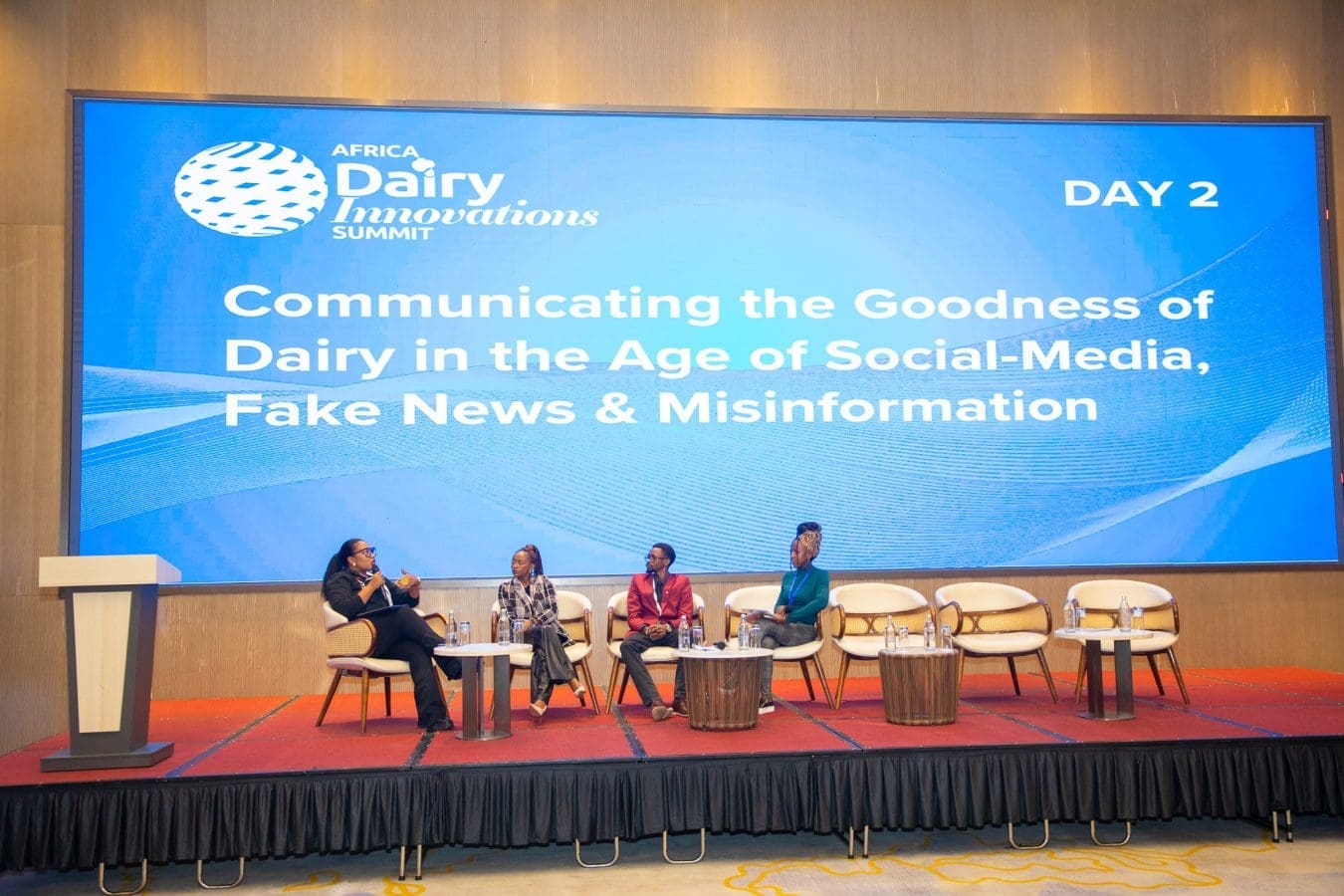
Industry experts at the recent Africa Dairy Innovations Summit (AFDIS) urged dairy producers to adopt more effective communication strategies to counter growing misinformation in the digital age. During a panel focused on communicating dairy’s benefits amid social media challenges, speakers highlighted the need for transparency and modern messaging tactics to reconnect with younger consumers.
The discussion, featuring marketing managers Milan Kabata from Glacier Products, Waithera Ng’ang’a from Bio Foods, and Victor Thumbi from Kinangop Dairy, examined how misconceptions about dairy products have influenced consumer behavior across African markets.
Kabata pointed to a significant perception problem among younger demographics, noting that many view dairy as an outdated, unexciting food category limited to “a glass of milk at breakfast.” This image problem has contributed to declining interest in dairy products among Generation Z and millennial consumers.
More concerning, according to Ng’ang’a, is the growing belief that dairy products are no longer necessary in modern diets. This misconception has gained traction alongside the rise of plant-based alternatives, which often market themselves as superior options despite lacking dairy’s complete nutritional profile.
“The industry is facing a serious communication crisis,” Ng’ang’a explained. “Regulators are doing much to enforce quality standards, but processors aren’t effectively communicating their achievements and the inherent value of dairy products to consumers.”
The panel identified several areas where misinformation has damaged consumer confidence. Many consumers self-diagnose lactose intolerance without proper understanding, often attributing reactions to contaminated milk rather than genuine intolerance. Additionally, the perception that plant-based alternatives are universally healthier than dairy products has spread widely across social media platforms.
Thumbi emphasized the viral nature of dairy misinformation, noting that “within 24 hours, a false claim can significantly damage consumer trust, and recovering from such damage is costly.” This rapid spread of unverified information presents a major challenge for dairy producers across Africa, who often lack the digital response infrastructure of larger global brands.
The discussion highlighted how dairy’s communication strategies have failed to evolve with changing media consumption patterns. Traditional marketing approaches that worked for previous generations have proven ineffective with digitally-native consumers who respond to visually engaging, authentic content.
Panelists advocated for highlighting dairy’s versatility through innovative products that appeal to health-conscious consumers. Thumbi specifically pointed to fruit yogurts and lactose-free options as examples of how the industry is adapting to changing consumer preferences while maintaining dairy’s nutritional benefits.
The experts agreed that self-regulation within the industry has maintained product quality, but these efforts remain largely invisible to consumers. Without effective communication about these standards, consumers remain vulnerable to misinformation from less credible sources.
The summit discussion reflects broader challenges facing Africa’s dairy sector, which has seen significant growth but struggles with consumer education and perception management. The continent’s dairy market is projected to expand substantially in coming years, making effective communication increasingly critical for sustaining this growth.
Industry observers note that these challenges mirror global trends, where traditional food categories face mounting pressure from alternative products backed by sophisticated digital marketing campaigns. For Africa’s dairy sector to thrive, producers must embrace more transparent communication while highlighting dairy’s nutritional advantages and cultural significance.
The panel concluded that rebuilding trust will require collaborative efforts across the industry, including partnerships with credible health professionals, nutritionists, and digital influencers who can effectively communicate dairy’s benefits to skeptical consumers.
Fact Checker
Verify the accuracy of this article using The Disinformation Commission analysis and real-time sources.

24 Comments
The dairy industry’s push for better communication is a smart move. In an era of rampant misinformation, building trust through transparency is crucial. I hope they can find effective ways to showcase dairy’s nutritional value and debunk common myths, especially among younger consumers.
Agreed. Leveraging digital platforms, influencer partnerships, and fact-based educational campaigns could be powerful tools in their arsenal.
The dairy industry’s efforts to combat misinformation and reconnect with younger consumers are much needed. Transparency and strategic messaging will be key to rebuilding trust and relevance in the digital age.
Interesting to hear about the dairy industry’s efforts to combat misinformation and reconnect with younger consumers. Transparency and modern messaging will be key to rebuilding trust and relevance in the digital age.
The dairy industry’s communication challenges highlight the importance of proactive, fact-based messaging to combat misinformation and stay relevant in the eyes of younger consumers.
The dairy industry’s push for better communication and transparency is a step in the right direction. In an age of rampant misinformation, rebuilding consumer trust is essential. I’m curious to see what innovative strategies they develop to position dairy as a relevant, essential part of modern, healthy diets.
Tackling the perception problem among younger demographics is critical for the dairy industry. Effective communication strategies that showcase dairy’s ongoing value in modern diets could help turn the tide.
Agreed. The industry needs to get creative with its messaging to appeal to Gen Z and millennials and dispel the notion that dairy is outdated or unnecessary.
This is a timely issue for the dairy industry. With plant-based alternatives on the rise, they’ll need to work hard to maintain relevance and consumer trust. Fact-based messaging and innovative marketing tactics could be crucial to dispelling misconceptions and keeping dairy top-of-mind.
Absolutely. The industry’s efforts to enhance transparency and modernize its communication strategies are a smart move in the face of growing misinformation. It will be interesting to see what specific tactics they employ to reconnect with younger consumers.
Dairy producers face a challenging social media landscape, but transparency and strategic communication could be powerful tools to combat misinformation and rebuild trust with consumers.
Interesting to see the dairy industry grappling with the challenges of the digital age. Transparency and strategic communication will be essential to countering misinformation and rebuilding consumer trust.
The dairy industry faces an uphill battle against misconceptions, especially among Gen Z and millennials who view dairy as outdated. Effective communication strategies focused on dairy’s benefits could help change this perception.
Agreed. The industry needs to get creative with its messaging to appeal to younger demographics and highlight dairy’s continued importance in modern diets.
It’s concerning to hear about the declining interest in dairy products, especially among younger demographics. The industry will need to get creative to reposition dairy as an essential, versatile part of a healthy, modern diet. Transparency and strategic communication could be key to combating misinformation.
The perception issue around dairy being an old-fashioned breakfast item is concerning. With plant-based alternatives gaining popularity, the industry will have to work hard to reframe dairy as a versatile, essential part of modern, healthy diets. Clear, fact-based messaging will be key.
Absolutely. Dispelling myths and misconceptions with transparency and educational campaigns could go a long way in restoring consumer trust and interest in dairy products.
Interesting to see the dairy industry grappling with negative perceptions and misconceptions. Proactive communication to highlight dairy’s benefits could be an effective way to counter these issues.
This highlights the challenges facing traditional industries as consumer preferences and information-sharing evolve. The dairy industry’s efforts to combat misinformation and reengage younger demographics are admirable. I’m curious to see what innovative strategies they develop to stay relevant in the digital age.
This article highlights the dairy industry’s struggle to stay relevant amid changing consumer attitudes. Innovative marketing tactics will be crucial to connect with younger generations and emphasize dairy’s continuing importance.
The growing belief that dairy is no longer necessary is concerning. The industry must work proactively to counter these misconceptions and reinforce dairy’s nutritional value through transparent, fact-based communication.
Dairy producers face an uphill battle against negative perceptions, but innovative marketing tactics focused on transparency and dairy’s benefits could help turn the tide.
Interesting to see the dairy industry grappling with misinformation and consumer perceptions. Transparency and modern messaging seem crucial to building trust with younger demographics who may view dairy as outdated. I wonder what innovative marketing tactics could help reposition dairy as a relevant, exciting food category.
Agreed, the industry needs to be proactive in countering misconceptions. Leveraging digital channels and influencers could be an effective way to connect with younger consumers and showcase dairy’s benefits in a fresh, compelling way.