


Listen to the article
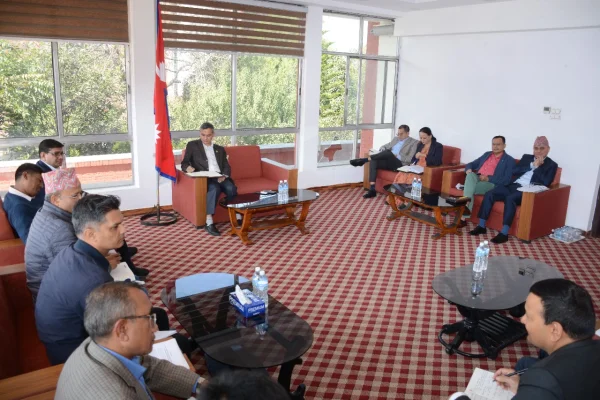
Nepal’s government has launched a coordinated effort to combat the rising tide of digital misinformation while balancing regulatory needs with constitutional freedoms. Home Minister Om Prakash Aryal led a high-level meeting on Friday with representatives from key agencies to develop strategies for tackling false information spreading across online platforms.
The ministerial dialogue brought together officials from various government departments, telecommunications authorities, the Press Council Nepal, and the Cyber Bureau of Nepal Police. Their collective mission was to identify regulatory approaches that could effectively address digital misinformation without infringing on press freedom or citizens’ right to information.
“We need a balanced approach that protects constitutional freedoms while enabling state institutions to curb the misuse of digital spaces,” Minister Aryal emphasized during the meeting held at the Ministry of Home Affairs.
The gathering included several prominent officials: Home Secretary Rameshwar Dangal; Radhika Aryal, Secretary of the Ministry of Communication and Information Technology; Bhupendra Bhandari, Chairman of the Nepal Telecommunications Authority; Anand Kafle, Joint Secretary at the Home Ministry; Jhavindra Bhusal, Chief Administrative Officer of Press Council Nepal; Deputy Inspector General Navinda Aryal from the Cyber Bureau; and representatives from Nepal Telecom.
According to Home Ministry Spokesperson Anand Kafle, participants reached a consensus to develop and implement a comprehensive action plan targeting misleading and deceptive content. The officials expressed particular concern about the accelerating spread of false information through social media platforms, which they noted poses significant risks to individual reputations, institutional credibility, social harmony, and potentially national security.
This initiative comes at a critical time as Nepal, like many countries worldwide, grapples with the complex challenges posed by digital misinformation. The rapid expansion of internet access and social media usage across the nation has created fertile ground for misleading content to spread quickly and widely, often with limited accountability.
The government’s approach appears two-pronged. While regulatory mechanisms will form one aspect of the strategy, officials also emphasized the importance of public education. The meeting highlighted plans for a nationwide digital literacy campaign designed to equip citizens with the critical thinking skills needed to identify and resist misleading information.
“Government regulation alone isn’t sufficient,” one participant noted. “Building a responsible and informed citizenry is equally crucial to preventing the proliferation of misinformation.”
This initiative represents Nepal’s latest effort to navigate the complex balance between digital regulation and freedom of expression. In recent years, the country has faced criticism from press freedom advocates over previous attempts to increase media surveillance. Earlier regulatory proposals have sometimes been withdrawn following stakeholder protests over concerns about potential overreach.
The current effort appears aimed at finding a middle path that acknowledges both the legitimate need to address harmful misinformation and the importance of maintaining Nepal’s constitutional guarantees of free expression and press freedom.
As digital platforms continue to reshape how information flows through Nepalese society, the effectiveness of this collaborative approach between government agencies will likely determine whether Nepal can successfully combat misinformation while preserving its democratic values.
The timeline for implementing the proposed action plan has not yet been specified, but officials indicated that developing comprehensive digital literacy programs would be a priority alongside any new regulatory measures.
Fact Checker
Verify the accuracy of this article using The Disinformation Commission analysis and real-time sources.

14 Comments
Combating digital misinformation is a complex issue that requires a comprehensive and balanced approach. Nepal’s initiative to bring together various government agencies and authorities is a constructive step in the right direction.
I agree. Tackling misinformation without infringing on constitutional freedoms is a delicate balance. Nepal’s efforts to engage diverse stakeholders in this process are encouraging and could provide valuable insights for other countries facing similar challenges.
Regulating misinformation is a delicate task that requires nuance and careful consideration of constitutional rights. Nepal’s efforts to engage a range of stakeholders in this process are commendable and could set an example for other countries.
Absolutely. Balancing the need to address the harms of misinformation with the preservation of free speech is a critical challenge. Nepal’s inclusive approach is a positive step towards finding workable solutions.
Regulating online content is a tricky proposition, with the potential to infringe on free speech if not done carefully. Nepal’s focus on developing a ‘balanced approach’ is commendable and will be closely watched.
Absolutely. Striking the right balance between curbing misinformation and protecting constitutional freedoms is a significant challenge. Nepal’s efforts to engage diverse stakeholders are a positive step forward.
Tackling misinformation while preserving constitutional freedoms is a delicate balance. Nepal’s approach of bringing together different government agencies and authorities is a thoughtful step in the right direction.
Agreed. It’s encouraging to see Nepal taking a proactive and inclusive approach to addressing this complex issue. I hope their efforts lead to effective and well-rounded solutions.
Digital misinformation is a growing global concern. Nepal’s efforts to develop a coordinated response, involving various stakeholders, could provide valuable insights for other countries facing similar challenges.
Absolutely. This is an issue that requires a collaborative approach across government, industry, and civil society. I’m curious to see the specific strategies and policies Nepal comes up with.
Misinformation in the digital age is a global problem that requires innovative solutions. Nepal’s initiative to address this issue through a collaborative process involving various government entities is a constructive approach.
I agree. Developing effective policies to combat online falsehoods without infringing on free speech is a complex undertaking. Nepal’s inclusive approach seems like a prudent way to tackle this challenge.
Regulating online misinformation is a complex challenge, requiring a delicate balance between protecting free speech and ensuring public safety. It will be interesting to see the regulatory approaches Nepal develops to address this issue.
Agreed, finding the right balance is crucial. Overly restrictive measures could infringe on legitimate discourse, while inadequate action allows harmful falsehoods to spread.