


Listen to the article
Understanding Explosions: How Weapons Work and Spread Misinformation
Misinformation about explosives has surged alongside the military campaign against Iran that began in February. Social media platforms have been flooded with videos misidentifying munitions and falsely attributing explosive effects to “mystery” or illegal weapons.
“The video does not show a nuclear explosion—something that I am astonished even needs to be clarified,” says Dr. NR Jenzen-Jones, Director of Armament Research Services, a weapons intelligence consultancy.
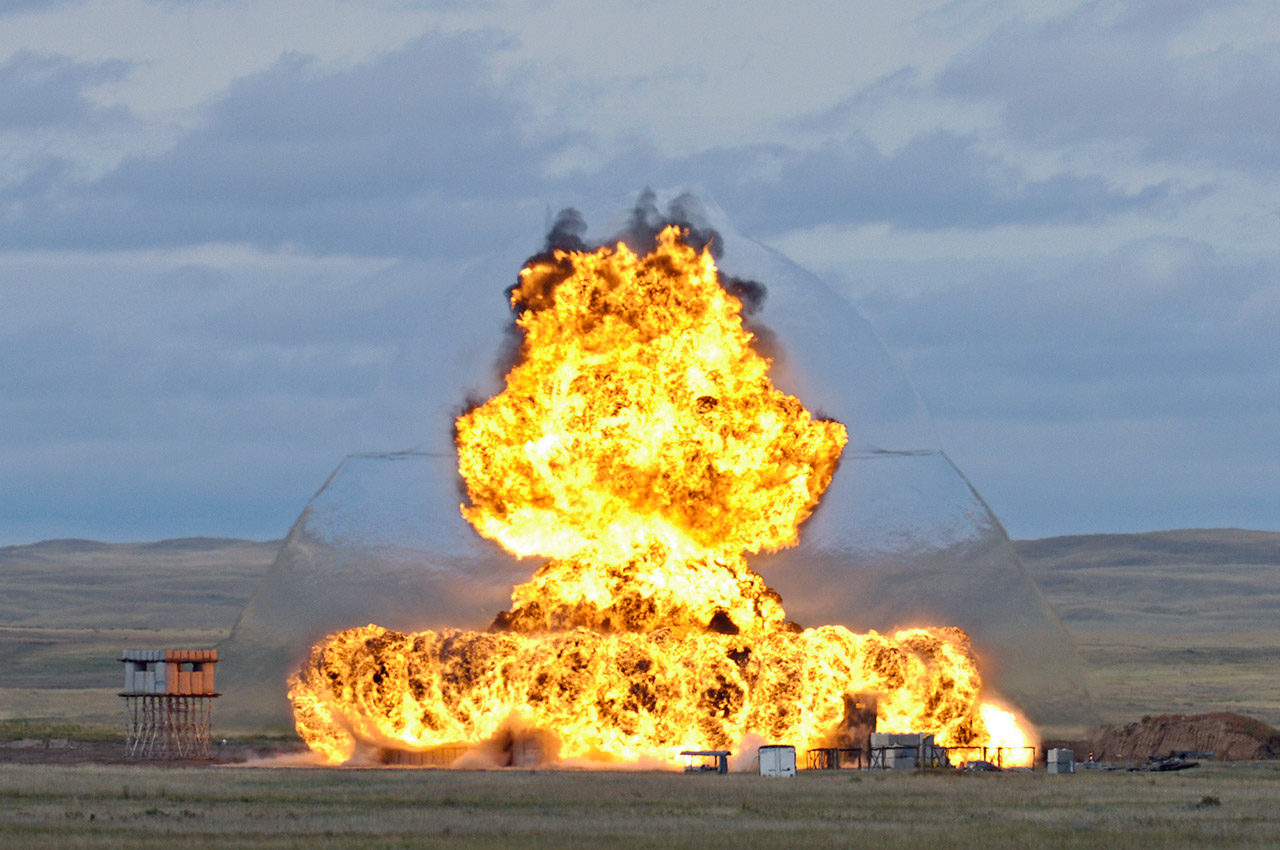
Mushroom clouds, often associated with nuclear weapons, can form during any large explosion when hot gases rise rapidly and meet resistance from denser, colder air. This natural phenomenon has repeatedly been misinterpreted as evidence of nuclear or exotic weapons.
“Certain types of explosive munitions, such as those working on the fuel-air explosive and thermobaric principles, are particularly poorly understood by non-specialists. As a result, these and other types of munitions are routinely misidentified,” Jenzen-Jones explains.
Joe Dyke, director of programmes at Airwars, notes that while some misinterpretations stem from genuine lack of knowledge, others represent deliberate disinformation. Posts often share “scientific sounding” analysis to shift responsibility for strikes or exaggerate their effects.
What Are Explosives?
Explosives are energetic materials that release energy rapidly, creating pressure waves that can kill or injure people and damage infrastructure. High explosives, typically used in warheads and shells, detonate at supersonic speeds, unlike low explosives used in rocket propellants.
During detonation, temperatures can exceed 3,000°C, though only briefly and close to the reaction zone. The resulting shockwave—visible as a wave or bubble in high-speed videos—impacts people and objects before the explosion’s sound is heard.
This shockwave creates a positive pressure phase pushing air away from the blast, followed by a negative phase when air rushes back in, creating a suction effect. Scientists have used shockwave arrival times to estimate explosive weights of blasts, including the 2020 Beirut explosion.
Manufacturers often add reactive materials like aluminum powder to explosives to improve performance. These metals react with gaseous detonation products, increasing energy output. Sometimes this burning aluminum can be seen outside the explosion’s fireball.
Contrary to popular belief, a fireball’s size doesn’t necessarily indicate a blast’s power. Hollywood often creates spectacular fireballs using gasoline with minimal explosives, creating visual impact with limited pressure effects.
Thermobaric Explosives
Social media posts have claimed that thermobaric explosives “literally suck the air out of children’s lungs and cause them to internally explode.” Dr. Rachel Lance, a biomedical engineer specializing in explosion trauma, refutes this: “There is no evidence that thermobarics pull the air out of the lungs.”
Similarly, claims about thermobaric weapons incinerating people are misleading. According to Armament Research Services, these explosions “are of the same nature as those expected from a conventional high explosive,” though their effects typically last longer.
Thermobaric explosives add significant fuel or reactive metals to the explosive composition. Some fuel burns after detonation, making these munitions effective against cave or bunker systems as pressure waves travel farther throughout structures.
Many countries, including the US, Russia, China, Ukraine, Iran, and Turkey, use enhanced blast and thermobaric explosives. Russia has deployed them in Ukraine and Syria, and Israel uses munitions with variants featuring thermobaric warheads, though their use hasn’t been confirmed.
Fuel-air explosives function similarly but differently. Both are volumetric weapons, but fuel-air explosives first disperse a fuel cloud before ignition causes the explosion.
Dense Inert Metal Explosives (DIME)
Claims about DIME munitions have circulated since 2006, when they were first alleged to have been used in Gaza. Similar allegations resurfaced after October 7, 2023.
DIME munitions are designed to reduce civilian harm by adding non-reactive metals like tungsten to explosives. This reduces the blast’s affected area while increasing its power. These munitions often use carbon fiber casings instead of steel to minimize fragmentation.
Some sources describe DIME as multiphase blast explosives, a term also covering certain explosives with reactive metals. Testing photos show mannequins near blasts coated in tungsten powder.
The US Air Force has received at least 500 DIME-filled GBU-39A/B bombs and has used at least 23 in combat. However, no transfers of these bombs from the US to other countries, including Israel, have been reported, and analysis of GBU-39 strikes in Gaza between October 2023 and January 2026 found no evidence of this variant’s use.
Currently, there’s no conclusive evidence that any military besides the US has used DIME in combat.
Clues From Explosion Characteristics
Clouds and smoke colors can provide valuable insights about explosives. The “condensation cloud” or “Wilson cloud” visible in some explosions occurs when shockwaves interact with humid air—the same effect seen in videos of the 2020 Beirut explosion.
Smoke colors also reveal information about the explosion’s chemistry. Yellow, orange, and red tones indicate specific chemicals, while black smoke suggests inefficient combustion typical of improvised explosives. White or light gray smoke points to efficient detonation from high-grade materials.
Geolocation is crucial for accurate analysis. Large explosions can result from smaller bombs hitting ammunition storage sites, creating secondary explosions that might be misinterpreted as larger weapons.
Effects on People
Misinformation about blast effects has led to both dismissal of genuine harm and proliferation of false claims about mystery weapons.
In February 2026, claims emerged about thermobaric weapons “vaporizing” people, followed by counterclaims that explosives can’t “disintegrate” people. According to multiple studies, even less powerful explosives can cause disintegration, especially in enclosed spaces where shock waves reflect and amplify.
Blast injuries fall into four categories:
-
Primary effects from the pressure wave itself, which “puts tremendous strains on human tissue, causing them to rip and tear, both internally and externally,” says Brian Castner, a weapons investigator for Amnesty International. This can cause symptoms including vertigo, vomiting blood, and bleeding from the ears.
-
Secondary effects come from metal fragments, which can injure or kill people hundreds of meters from a blast. Those close to explosions may experience “total body disruption,” as described in forensic medicine.
-
Tertiary effects occur when people are thrown by the blast wind.
-
Quaternary effects include burns and other injuries.
“Combined, these blast and fragmentary effects can do horrific damage to the human body, and if a person is close enough to a large munitions detonation, leave little trace they ever existed,” Castner explains.
A recent investigation into US-made munitions used in Gaza found evidence of total body disruption at several strike sites, with videos showing small fragments of human remains.
Legal Status of These Weapons
Misinformation often raises questions about legality, falsely claiming certain weapons are inherently illegal or misrepresenting their function.
Thermobaric and DIME weapons are legal if used in compliance with international humanitarian law and the law of armed conflict, particularly principles of proportionality and discrimination.
“Even lawful weapons can be used in an unlawful manner,” explains Michael Meier, former Senior Advisor to the Army Judge Advocate General for Law of War. This occurs when weapons are directed at civilians or used in ways that breach principles of distinction or proportionality.
Dr. Arthur van Coller, Professor of International Humanitarian Law at STADIO Higher Education, adds: “The law’s ability to prevent harm is constrained by compromises between military necessity and humanity made in its creation. As a result, weapons that cause immense destruction may remain lawful if they fit within legal definitions, even when their humanitarian impact is severe.”
Fact Checker
Verify the accuracy of this article using The Disinformation Commission analysis and real-time sources.

7 Comments
Explosions are complex physical events, and it’s easy for non-experts to misinterpret their visual characteristics. I’m glad the article provides clear explanations on how factors like heat, air density, and munition type can influence the resulting blast patterns.
Agreed. Understanding the underlying physics is key to avoiding sensationalism and panic around explosion videos. Nuanced analysis from experts like Jenzen-Jones helps the public make sense of these phenomena.
The article does a great job of debunking common misconceptions around explosive events. Mushroom clouds and sonic phenomena can occur in many types of large-scale blasts, not just nuclear weapons. Clear technical analysis is key to public understanding.
This is a fascinating and informative article on the science behind explosive phenomena. It’s important to separate fact from fiction when it comes to these types of events. Clearing up misinformation around munitions and blast effects is crucial for public understanding.
This is a timely and necessary article. With the proliferation of explosion videos online, it’s critical that the public has access to credible, scientific explanations to avoid panic and the spread of dangerous myths. Kudos to the experts who provided their insights.
While some misinterpretations may stem from genuine lack of knowledge, it’s concerning to see the spread of misinformation around explosives, especially in sensitive geopolitical contexts. Transparent, evidence-based reporting is vital to counter the flood of false claims.
The article highlights an important point – that certain types of explosives like fuel-air and thermobaric munitions are often misidentified. Detailed technical knowledge is required to accurately interpret the visual and auditory cues from explosions.