


Listen to the article
Trump’s Employment Claims: A Closer Look at America’s Workforce Numbers
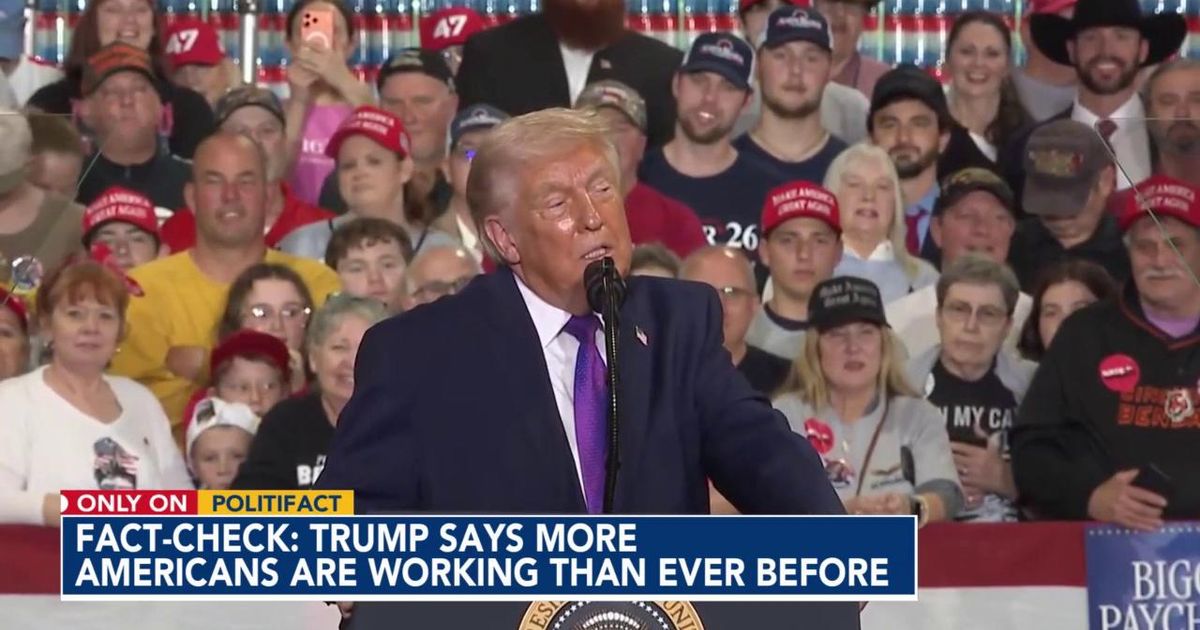
President Donald Trump has repeatedly highlighted the strength of America’s labor market, claiming in multiple speeches this year that “More Americans are working today than at any time in the history of our country,” a statement he reiterated at a Saudi investment conference in Florida on March 27.
While employment did reach an all-time high in January with 158.6 million Americans working (slightly decreasing to 158.5 million in February), economists point out that raw employment figures naturally rise with population growth, making such claims less meaningful as economic indicators.
A deeper examination of employment data reveals a more complex picture, particularly concerning Trump’s second term. Since January 2025, federal data shows that six out of fourteen months have experienced job losses, creating the weakest job creation record in 16 years.
Labor market experts suggest alternative metrics provide better insight into the country’s employment health. The labor force participation rate for prime-age workers (ages 25-54), which measures the percentage of people either working or seeking work, stands at 83.9% as of February. While strong, this figure remains below the all-time high of 84.6% recorded in 1999.
Similarly, the employment-population ratio for prime-age workers, which directly measures the proportion of employed individuals within that age group, currently sits at 80.7%, short of its peak of 81.9% reached in early 2000. This metric has largely stagnated since early 2023, spanning both Biden’s final year and Trump’s return to office.
“With labor force participation for prime-age Americans at a 25-year high, thanks to this administration’s pro-growth agenda that puts American workers first,” White House spokesperson Kush Desai said, “More Americans than ever before are working or coming off the sidelines to look for work.”
However, comparing monthly employment changes across recent administrations paints a different picture. From October 2010 through December 2024 – spanning most of Obama’s presidency, Trump’s first term (excluding three pandemic months), and Biden’s entire tenure – the economy consistently added jobs almost every month.
In stark contrast, Trump’s second term has averaged monthly employment gains of less than 11,000 jobs – significantly lower than the 176,000 to 236,000 monthly increases seen during comparable periods under Obama, Biden, and Trump’s first term.
Douglas Holtz-Eakin, president of the center-right American Action Forum, notes the employment situation is even more concerning because job growth has been concentrated in a single sector. “We have a golden age for the home health aide, but most people are working in industries that are shrinking,” Holtz-Eakin said. “If you’re thinking about the average worker, it’s not good.”
The health care industry has essentially kept Trump’s second-term employment figures from falling into negative territory, masking broader weaknesses across the economy.
After nearly 14 years of almost uninterrupted monthly employment gains across three administrations, the current pattern of frequent job losses represents a significant departure from recent economic trends, raising questions about the administration’s economic policies and their effectiveness.
While Trump’s claim contains elements of truth – employment did briefly reach an all-time high earlier this year – it omits crucial context about population growth driving those numbers and overlooks more telling indicators that suggest a struggling job market during his second term.
Economists generally agree that evaluating multiple metrics provides a more complete picture of employment conditions than focusing solely on raw numbers. By these broader measures, the current employment situation presents a mixed picture at best, with significant warning signs emerging amid historically high employment levels.
Fact Checker
Verify the accuracy of this article using The Disinformation Commission analysis and real-time sources.

9 Comments
This fact-check is a great example of the importance of data-driven analysis when it comes to evaluating economic claims. The article’s balanced, nuanced approach to examining employment trends is a welcome contrast to the often oversimplified political rhetoric on the subject. I’m eager to see more insights like this.
The claim of record US employment sounds impressive, but as the article points out, the data tells a more complex story. Tracking raw numbers without accounting for population changes and other contextual factors can paint an overly simplistic picture. Looking forward to seeing deeper dives on emerging employment trends.
Interesting look at the nuances of US employment data. Simply touting raw employment numbers can be misleading without considering factors like population growth and labor force participation rates. A more holistic view is needed to assess the true health of the job market.
I appreciate the balanced, fact-based analysis. It’s important to look past political rhetoric and examine employment trends through objective, data-driven lenses. Curious to see how other key metrics like wages, job quality, and sector breakdowns factor into the employment picture.
This fact-check highlights the importance of moving beyond simplistic employment metrics and examining the broader labor market dynamics. Tracking raw numbers without accounting for population changes and other key indicators can create a distorted picture. I’m interested to see how the analysis evolves as new data becomes available.
Appreciate the balanced, data-driven approach in this article. It’s crucial to look past political rhetoric and dive into the underlying employment trends and statistics. Metrics like labor force participation provide essential context that shouldn’t be overlooked. Looking forward to seeing more insightful analysis on this topic.
This fact-check highlights the need to look beyond political rhetoric and examine employment data through a more rigorous, objective lens. Factors like population growth and labor force participation rates provide essential context that can’t be ignored. I’m interested to see how these trends evolve in the coming years.
The analysis on employment claims is a good reminder to be cautious about simplistic narratives and to dig into the data. While raw numbers can be eye-catching, a deeper examination is needed to truly understand the underlying dynamics of the job market. Curious to learn more about the alternative metrics mentioned.
Excellent point about the importance of using the right metrics to assess the health of the US job market. Simply touting headline employment figures can be misleading. I’m glad the article took a more nuanced look at the data and suggested alternative indicators to provide better insight.