


Listen to the article
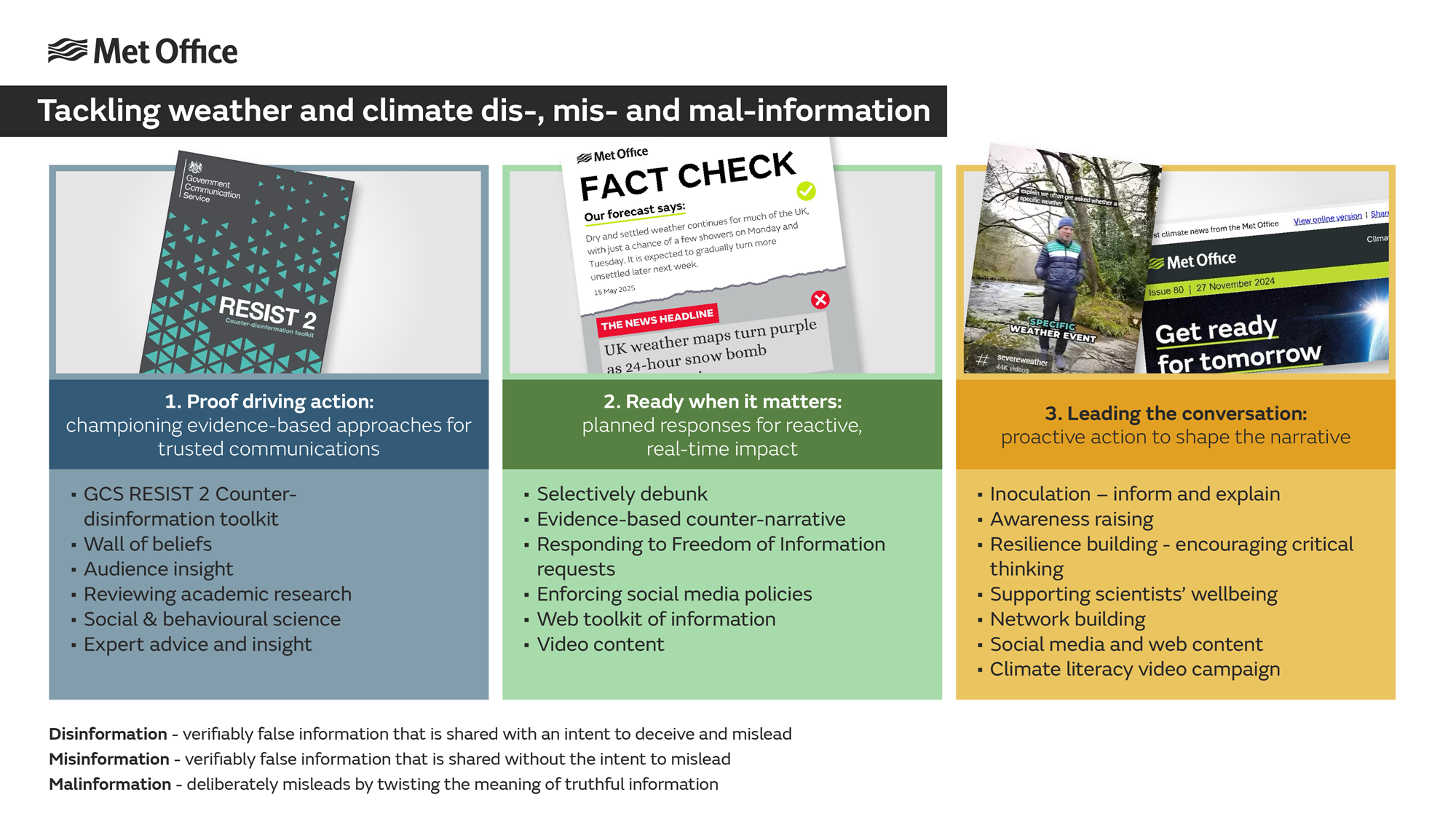
In an era of rampant online misinformation, the Met Office has evolved beyond its traditional role as a weather and climate authority to become a defender of scientific truth. The organization now actively combats misinformation through regular publications and a dedicated “Behind the Headlines” blog series aimed at separating meteorological fact from fiction.
This expanding responsibility has created significant challenges for the Met Office communications team, who describe the process as “playing whack-a-mole” against a relentless stream of misleading content that spreads with unprecedented speed across digital platforms.
“Trust matters,” explains the Met Office. “Our customers and the public expect and deserve clarity and truth, especially when it comes to science that affects their lives.” As a public institution, they recognize their fundamental responsibility to uphold scientifically verified, unbiased information based on rigorous methodologies.
While the organization acknowledges that healthy skepticism is an essential component of public discourse, they emphasize the corresponding responsibility to represent data accurately. The Met Office points to established misinformation techniques captured in the acronym FLICC: Fake experts, Logical fallacies, Impossible expectations, Cherry-picking, and Conspiracy theories.
Recent research underscores the severity of the information integrity crisis. According to Ofcom, 43% of UK adults report encountering misinformation or deep fakes in their daily media consumption. Meanwhile, research from communications firm FGS indicates that people increasingly desire trustworthy information sources that don’t require constant verification.
Public concern about misinformation continues to grow, with 69% of people worried that they or someone they know has been misled by false information online, according to FGS data. This concern spans all information sources, from traditional newspapers to social media platforms, demonstrating that misinformation is not isolated to any particular medium or demographic.
Despite widespread concern, only 33% of people report using fact-checking websites. However, there are encouraging signs as investigative websites gain popularity and help educate the public on spotting fake information and verifying facts through reliable sources.
The public’s desire for accountability is clear, with 79% of respondents in the FGS survey believing social media platforms should adhere to the same standards as traditional publishers. This sentiment reflects growing frustration with the unregulated spread of misinformation across digital platforms.
For the Met Office, ignoring the problem is not an option. As climate change drives more frequent extreme weather events, public trust in meteorological information becomes increasingly crucial for safety and preparedness. Maintaining their hard-earned 80%+ public trust rating requires transparency, scientific integrity, and actively addressing misrepresentations of their data.
The Met Office distinguishes between three types of problematic information: disinformation (verifiably false information shared with intent to deceive), misinformation (false information shared without intent to mislead), and malinformation (deliberately twisting truthful information to mislead).
At its core, the Met Office’s mission extends beyond weather forecasting to serving the public good through reliable science communication. In a world where advanced technologies like AI and supercomputing are transforming meteorology, the organization sees defending factual information as integral to helping people make informed decisions to stay safe and thrive during challenging weather conditions.
As extreme weather events become more common and climate communication grows increasingly politicized, the Met Office’s proactive stance against misinformation represents an essential service in maintaining public trust in science-based institutions.
Fact Checker
Verify the accuracy of this article using The Disinformation Commission analysis and real-time sources.

8 Comments
It’s a constant battle, but the Met Office is right to prioritize combating disinformation. As a public institution, they have a duty to provide accurate, unbiased information to the public.
I’m glad the Met Office is being proactive about separating fact from fiction when it comes to meteorological information. With so much misleading content online, their efforts to uphold scientific truth are invaluable.
Absolutely. Maintaining public trust in authoritative scientific sources is critical, especially on issues that impact people’s lives.
The Met Office’s responsibility to uphold scientific integrity is more important than ever. I applaud their efforts to combat disinformation and provide the public with reliable, fact-based information.
It’s good to see a respected scientific institution like the Met Office taking an active role in debunking misinformation. This helps reinforce the importance of trusting verified, data-driven sources.
This is an important role for the Met Office to play. Combating the spread of misinformation on climate and weather is crucial for maintaining public trust in science. It’s good to see them taking this responsibility seriously.
This is an interesting development in the Met Office’s role. I’m curious to learn more about the specific challenges they face in identifying and addressing misleading content in the digital age.
Yes, I imagine it’s a complex and resource-intensive task to stay on top of the constant stream of misinformation online. But it’s a crucial one for maintaining the public’s trust in science.