


Listen to the article
Uncovering Chernobyl’s Hidden Truth: How Soviet Secrets Came to Light Through East German Files
On April 26, 1986, what began as a routine safety test at the Chernobyl nuclear power plant in Ukraine spiraled into catastrophe. A combination of fatal design flaws and human negligence caused reactor 4 to explode during an attempted shutdown, releasing radioactive material estimated to be hundreds of times more powerful than the atomic bomb dropped on Hiroshima.
Despite the radioactive fallout being detected across northern and central Europe, Soviet authorities worked diligently to control information about the disaster’s true magnitude. For decades since, researchers have struggled to piece together the full story of mismanagement, negligence, and deliberate misinformation that led to widespread human suffering and environmental devastation.
A significant challenge in this historical investigation is the inaccessibility of official Soviet records, with many KGB files still sealed in Moscow archives. However, researchers have found an unexpected window into these events through East German intelligence documents.
Because East Germany was a Soviet satellite rather than a full member of the USSR, its records remained in the country after German reunification. In 1991, the German government passed legislation allowing for declassification of certain files from the Stasi, East Germany’s secret police. These documents have proven invaluable in understanding how the disaster was managed – and mismanaged – by Soviet authorities.
“I have spent the past three years reading Stasi files and researching the creation of misinformation in the former Eastern bloc,” explains Lauren Cassidy, Lecturer in German and Russian Studies at Binghamton University. Through her work with Stasi archivists in Berlin, including visits to the original archival rooms in former Stasi headquarters, Cassidy has uncovered revealing communication between the KGB and Stasi.
These formerly top-secret documents make it clear that despite public reassurances, both intelligence agencies recognized the explosion’s devastating impact. They meticulously tracked hospitalizations, casualties, contaminated livestock, damaged crops, and radiation levels – information accessible only to the highest-ranking officials.
“The main fear for both the KGB and Stasi was not the radiation that would harm affected populations but the damage done to their respective countries’ reputations,” Cassidy notes.
Controlling media narratives was paramount. Soviet leadership, including then-leader Mikhail Gorbachev, carefully crafted their messaging. In one declassified document, Gorbachev is recorded saying during a Politburo meeting: “When we inform the public, we should say that the power plant was being renovated at the time, so it doesn’t reflect badly on our reactor equipment.”
Senior Soviet official Nikolai Ryzhkov suggested creating three different press releases: one for Soviet citizens, another for satellite states, and a third for Western nations. East German Stasi reports echoed this approach, instructing officials to tell the public there was “absolutely no danger” despite their internal knowledge of radioactive contamination.
By the mid-1980s, many East Germans could access Western media, creating a situation where citizens recognized they weren’t receiving the truth but couldn’t determine exactly what was happening. “Much of the East German and Soviet propaganda at that time was designed to confuse and cast doubt, not necessarily to fully persuade,” Cassidy explains. “The idea was that enough conflicting information would tire people out.”
Beyond public health concerns, the Stasi worried about economic consequences as citizens grew wary of potentially contaminated food. Children refused milk at schools, and consumers questioned whether produce was grown in protected environments. As domestic sales declined, the East German government devised a plan to export potentially contaminated goods to West Germany.
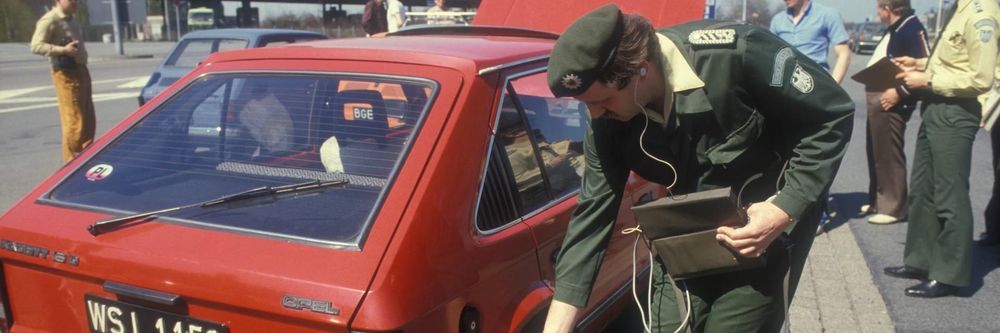
Stasi documents reveal officials justified this by claiming exports would “spread out the consumption of radioactive products” so no individual would consume unsafe levels. When West Germany implemented radiation screening at border crossings, lower-ranking Stasi workers were forced to personally clean contaminated vehicles, knowingly endangering their health.
The Soviet Union had similar plans but aimed to distribute contaminated meat products to “the majority of regions” within the USSR – “except for Moscow.”
This callous handling of the Chernobyl disaster contributed significantly to growing public dissatisfaction with communist regimes. Many early Stasi employees had genuinely believed in East Germany’s socialist vision, particularly those who had witnessed Nazi atrocities. By the 1980s, however, ideological commitment had largely given way to self-interest.
When protesters stormed Stasi headquarters in 1990, months after the Berlin Wall fell, there was minimal resistance. The Chernobyl disinformation campaign had reinforced a damaging message: the state was willing to sacrifice its citizens’ wellbeing to maintain its image.
Decades later, these declassified files continue to reveal how the disaster’s mismanagement ultimately became one of the final chapters in the Soviet Union’s collapse.
Fact Checker
Verify the accuracy of this article using The Disinformation Commission analysis and real-time sources.

31 Comments
Exploration results look promising, but permitting will be the key risk.
I like the balance sheet here—less leverage than peers.
Good point. Watching costs and grades closely.
Good point. Watching costs and grades closely.
Silver leverage is strong here; beta cuts both ways though.
Good point. Watching costs and grades closely.
Good point. Watching costs and grades closely.
The cost guidance is better than expected. If they deliver, the stock could rerate.
Interesting update on Chernobyl at 40: Declassified Stasi Files Expose Soviet Nuclear Disaster Cover-up. Curious how the grades will trend next quarter.
Good point. Watching costs and grades closely.
Good point. Watching costs and grades closely.
The cost guidance is better than expected. If they deliver, the stock could rerate.
Good point. Watching costs and grades closely.
Good point. Watching costs and grades closely.
Nice to see insider buying—usually a good signal in this space.
Good point. Watching costs and grades closely.
Production mix shifting toward News might help margins if metals stay firm.
Good point. Watching costs and grades closely.
Nice to see insider buying—usually a good signal in this space.
Good point. Watching costs and grades closely.
Good point. Watching costs and grades closely.
Silver leverage is strong here; beta cuts both ways though.
Nice to see insider buying—usually a good signal in this space.
Good point. Watching costs and grades closely.
Good point. Watching costs and grades closely.
The cost guidance is better than expected. If they deliver, the stock could rerate.
Good point. Watching costs and grades closely.
Uranium names keep pushing higher—supply still tight into 2026.
Good point. Watching costs and grades closely.
Nice to see insider buying—usually a good signal in this space.
Good point. Watching costs and grades closely.