


Listen to the article
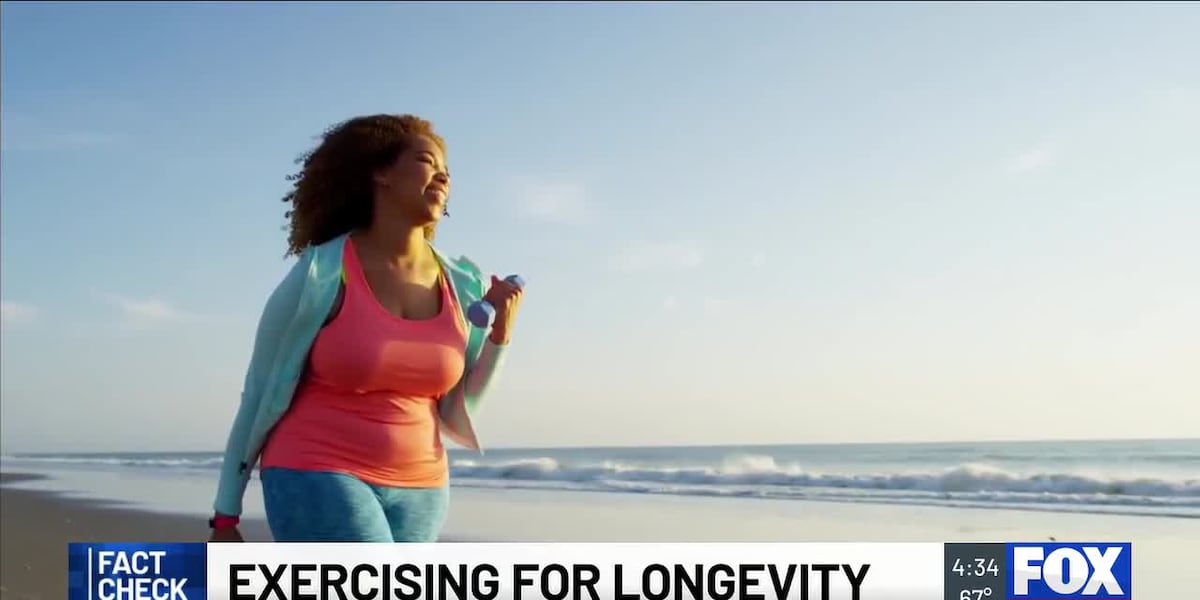
Health experts are increasingly focusing on the link between regular exercise and increased longevity, with new research suggesting that specific workout approaches may yield better results than others for those looking to extend their lifespan.
Dr. Mark Hyman, founder of the UltraWellness Center and a leading functional medicine physician, emphasizes that not all exercise routines are created equal when it comes to longevity benefits. “The data consistently shows that a combination of strength training and cardiovascular fitness provides the most comprehensive benefits for extending healthy lifespan,” he explained in a recent interview.
According to a landmark study published in the British Journal of Sports Medicine last year, people who incorporated both resistance training and aerobic exercise into their weekly routines showed a 30% lower all-cause mortality risk compared to sedentary individuals. The research tracked over 80,000 adults across a 15-year period, providing some of the most compelling evidence to date on exercise’s life-extending potential.
The Centers for Disease Control and Prevention (CDC) currently recommends that adults engage in at least 150 minutes of moderate-intensity aerobic activity or 75 minutes of vigorous activity weekly, combined with muscle-strengthening activities on two or more days per week. However, longevity researchers suggest these guidelines may represent the minimum threshold rather than the optimal amount.
“What we’re finding is that consistency matters more than intensity for most people,” says Dr. Louise Richardson, an exercise physiologist at the Mayo Clinic. “Someone who walks briskly for 30 minutes five days a week will likely see greater longevity benefits than someone who does an intense workout once a week and remains sedentary otherwise.”
The concept of “exercise snacking” – breaking physical activity into shorter, more frequent sessions throughout the day – has gained traction among busy professionals. Research from the University of Texas showed that three 10-minute moderate exercise sessions produced similar metabolic benefits to a single 30-minute session, potentially making fitness more accessible to those with tight schedules.
For older adults specifically, balance training emerges as another crucial component for longevity. Falls represent a significant mortality risk among seniors, and exercises that enhance stability can reduce fall risk by up to 50%, according to research from the National Institute on Aging.
The growing field of exercise genetics also suggests that individual responses to different workout types vary significantly. “Some people show dramatic improvements in cardiovascular health with endurance training, while others see minimal changes but respond strongly to resistance training,” notes Dr. James Timmons, professor of precision medicine at King’s College London. This variability has led to increased interest in personalized exercise prescriptions based on genetic profiles.
Fitness tracking technology has evolved to support longevity-focused exercise habits. Advanced wearables now measure not just steps and heart rate but also recovery metrics like heart rate variability (HRV) and sleep quality, providing users with insights into whether their exercise regimens are promoting or potentially hindering longevity.
Experts caution, however, against extreme exercise approaches. Ultra-endurance athletes sometimes show markers of cardiac stress and inflammation that could potentially counteract longevity benefits. “There appears to be a sweet spot,” says Dr. Richardson. “Enough exercise to challenge your body’s systems but not so much that recovery becomes impossible.”
Community-based exercise programs have shown particular promise for longevity outcomes. The Blue Zones Project, which studies regions with high concentrations of centenarians, found that social physical activity – from group walks to community gardens – correlates strongly with extended lifespan, suggesting that the social component of exercise may be as important as the physical activity itself.
As research continues to evolve, health professionals emphasize that the best exercise program for longevity is ultimately one that individuals can maintain consistently throughout life. “The most effective workout regimen is the one you’ll actually do regularly,” Dr. Hyman concludes. “Finding physical activities you genuinely enjoy is perhaps the most important factor in leveraging exercise for a longer, healthier life.”
Fact Checker
Verify the accuracy of this article using The Disinformation Commission analysis and real-time sources.

17 Comments
Definitely some food for thought here. I’ll need to reevaluate my own fitness routine and see how I can better incorporate both resistance training and cardiovascular exercise. Seems like a worthwhile investment for my long-term wellbeing.
This is really useful information. I wasn’t aware of the specific advantages of combining different exercise modalities for lifespan extension. Good to know that a holistic approach seems to be the most effective.
Agreed, the key seems to be finding the right balance and variety in your fitness routine. I’ll have to reevaluate my own exercise regimen.
This research underscores the importance of not getting stuck in exercise ruts. Mixing up cardio and strength training seems crucial for maximizing longevity benefits. I’m eager to experiment and find the right balance for my needs.
Fascinating research on the longevity benefits of combining strength training and cardio. I’m intrigued by the 30% lower mortality risk – that’s quite significant. Seems like a balanced approach could really pay dividends for our health over the long term.
Definitely agree. The data seems quite compelling. I’ll have to look into incorporating more resistance and aerobic workouts into my routine.
The findings around a 30% lower mortality risk are quite striking. I wonder what the potential mechanisms are behind the synergistic effects of strength training and cardio? Something worth diving deeper into.
That’s a great question. I’d be curious to learn more about the physiological processes at play and how the different exercise modes complement each other for longevity benefits.
As someone who has primarily focused on cardio in the past, this is a good reminder to diversify my workouts and not neglect strength training. The potential 30% mortality risk reduction is quite motivating.
Agreed, it’s easy to get stuck in a cardio-centric routine. Incorporating more resistance training could provide some really impactful benefits. Worth experimenting to find the right balance.
Great insights on the synergistic effects of different exercise modalities. I’ll have to dig deeper into the research to understand the underlying mechanisms. Excited to explore ways to optimize my fitness regimen for longevity.
This is a helpful reminder that a well-rounded fitness approach is key for maximizing health benefits. The 30% mortality risk reduction is quite motivating. I’ll have to reevaluate my current routine and see where I can make improvements.
Interesting to see the CDC recommendations highlighted here. It’s good to have authoritative guidelines to work towards, though I imagine individual factors like age, fitness level, and personal preferences will also play a role in the optimal exercise regimen.
Absolutely, individual circumstances are important to consider. The CDC provides a useful baseline, but personalization is key when developing an effective long-term fitness plan.
The data on the longevity benefits of combined strength and cardio training is really compelling. I’m curious to see if future research can provide even more granular details on the optimal frequency, intensity, and duration of each type of workout.
That’s a great point. More specifics on the most effective exercise protocols would be really valuable for putting this research into practice. Looking forward to seeing how the science evolves in this area.
It’s encouraging to see such robust research highlighting the importance of a multi-faceted approach to exercise for improving health outcomes. The CDC recommendations provide a helpful framework to work towards.