


Listen to the article
The ongoing conflict in Iran continues to disrupt global fertilizer markets, with supply chains facing significant strain as tensions around the strategic Strait of Hormuz show little sign of easing.
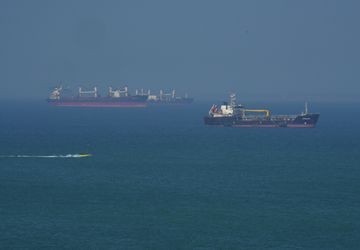
Maritime shipping through the critical waterway, which handles approximately 21% of global petroleum liquids and serves as a vital conduit for natural gas shipments, remains severely restricted as Iran maintains its partial blockade. The situation has created ripple effects far beyond energy markets, with agricultural inputs like nitrogen-based fertilizers experiencing price volatility and supply uncertainties.
Industry analysts note that natural gas serves as the primary feedstock for nitrogen fertilizer production, making fertilizer prices particularly sensitive to disruptions in global energy flows. The American Farm Bureau Federation reports that farmers across the United States are facing a 15-20% premium on fertilizer costs compared to pre-conflict levels.
“We’re seeing the agricultural sector bear a hidden cost of this geopolitical standoff,” said Maryam Kazemi, senior commodities analyst at AgriGlobal Research. “When natural gas supplies are constrained or rerouted, fertilizer production capacity is directly impacted, and those costs inevitably get passed down the supply chain.”
The situation has become particularly acute for major fertilizer producers in Europe and the Middle East, many of whom rely on steady natural gas supplies that traditionally transit through or near the contested region. Companies like Yara International and CF Industries have reported production adjustments at several facilities in response to input cost pressures.
For American farmers preparing for next season’s planting decisions, the uncertainty creates difficult planning challenges. The U.S. Department of Agriculture estimates that fertilizer typically represents 15-18% of a crop farmer’s operating costs, making it one of the most significant input expenses alongside seed and equipment.
“What we’re witnessing is a fragile equilibrium,” explained Dr. Robert Chen, agricultural economist at Midwest State University. “Global fertilizer stocks aren’t critically low yet, but the market lacks the buffer it would normally have. Any additional supply shock could trigger more significant price spikes.”
The current tensions stem from Iran’s decision to restrict vessel traffic through the Strait in response to international sanctions and the U.S. naval presence in the region. Iran’s latest diplomatic proposal, delivered to Pakistani intermediaries earlier this week, demands an end to the American naval blockade of Iranian ports but notably leaves questions about Iran’s nuclear program unaddressed.
U.S. officials have yet to formally respond to the proposal, with State Department spokesperson Vanessa Miller stating only that “all communications are being reviewed through appropriate diplomatic channels.”
For countries heavily dependent on food imports, the fertilizer price pressure adds another layer of concern regarding food security. The UN Food and Agriculture Organization warns that sustained high fertilizer prices could reduce crop yields in vulnerable regions like sub-Saharan Africa and parts of Southeast Asia, where farmers may be forced to reduce application rates.
Industry experts point out that the current situation highlights the interconnected nature of global agricultural and energy systems. While natural gas prices in North America have remained relatively stable due to domestic production, the global redistribution of energy flows has created localized shortages that affect fertilizer manufacturing capacity.
“We’re essentially seeing a domino effect play out in slow motion,” said Jonathan Reeves, director of the Institute for Agricultural Economics. “Energy disruption leads to fertilizer production constraints, which impacts crop yields, and ultimately affects food prices and availability.”
As diplomatic efforts continue to resolve the standoff, agricultural stakeholders are exploring both short and long-term solutions. Some large-scale farming operations have invested in fertilizer storage capacity, allowing them to purchase when prices temporarily dip. Meanwhile, agricultural research institutions report increased interest in alternative fertilization methods, including precision application technologies and biological nitrogen fixation approaches.
For now, markets remain on edge as the conflict enters its fourth month with no clear resolution in sight. The situation underscores how geopolitical tensions in one region can cascade through global supply chains, ultimately affecting food production systems worldwide.
Fact Checker
Verify the accuracy of this article using The Disinformation Commission analysis and real-time sources.

11 Comments
Higher fertilizer prices are the last thing farmers need right now. I hope policymakers can work to find solutions that stabilize this critical market.
Fertilizer costs are a major concern for farmers right now. I hope we can find ways to stabilize this critical market and ensure reliable access to these essential agricultural inputs.
Agreed. Disruptions to fertilizer supply chains could have serious implications for global food security. Policymakers need to prioritize ensuring the resilience of these supply chains.
Interesting to see how geopolitical tensions can ripple through to other industries like agriculture. The Strait of Hormuz is a vital chokepoint that we need to monitor closely.
You’re right, the interdependence of global supply chains means disruptions in one area can have widespread ramifications. Diversifying sourcing and transportation routes is key to mitigating these risks.
It’s concerning to see the conflict in Iran putting such strain on global agricultural supply chains. We need to find ways to ensure reliable access to essential inputs like fertilizers.
Absolutely. Disruptions to fertilizer supplies could have serious consequences for food production and prices worldwide. Diversifying sourcing and transportation options is crucial.
This is a great example of how geopolitical tensions can have ripple effects far beyond the energy sector. The agricultural industry is really feeling the impact of the Iran situation.
The Iran conflict is really putting a strain on the global fertilizer supply chain. It’s critical that we find ways to ensure continued access to these vital agricultural inputs.
Absolutely. Disruptions to fertilizer supplies could have serious impacts on food production and prices. We need to explore alternative sourcing options to build more resilience.
The Iran conflict is really exposing the vulnerabilities in our global fertilizer supply chains. We need to take a hard look at how to build more redundancy and diversification into these systems.