


Listen to the article
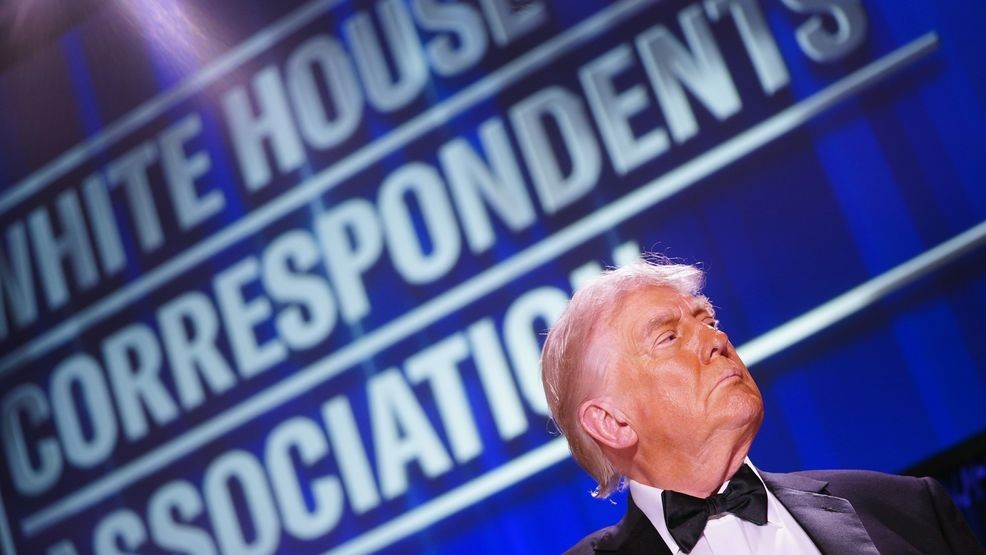
An attempted shooting at the White House Correspondents’ Dinner has ignited fresh concerns about political violence in the United States, prompting security experts and officials to examine whether such attacks follow identifiable patterns. The incident comes amid heightened tensions in the American political landscape, with former President Donald Trump recently describing the presidency as a “dangerous” job—a characterization that aligns with the documented history of violence against U.S. leaders.
The attempted attack marks the latest chapter in America’s long and troubling history of political violence. Four U.S. presidents have been assassinated throughout American history: Abraham Lincoln in 1865, James A. Garfield in 1881, William McKinley in 1901, and John F. Kennedy in 1963. All died from gunshot wounds, and each assassination fundamentally transformed security protocols surrounding the presidency.
While these successful assassinations remain seared in the national consciousness, numerous failed attempts have occurred with less public awareness. Andrew Jackson survived an 1835 attempt when the assailant’s guns fortuitously misfired. Harry S. Truman escaped harm during a 1950 attack at Blair House, the presidential residence during White House renovations. Perhaps most famously in recent memory, Ronald Reagan was shot and seriously wounded in 1981 but survived the assassination attempt.
Political violence has extended beyond presidents to other prominent public figures. Conservative commentator Charlie Kirk, civil rights leader Martin Luther King Jr., and presidential candidate Robert F. Kennedy have all been targets, with the latter two assassinated in 1968.
In the current case, federal authorities have identified 31-year-old Cole Tomas Allen of California as the suspect in the White House Correspondents’ Dinner incident. According to investigators, Allen allegedly traveled across the country and stayed at the hotel hosting the event. On Monday, the Justice Department charged him with two federal gun crimes and one count of attempting to assassinate President Trump.
Investigators report that Allen was armed with multiple weapons when apprehended. They also believe he may have left behind writings expressing anger toward government officials. Current evidence suggests he acted alone, consistent with patterns seen in many previous attacks on political figures.
Security experts classify many of these attacks as “grievance-fueled violence”—a category of threat driven by a complex mixture of personal resentment, political anger, and perceived injustice against the attacker or groups they identify with. While each case has unique elements, certain common characteristics frequently emerge among perpetrators.
These attackers often operate independently rather than as part of organized groups. Their grievances typically build over extended periods, and many engage in substantial advance planning rather than acting impulsively. Many attackers also produce manifestos or written threats detailing their motivations and intentions.
Some individuals who attempt political violence have prior criminal histories or documented mental health challenges. However, experts caution against overemphasizing any single profile or characteristic, as the path to political violence varies considerably between individuals.
The incident underscores a persistent security challenge for law enforcement and protection agencies. Targeted political violence, while relatively rare in frequency, has been a consistent threat throughout American history. Despite advances in security protocols and threat assessment, such attacks remain difficult to predict with precision.
As investigators continue working to establish the suspect’s specific motives and planning timeline, the case serves as a sobering reminder of the ongoing threats faced by political leaders in a polarized environment, and the complex interplay of factors that drive individuals toward political violence.
Fact Checker
Verify the accuracy of this article using The Disinformation Commission analysis and real-time sources.

27 Comments
Uranium names keep pushing higher—supply still tight into 2026.
Good point. Watching costs and grades closely.
Good point. Watching costs and grades closely.
Production mix shifting toward Fact Check might help margins if metals stay firm.
The cost guidance is better than expected. If they deliver, the stock could rerate.
Good point. Watching costs and grades closely.
Good point. Watching costs and grades closely.
If AISC keeps dropping, this becomes investable for me.
Good point. Watching costs and grades closely.
Interesting update on WHCA Shooting Highlights Pattern of Political Violence in U.S., Fact-Checkers Report. Curious how the grades will trend next quarter.
Exploration results look promising, but permitting will be the key risk.
If AISC keeps dropping, this becomes investable for me.
If AISC keeps dropping, this becomes investable for me.
Good point. Watching costs and grades closely.
Good point. Watching costs and grades closely.
Nice to see insider buying—usually a good signal in this space.
Good point. Watching costs and grades closely.
Good point. Watching costs and grades closely.
If AISC keeps dropping, this becomes investable for me.
Good point. Watching costs and grades closely.
Good point. Watching costs and grades closely.
Nice to see insider buying—usually a good signal in this space.
Good point. Watching costs and grades closely.
Good point. Watching costs and grades closely.
Exploration results look promising, but permitting will be the key risk.
Production mix shifting toward Fact Check might help margins if metals stay firm.
Good point. Watching costs and grades closely.