


Listen to the article
Israeli Researchers Uncover Unique Muscle Structure in Sleep Apnea Patients
Researchers in Israel have discovered that people with obstructive sleep apnea (OSA) have a distinctly different muscle composition compared to those without the condition, according to a new study published in the journal Sleep and Breathing.
The research reveals a paradoxical finding: individuals with OSA tend to have a higher muscle mass index relative to their height, but that muscle is typically less dense and potentially less functional than in people without the condition.
“Individuals with OSA may have more muscle mass, but that muscle may be less healthy because it contains more fat, which can impair strength and metabolic function,” explained Dr. Wendy Troxel, a Utah-based clinical psychologist and senior behavioral scientist at RAND, who was not involved in the study.
The research team gathered data from 209 adults who participated in an overnight sleep study and underwent chest or abdominal CT scans. When compared with a control group, the OSA patients were typically older, more frequently male, and heavier on average. They also showed higher rates of hypertension and cardiovascular disease, along with poorer oxygen levels during sleep.
Analysis of the data revealed a significant link between OSA and higher muscle mass index. However, the study found that lower muscle density was more strongly associated with age and weight than with OSA itself. Worse sleep apnea severity correlated with lower skeletal muscle density (SMD) and higher skeletal muscle index (SMI), indicating larger but less dense muscle tissue.
“Age and obesity appeared to have a stronger influence on muscle health than sleep apnea itself,” noted study co-author Ariel Tarasiuk, professor at the department of physiology and cell biology at Israel’s Ben-Gurion University of the Negev. “This suggests that while sleep apnea may play a role, it is unlikely to be the primary factor driving these changes.”
The findings showed that individuals over 60 years old and those with a BMI over 30 had much stronger links to lower muscle density than OSA alone. This pattern resembles sarcopenia, a clinical condition where muscle becomes weaker and less efficient despite maintaining its size.
The research underscores that OSA is far more complex than simply a nighttime breathing disorder. “It may signal underlying metabolic dysfunction affecting multiple systems, including muscle health,” Troxel pointed out.
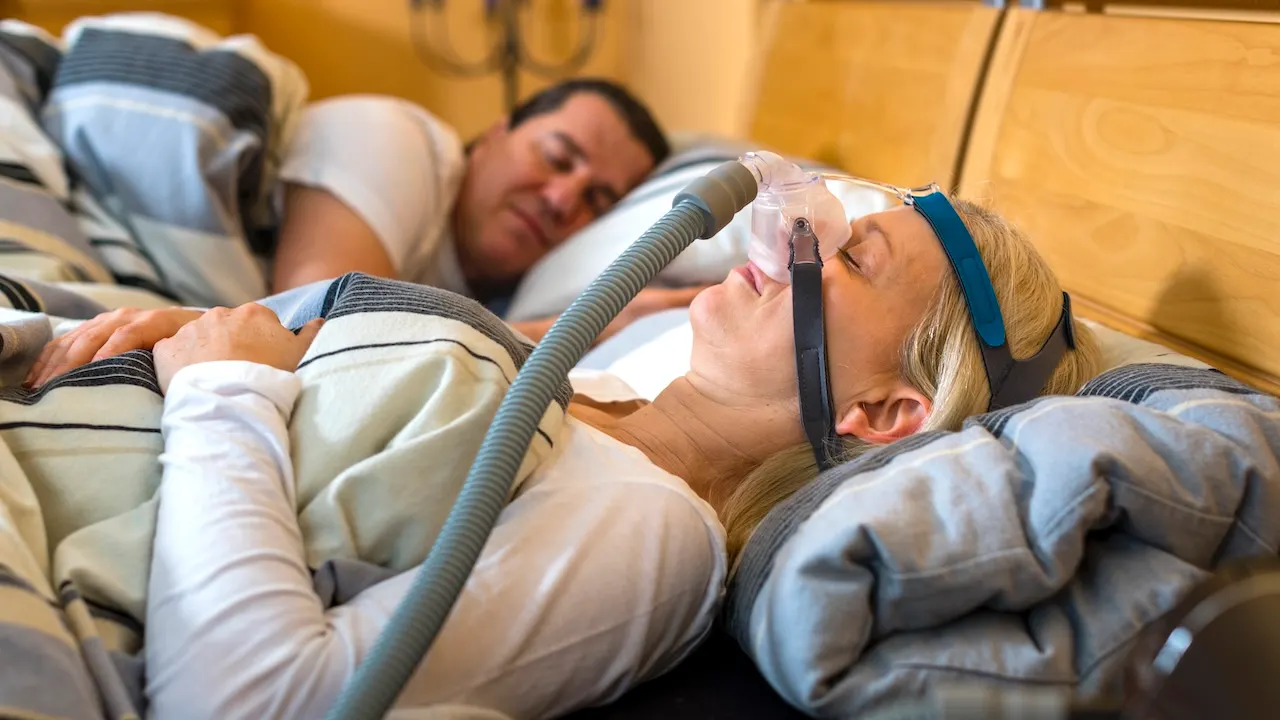
For patients, these findings highlight the importance of comprehensive treatment approaches. While CPAP (Continuous Positive Airway Pressure) therapy remains an effective treatment for improving breathing and sleep quality in OSA patients, Tarasiuk emphasizes it’s only part of the solution.
“Maintaining a healthy weight and staying physically active are equally important for muscle health and for reducing the severity of sleep apnea,” he said. “In short, treating sleep apnea is about protecting long-term health, not just getting a better night’s sleep.”
The study also suggests clinicians should look beyond muscle size alone when assessing patient health. “Routine imaging, such as CT scans performed for other reasons, can sometimes provide additional insight into muscle quality,” Tarasiuk noted, suggesting that larger muscles don’t necessarily indicate better health if they’re infiltrated with fat.
The researchers acknowledge some limitations to their work. The study was conducted at a single center, which may limit its applicability to broader populations. Additionally, they lacked information on lifestyle factors such as physical activity, diet, smoking or alcohol use – all of which can influence muscle health.
Looking ahead, Tarasiuk indicates that larger multi-center studies are needed to confirm these findings and provide a more comprehensive picture. Future research will focus on real-world outcomes, such as how patients respond to treatments like CPAP therapy, and developing a better understanding of how muscle changes progress over time in people with sleep apnea.
The study represents an important step in understanding OSA as not just a sleep disorder, but as a condition with wide-ranging effects on overall physical health and metabolism.
Fact Checker
Verify the accuracy of this article using The Disinformation Commission analysis and real-time sources.

27 Comments
I like the balance sheet here—less leverage than peers.
Good point. Watching costs and grades closely.
Exploration results look promising, but permitting will be the key risk.
Good point. Watching costs and grades closely.
Good point. Watching costs and grades closely.
I like the balance sheet here—less leverage than peers.
Good point. Watching costs and grades closely.
Nice to see insider buying—usually a good signal in this space.
Good point. Watching costs and grades closely.
Good point. Watching costs and grades closely.
I like the balance sheet here—less leverage than peers.
Good point. Watching costs and grades closely.
If AISC keeps dropping, this becomes investable for me.
The cost guidance is better than expected. If they deliver, the stock could rerate.
If AISC keeps dropping, this becomes investable for me.
Good point. Watching costs and grades closely.
I like the balance sheet here—less leverage than peers.
Good point. Watching costs and grades closely.
Good point. Watching costs and grades closely.
If AISC keeps dropping, this becomes investable for me.
Good point. Watching costs and grades closely.
Good point. Watching costs and grades closely.
Silver leverage is strong here; beta cuts both ways though.
Production mix shifting toward Health might help margins if metals stay firm.
Interesting update on Sleep Apnea Linked to Unexpected Physical Changes, New Study Reveals. Curious how the grades will trend next quarter.
Good point. Watching costs and grades closely.
Nice to see insider buying—usually a good signal in this space.