


Listen to the article
Drone Program in Missouri Tests Medical Deliveries to Improve Rural Healthcare Access
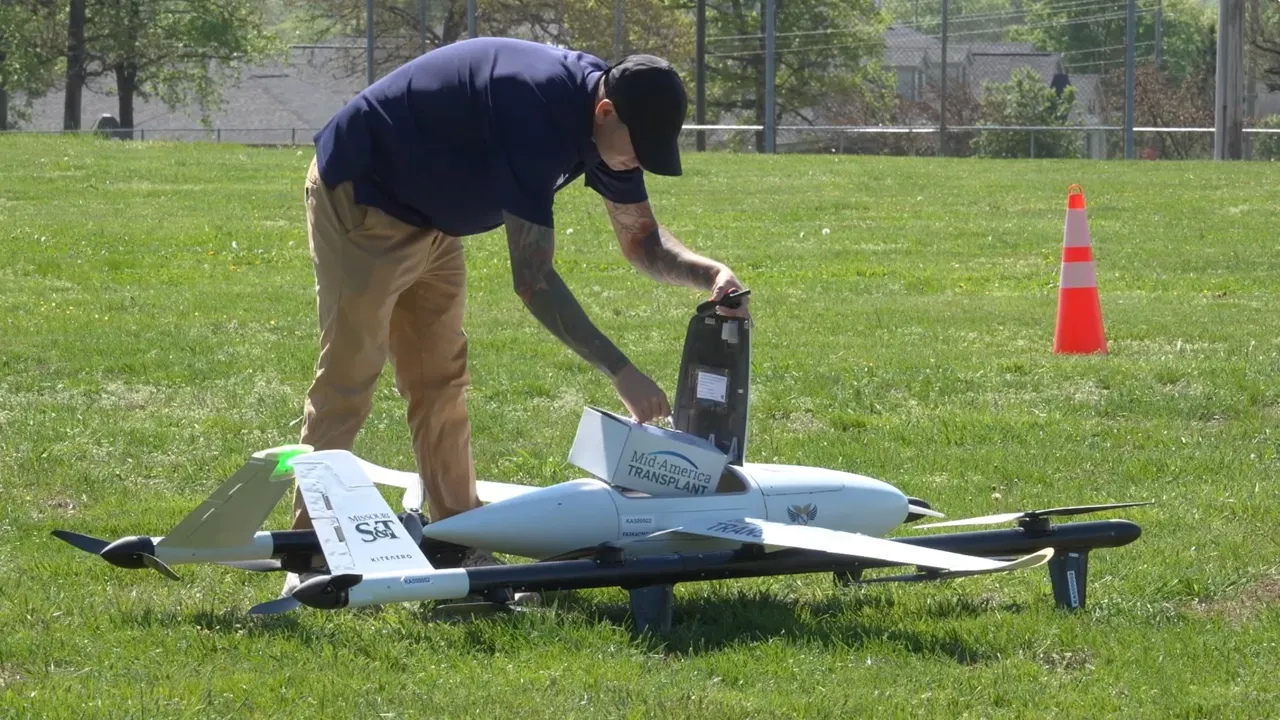
In rural Missouri, a pioneering medical drone program is taking flight with the potential to transform healthcare delivery across underserved communities. The initiative, developed through a partnership between Missouri University of Science and Technology and a drone company, aims to expedite the transportation of critical medical supplies between smaller communities and major hospital centers.
At a testing site in Rolla, Missouri, researchers are conducting flight trials designed to move essential medical materials including blood samples, laboratory specimens for diagnosis, and tissue samples used in organ donation matching. The drones being tested can reach speeds of approximately 100 miles per hour, significantly reducing transport time compared to traditional ground delivery methods.
“It’s very essential,” explained a drone operator involved in the project. “For instance, if you miss sample pickup at 5 p.m. on Tuesday, if you miss that time, it’s another week you can get it delivered on time.”
The program comes at a critical juncture for rural healthcare in America. According to the Senate Joint Economic Committee, more than 130 rural hospitals closed between 2010 and 2021, forcing some patients to travel an additional 20 miles for medical care. These closures have created significant gaps in access to timely medical services, particularly affecting time-sensitive procedures and testing.
David Borrok, vice provost and dean of the College of Engineering at Missouri University of Science and Technology, highlighted one of the key applications: “When you’re looking at things like transplant speed, it’s an issue.”
The proposed drone route would connect Springfield in southwestern Missouri to Rolla in the central part of the state, extending northeast to the St. Louis region. “We’re partnering with American Transplant, and we’re running our test corridor from all the way from Springfield, pit stop in Rolla, all the way up to St. Louis,” the drone operator explained.
Flight operations incorporate sophisticated monitoring systems, with operators tracking the drones in real time using live maps, weather forecasting tools, and air traffic data to ensure safe and reliable delivery. “This is what the pilot sees whenever the aircraft is actually in flight,” the operator demonstrated during a recent test.
The technology represents a significant advancement in medical logistics, particularly for rural areas where timely delivery can mean the difference between successful treatment and missed opportunities for care. While initially focused on transporting laboratory samples and testing materials, future iterations of the drones are being developed with the capability to carry more sensitive medical cargo, including materials related to organ transplantation.
St. Albans has been designated as the easternmost landing site along the current proposed route, creating a strategic delivery network across the state.
Similar programs are beginning to emerge across the United States as healthcare providers seek innovative solutions to address disparities in medical access. “It’s really unique. And I think it could work in a lot of different ways for a lot of different people,” Borrok noted, pointing to the versatility of the technology.
The team behind the Missouri program anticipates beginning official flights this summer, starting with medical sample transportation before potentially expanding to include more specialized medical materials.
This drone initiative represents a creative response to the ongoing challenges facing rural healthcare delivery in America. By leveraging cutting-edge technology to overcome geographical barriers, the program could establish a model for how innovative transportation solutions might help bridge healthcare gaps in underserved regions nationwide, ultimately improving patient outcomes through faster delivery of essential medical supplies.
Fact Checker
Verify the accuracy of this article using The Disinformation Commission analysis and real-time sources.

8 Comments
While the potential benefits of medical drone delivery are clear, I wonder about the practical and regulatory hurdles that will need to be navigated. Safety, security, and privacy concerns will all have to be carefully addressed. But if executed well, this could be a transformative solution for remote and underserved communities.
Kudos to the Missouri University of Science and Technology and their drone company partner for spearheading this important initiative. Accelerating the transport of medical samples and supplies could save lives in emergencies. I hope the trials are a resounding success and pave the way for wider adoption of drone-based healthcare logistics.
Agreed. The speed and reliability of drone delivery could be a real game-changer for rural healthcare. I’m eager to see the results of the trials and whether this model can be replicated elsewhere.
This is a really creative and forward-thinking approach to tackling the longstanding challenges of rural healthcare access. Drones could provide a vital lifeline for remote areas, speeding up the transport of time-sensitive medical materials. I’ll be following the progress of these trials closely to see if it can serve as a model for other states.
While the idea of using drones for medical deliveries is intriguing, I have some concerns about the potential risks and unintended consequences. Factors like equipment failure, air traffic control, and public acceptance will all need to be carefully considered. But if the program can address those issues, the benefits could be substantial for rural communities.
As someone who has experienced the challenges of accessing healthcare in a rural area, I’m excited to see this drone program take flight. Anything that can reduce delays and improve the timely delivery of critical medical resources is worth pursuing. I hope the trials yield positive results that encourage further innovation in this space.
This is a fascinating initiative to improve healthcare access in rural areas. Drones could make a real difference in speeding up medical deliveries and helping save lives. I’m curious to see how the trials progress and whether these drone delivery systems can be scaled up across Missouri and other underserved regions.
Utilizing drones to accelerate the transport of critical medical supplies is a smart and innovative approach. This could be a game-changer for rural healthcare, reducing delays and ensuring patients get the care they need faster. It will be interesting to monitor the results of these trials and see if the model can be replicated in other states facing similar challenges.