


Listen to the article
Texas Man Pleads Not Guilty in Molotov Cocktail Attack on OpenAI CEO’s Home
The man accused of launching a Molotov cocktail at OpenAI CEO Sam Altman’s San Francisco residence entered a plea of not guilty Tuesday to attempted murder and attempted arson charges. Daniel Alejandro Moreno-Gama, 20, from Spring, Texas, remained silent during his arraignment in state court as his public defender entered the pleas on his behalf.
Prosecutors allege that Moreno-Gama threw the incendiary device at Altman’s home last month, igniting an exterior gate before fleeing the scene on foot. According to authorities, less than an hour after the attack, he traveled approximately three miles to OpenAI’s headquarters, where he allegedly threatened to burn down the building.
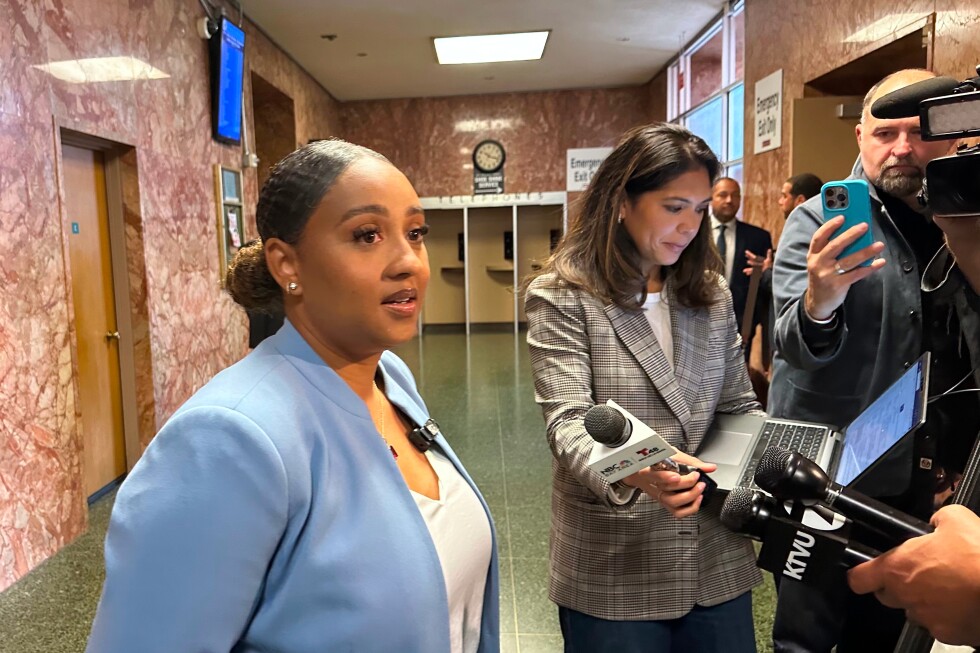
Diamond Ward, Moreno-Gama’s public defender, characterized her client as experiencing a severe mental health crisis at the time of the incident. Following the hearing, Ward told reporters that Moreno-Gama is “a kind, hard-working person who has been publicly advocating for peaceful measures to address the danger of AI on humanity.”
Ward successfully requested a mental health evaluation for Moreno-Gama during the arraignment. The judge approved the evaluation and scheduled a follow-up hearing later this month to review the results. The defense attorney suggested that prosecutors were overcharging her client and ignoring evidence of his mental health issues in an attempt to curry favor with Altman, who has become one of the most prominent figures in the artificial intelligence industry.
San Francisco District Attorney Brooke Jenkins previously stated that evidence supported the serious charges, describing the incident as a “targeted attack on Mr. Altman.” However, Moreno-Gama’s parents released a statement shortly after the attack indicating their son had never previously harmed anyone and had only recently begun experiencing mental health difficulties.
Court filings reveal that Moreno-Gama, who works part-time at a pizzeria while attending community college, had expressed strong anti-AI sentiments in his writings. He reportedly described artificial intelligence as a danger to humanity and warned of an “impending extinction,” according to documents filed with the court.
The case highlights growing tensions surrounding the rapid development of AI technology. OpenAI, under Altman’s leadership, has become a focal point in debates about AI safety and regulation after the company’s ChatGPT sparked both excitement and concern about the capabilities and potential risks of advanced artificial intelligence systems.
Authorities have not disclosed whether Altman was home during the attack, which could have potentially resulted in serious injuries or worse had the fire spread beyond the gate.
In addition to the state charges, Moreno-Gama faces federal prosecution for possession of an unregistered firearm and damage and destruction of property by means of explosives. The state charges alone carry potential penalties ranging from 19 years to life imprisonment, while the federal charges could result in maximum prison terms of 10 and 20 years, respectively.
Moreno-Gama made his initial appearance in federal court last Friday. He remains in custody, as evidenced by his appearance in an orange jail uniform during Tuesday’s state court hearing.
The case underscores the intensifying public discourse around artificial intelligence, with some viewing companies like OpenAI as pioneering beneficial technologies while others express grave concerns about potential existential risks. As the legal proceedings move forward, both the prosecution and defense appear poised to focus significantly on Moreno-Gama’s mental state at the time of the alleged attack.
Fact Checker
Verify the accuracy of this article using The Disinformation Commission analysis and real-time sources.

7 Comments
This is a troubling incident that highlights the need for more open, balanced dialogue around the responsible development of transformative technologies like AI. I hope the legal process will provide opportunities to better understand the suspect’s perspective and mindset, and explore constructive solutions to address legitimate concerns.
The alleged attack on the OpenAI CEO’s home is extremely concerning. However, I’m curious to learn more about the suspect’s reported mental health struggles and whether open, evidence-based discussions about AI risks and mitigation strategies could have prevented this incident. Public safety must be the top priority.
While I don’t condone the alleged actions, I’m interested to understand the suspect’s motivations and mental state. Engaging in thoughtful, respectful discussions about AI development and its societal impacts is crucial, rather than resorting to reckless violence. Public safety must be the top priority.
It’s concerning to see such an extreme reaction to perceived AI risks. I hope the legal proceedings will shed more light on the suspect’s mindset and provide opportunities for constructive discussion on this complex topic. Addressing AI’s challenges requires nuanced, evidence-based approaches, not reckless violence.
I agree. Resorting to attacks is never the answer, even with serious concerns. Hopefully this case can serve as a wake-up call to have more open, solutions-oriented conversations about the responsible development of transformative technologies like AI.
This is a troubling situation. While I don’t condone violence, I’m curious to learn more about the alleged perpetrator’s reported mental health struggles and motivations behind this attack. Public safety and the responsible development of AI are critical issues that deserve thoughtful, peaceful dialogue.
Public figures like the OpenAI CEO must be protected, but this alleged attack seems to stem from deeper issues. I’m curious to learn whether mental health support and open dialogue could have prevented such an extreme response. Addressing AI risks requires nuanced, evidence-based approaches, not violence.