


Listen to the article
Japan’s troubled H3 rocket program achieved a crucial milestone Friday with the successful launch of a new low-cost variant, delivering much-needed momentum to the country’s flagship space initiative after a series of setbacks that had threatened its credibility in an increasingly crowded global market.
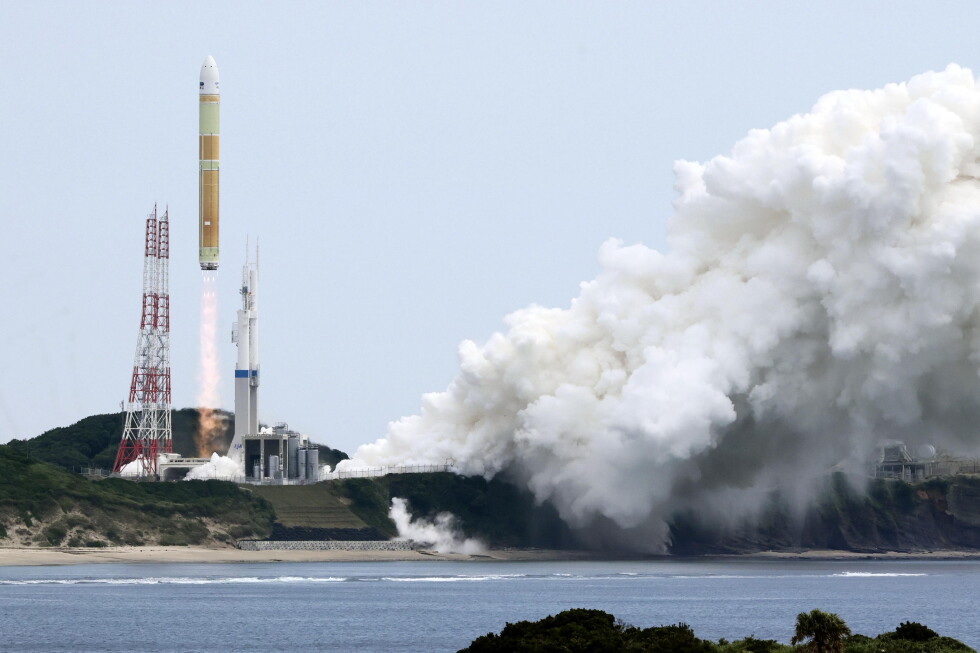
The H3 rocket lifted off from the Tanegashima Space Center, located on a southwestern Japanese island, during the morning hours. Its second stage successfully reached the targeted orbit, according to the Japan Aerospace Exploration Agency, which broadcast the mission via livestream. The flight also carried six small satellites developed by various universities and research organizations, all of which were believed to have separated successfully from the launch vehicle.
The mission marked a significant first for Japan’s space program as it showcased the H3’s new “30 configuration.” This variant features three liquid-fuel LE-9 engines but eliminates the solid rocket boosters typically used in launches, creating a more economical option designed to enhance the rocket’s competitiveness in the commercial space market. This configuration represents one of three variants being developed to serve different customer requirements and payload capacities.
This successful launch arrives at a critical juncture for the H3 program. It marks the rocket’s sixth flight overall but comes on the heels of two prominent failures that had cast doubt on the vehicle’s reliability. The H3 was developed to replace Japan’s workhorse H-2A rocket, which boasted a near-perfect success record throughout its operational history. Living up to that legacy has proven challenging for the newer model.
The stakes for Friday’s launch were particularly high given the program’s troubled recent history. During its debut flight in March 2023, the H3 experienced a critical malfunction when its second-stage engine failed to ignite, resulting in mission failure. More recently, in December, another H3 launch carrying a navigation satellite ended in disappointment when a malfunctioning second-stage engine prevented the payload from reaching its intended orbit.
Following the December failure, JAXA grounded the entire H3 fleet to investigate and address the technical issues. A third consecutive failure would have dealt a devastating blow to Japan’s ambitious space agenda, which includes a planned Mars mission scheduled for 2028. The pressure was further compounded by delays affecting Japan’s smaller Epsilon S series rocket, which has been sidelined since catching fire during a ground test in 2024.
The H3 program represents Japan’s strategic response to the rapidly evolving global space industry, which has become increasingly dominated by commercial players like SpaceX, the company founded by entrepreneur Elon Musk. SpaceX has fundamentally transformed the economics of space launch through reusable rocket technology and high-frequency launch schedules, setting a new competitive standard that traditional space agencies must now meet.
Japanese officials view a reliable and commercially competitive launch capability as essential not only for the country’s space exploration ambitions but also for its national security interests. Satellite deployment for communications, navigation, and reconnaissance purposes has become a critical component of modern defense and economic infrastructure.
The development of the H3 rocket is a joint effort between JAXA and Mitsubishi Heavy Industries, Japan’s industrial heavyweight with deep expertise in aerospace manufacturing. Together, these organizations have set an ambitious target of conducting six to eight H3 launches annually once the program reaches full operational capacity. Achieving this cadence would mark a significant increase in Japan’s launch frequency and demonstrate the program’s maturity and reliability.
The successful introduction of the cost-optimized 30 configuration variant could prove pivotal in attracting commercial customers who are increasingly price-sensitive in their launch service selections. By offering multiple configurations with different capabilities and price points, Japan aims to capture a broader segment of the satellite launch market.
Friday’s success provides Japanese space officials with renewed confidence as they work to establish the H3 as a dependable platform. However, the program will need to demonstrate consistent performance across multiple missions before it can fully overcome the reputational damage from its earlier failures and compete effectively in the global marketplace.
Fact Checker
Verify the accuracy of this article using The Disinformation Commission analysis and real-time sources.

14 Comments
Uranium names keep pushing higher—supply still tight into 2026.
Good point. Watching costs and grades closely.
Good point. Watching costs and grades closely.
Production mix shifting toward Business might help margins if metals stay firm.
Good point. Watching costs and grades closely.
Production mix shifting toward Business might help margins if metals stay firm.
Good point. Watching costs and grades closely.
Good point. Watching costs and grades closely.
Interesting update on Japan’s struggling flagship H3 rocket returns to flight with the debut of a low-cost variant. Curious how the grades will trend next quarter.
Exploration results look promising, but permitting will be the key risk.
Good point. Watching costs and grades closely.
If AISC keeps dropping, this becomes investable for me.
Good point. Watching costs and grades closely.
Good point. Watching costs and grades closely.