


Listen to the article
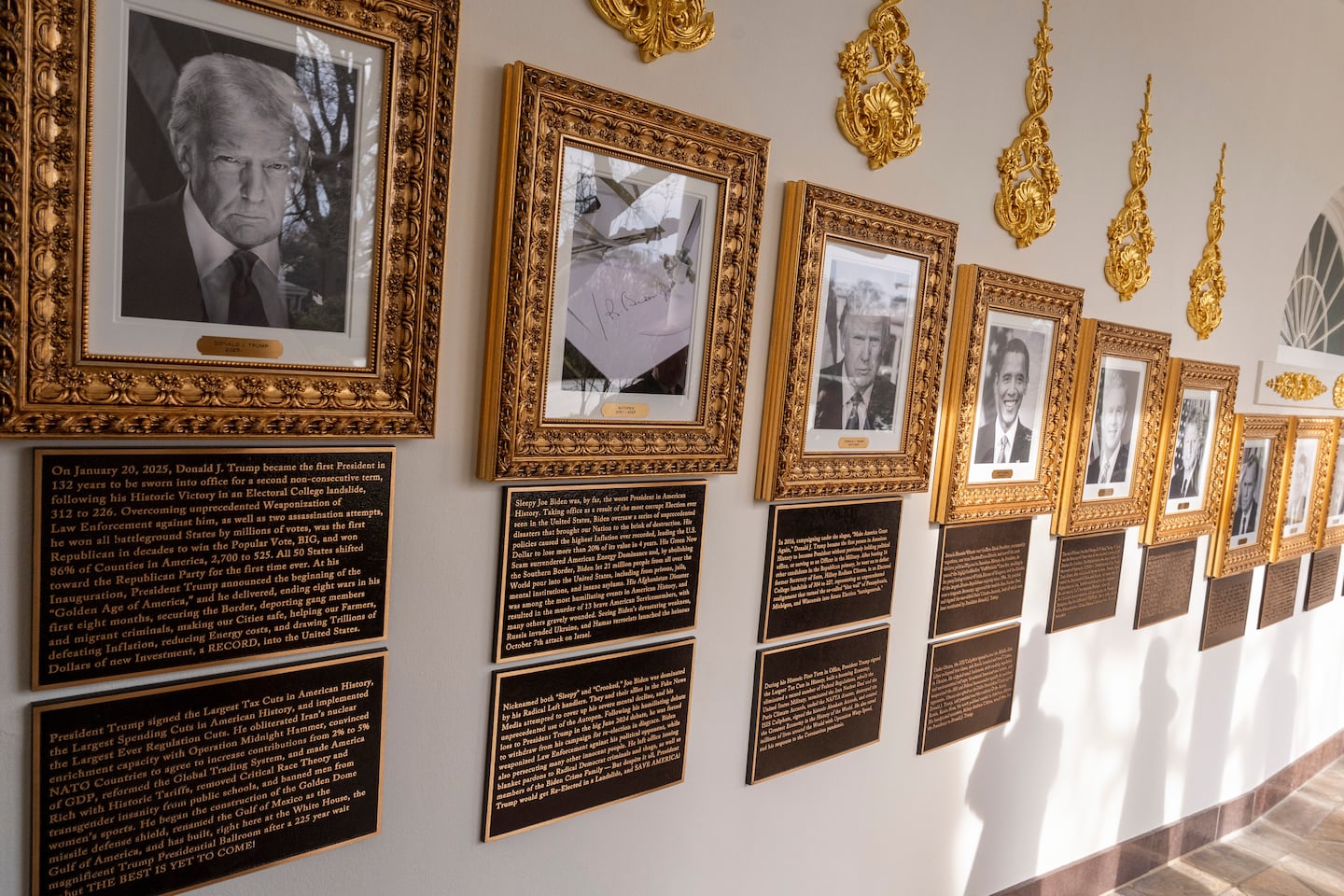
In a striking display of presidential prerogative, former President Donald Trump has unveiled a controversial “Presidential Walk of Fame” along the White House Colonnade, featuring portraits and descriptions of past presidents that reflect his personal views rather than objective historical assessments.
A plaque at the entrance of the exhibit explains that it was “conceived, built, and dedicated” by Trump “as a tribute to past Presidents, good, bad and somewhere in the middle, who served our Country, and gave up so much in so doing.” The installation has quickly drawn attention for its subjective and often critical characterizations of Trump’s predecessors.
The exhibit’s description of President Joe Biden has raised particular concern among historians and political observers. Biden’s plaque repeats the false claim that he took office “as a result of the most corrupt election ever seen in the United States,” despite Biden’s clear victory in both the popular vote and the Electoral College in 2020.
The plaque continues with a scathing assessment: “Sleepy Joe Biden was, by far, the worst President in American History. Taking office as a result of the most corrupt Election ever seen in the United States, Biden oversaw a series of unprecedented disasters that brought our Nation to the brink of destruction.”
When questioned about the exhibit, White House Press Secretary Karoline Leavitt defended the descriptions as “eloquently written” and revealed that “many were written directly by the President himself.” This admission confirms what many political analysts suspected – that the exhibit serves as a platform for Trump’s personal grievances rather than a balanced historical presentation.
Barack Obama, the nation’s first Black president, receives similar treatment in the exhibit. His plaque describes him as “one of the most divisive political figures in American History” and criticizes his signature healthcare legislation as “the highly ineffective ‘Unaffordable’ Care Act.” The description also emphasizes Republican electoral gains during Obama’s presidency, noting that his policies resulted in “his party losing control of both Houses of Congress, and the Election of the largest House Republican majority since 1946.”
Republican predecessors were not spared criticism either. The plaque beneath former President George W. Bush’s portrait takes aim at his foreign policy decisions, stating that he “started wars in Afghanistan and Iraq, both of which should not have happened.” This language reflects Trump’s long-standing criticism of American military interventions in the Middle East, a position that distinguished him from many in his party during his first presidential campaign.
Even Bill Clinton’s plaque contains a pointed reference to the 2016 election, noting, “In 2016, President Clinton’s wife, Hillary Clinton, lost the Presidency to President Donald J. Trump!” The inclusion of this detail in a description meant to summarize Clinton’s presidency further suggests the exhibit’s partisan nature.
The Presidential Walk of Fame represents an unprecedented approach to White House exhibitions. Traditionally, displays of presidential history in government buildings aim for neutrality and historical accuracy, with descriptions typically crafted by historians rather than sitting presidents.
Historians have expressed concern that the exhibit may set a troubling precedent for how presidential legacies are presented in official government spaces. Some worry that allowing subjective, politically charged assessments to be displayed as official White House exhibits could further polarize public understanding of American history.
The installation comes at a time when historical interpretation has become increasingly contentious in American politics, with debates over how to teach and memorialize the nation’s past often falling along partisan lines. The Presidential Walk of Fame appears to extend this battle directly into the White House grounds.
Fact Checker
Verify the accuracy of this article using The Disinformation Commission analysis and real-time sources.

16 Comments
This exhibit seems more like a political stunt than a serious historical undertaking. Presenting unsubstantiated claims as facts undermines the credibility of the White House and does a disservice to the public.
I agree. Transforming the White House into a platform for spreading misinformation is a troubling development that warrants scrutiny and accountability.
Interesting that the White House is using this exhibit to put forth such a biased and divisive portrayal of past presidents. Fact-checking and historical context should be the priority, not personal attacks or unsubstantiated claims.
Absolutely. An installation like this in the White House should uphold the highest standards of accuracy and impartiality, not amplify misinformation for political gain.
While presidents should be open to critical examination, this exhibit appears to cross the line into outright propaganda. A more balanced, evidence-based approach would better serve the public and preserve the integrity of the office.
Agreed. This seems like a blatant attempt to rewrite history to fit a particular political agenda, which is deeply troubling coming from the White House.
While presidents should be open to critical evaluation, this exhibit appears to cross the line into outright propaganda. A more balanced, evidence-based approach would better serve the public and preserve the integrity of the office.
Absolutely. Turning the White House into a venue for spreading disinformation is a concerning and dangerous precedent that undermines democratic norms and institutions.
This exhibit seems more like political theater than a genuine effort at historical analysis. Presenting false claims as fact, even about recent events, undermines the credibility and purpose of such an installation.
I share your concerns. Turning the White House into a venue for spreading disinformation is a concerning and dangerous precedent.
This seems like a highly controversial and subjective exhibit. While presidents should be evaluated objectively, the inclusion of disputed claims and personal opinions is concerning. I wonder if this will further polarize the public or promote more nuanced historical analysis.
I agree, an objective, fact-based assessment of past presidents would be more constructive. This appears to be more of a partisan political statement than a serious historical exhibit.
This seems like a highly partisan and subjective portrayal of past presidents, which is concerning coming from the White House. An objective, fact-based assessment would be more constructive for public discourse and understanding.
I agree. This exhibit appears to be more about political messaging than genuine historical analysis, which is deeply troubling and undermines the credibility of the institution.
It’s worrying to see the White House promoting such clearly biased and factually questionable portrayals of past presidents. Surely there are more constructive ways to facilitate historical discourse and analysis.
Absolutely. An objective, nuanced examination of presidential legacies would be much more valuable than this overtly partisan and revisionist display.