


Listen to the article
Florida Couple Pleads Guilty to Wildfire Disaster Fraud Scheme, Stealing Over $110,000 from FEMA
A Florida couple has admitted to orchestrating an elaborate fraud scheme by falsely claiming to be victims of two devastating wildfires, bilking the Federal Emergency Management Agency (FEMA) of more than $110,000 in disaster relief funds.
Chelsea Johnson, 32, of Tampa, Florida, pleaded guilty Monday to conspiracy to commit wire fraud after falsely claiming she and her ex-boyfriend, Daylyn Harris, 34, were victims of both the August 2023 West Maui wildfires and January’s Los Angeles wildfires. Harris is scheduled to enter his guilty plea on Friday.
The pair was initially charged with one count of conspiracy to commit wire fraud and three counts of disaster fraud for activities spanning from September 2023 through January 2024. A subsequent indictment in July expanded the charges to include six additional counts of wire fraud, though prosecutors agreed to drop these counts in Johnson’s plea agreement.
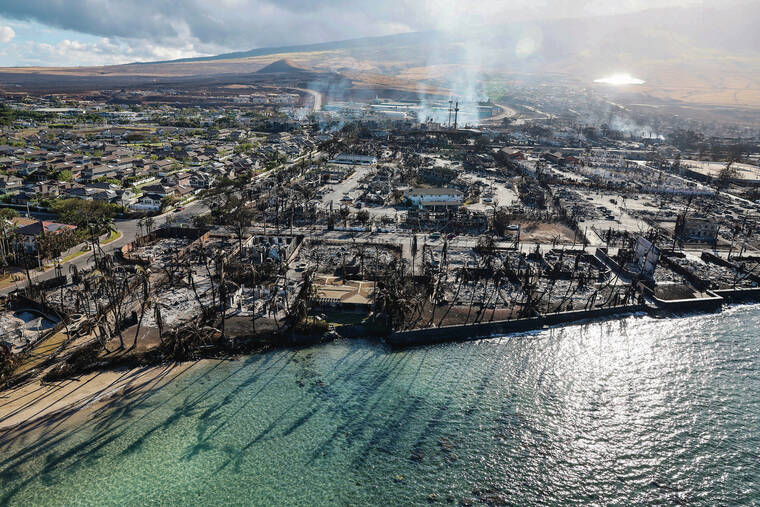
According to federal investigators, the fraud began when Harris submitted an application for disaster assistance on September 6, 2023, claiming his primary residence in Lahaina, Maui had been damaged in the devastating wildfires that killed 102 people and destroyed thousands of homes. In the application, Harris listed Johnson as his landlord.
When FEMA contacted Johnson to verify Harris’s claims, she reportedly panicked and hung up. The scheme quickly began to unravel as investigators discovered the actual property owners had never rented to either Harris or Johnson. In fact, the legitimate owners had filed their own FEMA claims for the same property.
Harris’s deception extended beyond housing claims. He submitted falsified pay stubs from a Lahaina restaurant that had been destroyed in the fires to support claims for lost income. When FEMA contacted the restaurant owner, they confirmed Harris had never been employed there.
In a particularly audacious move, Harris submitted medical reimbursement claims for alleged injuries sustained in the Lahaina fire. He provided what appeared to be a physician’s statement from a major Hawaiian hospital system, claiming medical bills totaling $55,760. FEMA investigators determined the hospital had no record of Harris receiving treatment on the dates reported.
During the investigation, agents discovered a police report from Tampa showing Harris had been arrested for domestic violence against Johnson in Florida – during the same period he claimed to be living in Lahaina.
Despite these inconsistencies, FEMA initially disbursed multiple payments to Harris, including $5,462 in rental assistance, $13,625 for lost personal property, and $27,374 for “other needs assistance” – all between September and October 2023.
The couple didn’t stop with the Maui disaster. Following the January 2024 California wildfires, which killed 30 people and destroyed thousands of structures across 37,000 acres, Johnson filed another fraudulent claim. She alleged her property in Pacific Palisades, California had been damaged, though investigators later confirmed with the actual property owner that Johnson had never lived there and was unknown to them.
Johnson also fabricated a 29-night hotel stay and claimed $3,768 in lost pet grooming tools from a Santa Monica business where she falsely claimed to work. FEMA paid her $770 for critical needs, $9,404 for personal property, and $3,822 for displacement assistance. Bank records revealed that Johnson transferred over 70% of these funds to Harris’s account shortly after receiving them.
The case, prosecuted by Assistant U.S. Attorney Michael F. Albanese, highlights the challenges federal agencies face in balancing rapid disaster response with fraud prevention. FEMA has increasingly strengthened its verification processes following similar fraud cases in recent years.
Johnson’s sentencing is scheduled for March 30. The couple could face substantial prison time and will likely be ordered to pay full restitution for the fraudulently obtained funds.
The case comes amid heightened scrutiny of disaster relief fraud, which diverts critical resources from genuine victims during their most vulnerable moments.
Fact Checker
Verify the accuracy of this article using The Disinformation Commission analysis and real-time sources.

9 Comments
Defrauding FEMA and stealing disaster relief funds is a despicable crime that takes resources away from those who truly need it. I hope these defendants receive appropriate punishment for their fraudulent actions.
Agreed. Exploiting natural disasters for personal gain is morally reprehensible. These criminals should be held fully accountable.
It’s disturbing to see people take advantage of disaster victims in this way. I hope the authorities are able to recover as much of the stolen funds as possible to support legitimate relief efforts.
Absolutely. Disaster fraud undermines public trust and diverts critical resources. Rigorous investigation and prosecution are necessary to deter such unethical behavior.
While I’m glad the defendants have pleaded guilty, the scale of their fraud is truly appalling. Stealing over $110,000 in FEMA funds is a serious crime that deserves harsh penalties.
Agreed. The public should have confidence that disaster relief funds are reaching the intended recipients, not being siphoned off by criminals. Robust oversight is crucial.
This case highlights the importance of verifying claims and vigilantly guarding against fraud in disaster relief efforts. I hope the guilty pleas serve as a deterrent to others considering similar schemes.
Absolutely. Fraud not only robs from genuine victims but also undermines public support for critical disaster assistance programs. Stricter controls are clearly needed.
It’s disheartening to see people exploit natural disasters for personal gain. While I’m glad the defendants were caught, the scale of their fraud is truly appalling. Rigorous investigation and prosecution are necessary to protect disaster relief funds.