


Listen to the article
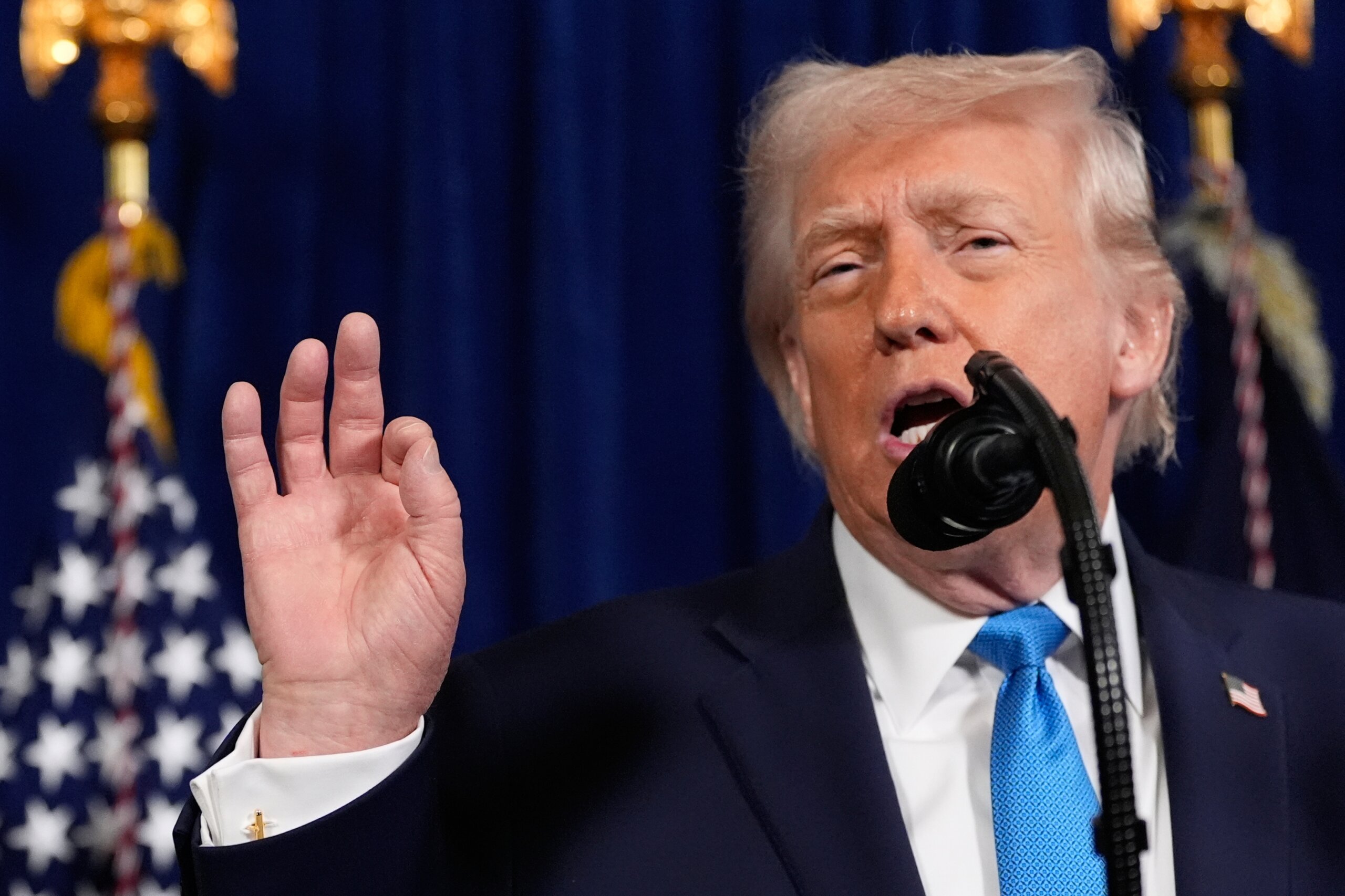
In a lengthy press conference on Saturday, President Donald Trump provided details about the U.S. raid on Venezuela to extract President Nicolás Maduro and his wife. Throughout the briefing, Trump made several assertions about military operations and domestic crime statistics that merit closer examination.
The president highlighted what he described as successful strikes against vessels carrying drugs from Venezuela, claiming that “each boat kills on average 25,000 people.” This figure appears significantly inflated when compared to available data. The U.S. military has targeted approximately 35 boats in Caribbean and eastern Pacific operations since September 2, with the most recent strike occurring on December 31.
Using Trump’s calculation would suggest these operations prevented 875,000 fatal overdoses—a number that exceeds the total drug deaths recorded in recent years. According to preliminary data from the CDC’s National Vital Statistics System, up to 76,516 drug overdose deaths occurred in the U.S. during the 12-month period ending in April 2025, representing a 24.5% decrease from the previous year’s total of 101,363.
Public health experts note that while maritime interdiction plays a role in drug enforcement, it doesn’t align with trafficking patterns for fentanyl, which accounts for 65.1% of drug overdose deaths. Fentanyl typically enters the U.S. overland from Mexico, where it is produced using chemicals imported from China and India.
During the press conference, Trump also made inaccurate statements regarding the impact of National Guard deployments in several major cities. Regarding Washington D.C., he claimed there hadn’t been “a killing in a long period of time. Six, seven months.” Metropolitan Police Department statistics contradict this assertion, documenting 59 homicides in the past seven months, including two last week.
The president’s statement notably overlooked the November 26 fatal shooting of a West Virginia National Guard member by an Afghan national—an incident FBI Director Kash Patel has characterized as a potential act of terrorism. Since the Guard’s deployment to the capital on August 11, the city has recorded 29 homicides, with a total of 126 for 2025.
Trump similarly overstated the impact of National Guard operations in Chicago, where legal challenges prevented troops from conducting street patrols. When the Chicago deployment faced court scrutiny, Justice Department representatives clarified that the Guard’s mission was limited to protecting federal properties and personnel, not “solving all of crime in Chicago.”
Crime statistics from Chicago show mixed results between 2020 and 2024, with homicides decreasing by 25% while rape increased 27%, robbery rose 17%, and aggravated assault climbed 11%.
Regarding Los Angeles, Trump claimed his administration “saved Los Angeles early on” through military deployments. The operation initially involved approximately 4,000 National Guard members and 700 Marines tasked with guarding federal buildings and supporting immigration enforcement actions. By December 15, most troops had withdrawn following legal challenges from California Governor Gavin Newsom.
The dispute over control of California’s National Guard forces was recently settled by the U.S. Court of Appeals for the Ninth Circuit, which ordered the administration to return command authority to Governor Newsom.
The president’s statements about criminal activity and military operations reflect a pattern of selective interpretation and overstatement that has characterized his public comments throughout his presidency, particularly on matters of national security and law enforcement.
Fact Checker
Verify the accuracy of this article using The Disinformation Commission analysis and real-time sources.

14 Comments
It’s concerning to see the president making unsubstantiated claims about the effects of the drug interdiction efforts. Reliable data and impartial analysis are essential to evaluate the true effectiveness and consequences of these actions.
I share your concern. Exaggerated figures undermine public trust and make it difficult to have a meaningful discussion about these important issues. Fact-based reporting is essential.
The president’s statements about the drug interdiction operations raise some red flags. Claiming each boat kills 25,000 people is an incredible statistic that needs to be backed up by credible evidence. I hope authorities can provide more accurate data to the public.
Absolutely, the numbers cited seem far-fetched and require closer scrutiny. Transparency around the real impact of these operations is crucial for informed public discourse.
The president’s claims about the impact of the maritime drug interdiction operations raise serious concerns due to the apparent inflation of the statistics. Transparent and fact-based reporting is crucial to assess the true effectiveness of these efforts and inform future policy decisions.
Absolutely. Unsubstantiated figures undermine public trust and make it difficult to have a constructive dialogue. Rigorous data and impartial analysis are essential to evaluate the real-world impact of these operations.
While the goal of disrupting drug trafficking is understandable, the president’s statistics about the impact of the maritime operations seem highly questionable. More rigorous data and impartial analysis are needed to properly evaluate the effectiveness of these efforts.
I agree, the numbers cited by the president appear to be significantly exaggerated. Reliable information is essential to have a meaningful discussion about these important issues and their real-world consequences.
The president’s statements about the drug interdiction operations are concerning due to the apparent exaggeration of the figures. Accurate data and objective evaluation are essential to understand the real impact of these efforts and inform future policy decisions.
Absolutely. Inflated statistics undermine the credibility of these claims and make it difficult to have a constructive dialogue. Transparency and fact-based reporting are crucial in this context.
While combating drug trafficking is a noble goal, the president’s statements about the impact of these maritime operations raise serious questions. The public deserves accurate information and transparency around the actual outcomes of these efforts.
I agree, the president’s claims seem highly dubious and require rigorous verification. Reliable data and impartial analysis are crucial to assess the true effectiveness of these interdiction activities.
Interesting claims by the President, but the numbers seem highly exaggerated. I wonder what the actual data says about the impact of these maritime operations. More transparency and fact-checking would be helpful to assess the true effectiveness.
I agree, the figures cited by the President appear to be significantly inflated compared to the available data. Reliable statistics are important to properly evaluate the impact of these efforts.