


Listen to the article
Trump’s Pattern: False Claims, Attempted Corrections, and Repeated Falsehoods
A recurring pattern in President Donald Trump’s communication style has emerged once again, playing out across two significant issues in recent days: grocery prices and FBI presence during the January 6, 2021 Capitol riot.
The three-step cycle has become familiar to observers of the administration: Trump makes a false or inflammatory claim, his officials attempt to clarify or correct the statement with more factual information, and then Trump simply repeats his original assertion, disregarding his team’s efforts.
This pattern was on full display in the past 24 hours regarding both economic metrics and the events of January 6th.
On the economic front, Trump has repeatedly claimed this fall that grocery prices are “down” or “way down” during his second presidency. Data contradicts this assertion. As of September, grocery prices had actually increased approximately 1.4% since January when Trump took office, and were up about 2.7% from September 2023.
Kevin Hassett, director of the White House’s National Economic Council, initially echoed Trump’s false assertion on CBS on November 9, claiming grocery prices were “down significantly under Trump.” However, Hassett adjusted his stance the following day during a CNN interview with Kaitlan Collins, acknowledging that “not everything” is down in grocery prices, while noting certain items like eggs had decreased in price.
When pressed about the discrepancy between Trump’s categorical claims and reality, Hassett attempted to reframe the president’s statement, saying: “Inflation is down, is what he means.”
The White House communication team employed a similar strategy in a Friday press release, highlighting the decline in average monthly inflation and carefully stating that grocery staples “are starting to see declines.” The release then listed specific items that have become cheaper during Trump’s presidency—eggs, ham, butter, and ice cream—while omitting the fact that most grocery products have become more expensive.
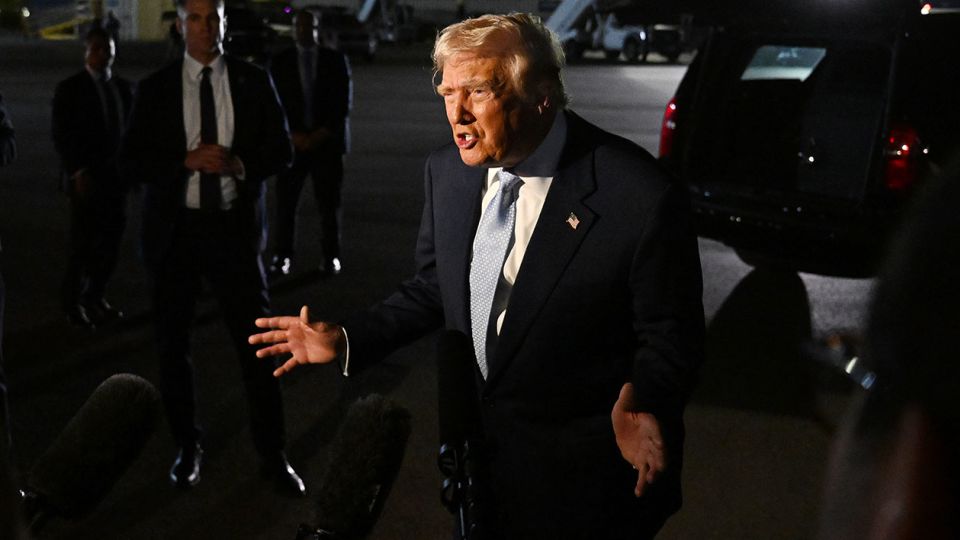
Despite these efforts at damage control, Trump doubled down on Sunday when speaking to reporters: “From an economic standpoint, our prices are coming down very substantially on groceries and things. They’re already at a much lower level than they were with the last administration.” This directly contradicted Hassett’s attempt to reinterpret the president’s meaning.
A similar pattern emerged regarding Trump’s claims about FBI involvement on January 6, 2021. In late September, Trump posted on social media that “274 FBI Agents” had been “secretly placed” into the crowd at the Capitol, “probably acting as Agitators and Insurrectionists.”
This claim distorted information from a right-wing website that had published a document stating 274 FBI agents were deployed on January 6. However, the document indicated these agents were responding to the riot and other incidents that day, not instigating violence. Additionally, the Justice Department inspector general found last year that the FBI had no undercover agents at the Capitol on January 6, though 26 paid informants were in Washington.
Kash Patel, Trump’s appointed FBI director, attempted to correct the record, telling Fox News that agents “were sent into a crowd control mission after the riot was declared by Metro Police.” Patel added this was “against FBI standards,” but his statement clearly refuted the president’s conspiracy theory about agents instigating the riot.
Despite this correction from his own FBI director, Trump revived his conspiracy theory nearly two months later, reposting his September claim and adding a new post on Monday baselessly stating “Wray lied!!!” while promoting calls for former FBI Director Christopher Wray to be indicted and imprisoned.
This recurring pattern of presidential communication—making false claims, team corrections, and presidential repetition—continues to challenge the administration’s messaging coherence and raises questions about information integrity at the highest levels of government.
Fact Checker
Verify the accuracy of this article using The Disinformation Commission analysis and real-time sources.

12 Comments
While I understand the desire to put a positive spin on things, repeatedly making false claims and then contradicting staff efforts to correct the record is unacceptable. The administration needs to focus on providing accurate, evidence-based information to the public.
This pattern of false claims and contradictions is very concerning. The public needs to be able to trust the information coming from the White House, especially on important economic and political issues. Improved transparency and accountability would go a long way.
This back-and-forth over false claims is quite troubling. The public needs to be able to trust the information coming from the White House, especially on important issues like the economy and January 6th. Improved transparency and accountability would be a step in the right direction.
While I understand the desire to present a positive narrative, repeatedly making false claims and then contradicting staff efforts at correction is highly problematic. The administration needs to focus on providing factual, evidence-based information to the public.
It’s concerning to see this pattern of false claims and contradictions from the administration. Providing accurate, factual information is crucial, especially on important issues like the economy and January 6th. I hope they can do better at aligning their messaging going forward.
It’s disheartening to see the President continue to make false claims even after his staff has tried to correct the record. Consistent, factual communication should be a top priority for any administration. I hope they can work to improve their approach.
It’s troubling to see the President disregarding his staff’s efforts to provide more factual information. Clear, consistent, and truthful communication should be a basic expectation for any administration. I hope they can work to improve their approach going forward.
This pattern of false claims and contradictions is deeply concerning. The public deserves leaders who are committed to transparency and accountability, not repeated falsehoods. I hope the administration can course-correct and focus on providing accurate information.
It’s disappointing to see the President continue to make false claims even after his staff has tried to correct the record. Providing accurate, consistent information should be a top priority for any administration. I hope they can improve their approach going forward.
While I appreciate the desire to present a positive narrative, repeatedly making false claims and then contradicting staff attempts at correction is highly problematic. The administration needs to prioritize factual, evidence-based communication to rebuild public trust.
This back-and-forth between the President and his staff over false claims is quite troubling. The public deserves clear, consistent, and truthful information from their leaders, not repeated contradictions. Hopefully they can work to improve transparency and accountability.
I agree, it’s important for the administration to be upfront and transparent, rather than doubling down on falsehoods. Rebuilding public trust will require a commitment to facts and accuracy.