


Listen to the article
Income Tax Department’s Email Notices Cause Concern Among Taxpayers as Refunds Hang in Balance
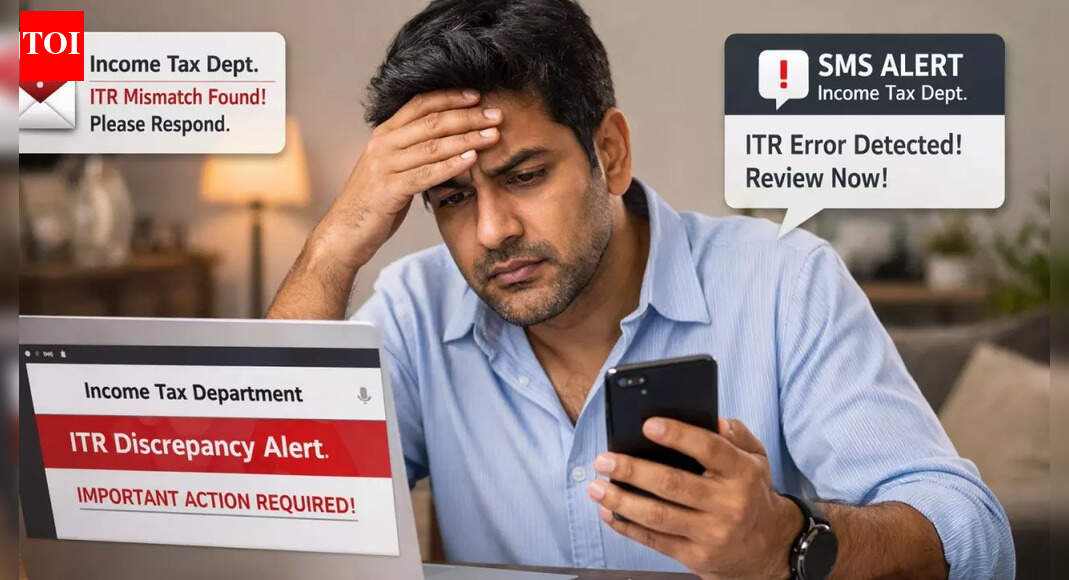
The Income Tax Department has begun sending emails and text messages to taxpayers alerting them about mismatches in their deduction and exemption claims during the processing of income tax returns. These communications, arriving just before year-end, have caused significant concern among recipients as they indicate that tax refunds and return processing have been temporarily halted.
The notices primarily target two categories of taxpayers: salaried individuals whose claims don’t align with their Form 16 (the tax certificate provided by employers), and wealthy individuals who have made substantial charitable donations, often exceeding Rs 2 lakh.
A December 23 statement from the tax department characterized this initiative as an effort to assist taxpayers and promote voluntary compliance. However, the blunt wording of these communications has left many recipients confused about appropriate next steps, including whether they should ignore the messages or file revised returns before the December 31 deadline.
The department cited several reasons for flagging returns, including incorrect permanent account numbers (PANs) for recipient charities, organizations not being registered under Section 80G of the Income Tax Act, and refund claims under the old tax regime that “appear to be high compared to the gross salary.”
Other grounds for holding tax return processing include leave travel allowance claims significantly higher than employer-reported figures, capital gains declarations that don’t align with official records, unusually high house rent allowance claims, or donations exceeding permissible deduction thresholds.
Tax professionals have pointed out that many flagged returns contain accurate information. According to an Economic Times report, numerous taxpayers have expressed confusion after being questioned about donations to a well-known yoga and spiritual development foundation in southern India. Under current regulations, taxpayers can claim deductions for 50% of qualifying donations, with the deductible amount capped at 50% of the total contribution to registered organizations.
These communications, while concerning to recipients, are not formal notices and don’t appear on the official income tax portal. The messages reference discrepancies between taxpayer claims and information in the Annual Information Statement (AIS) and Taxpayer Information Summary (TIS), which are auto-generated records compiled from transaction data reported by various third parties.
Mohit Bang, partner at Hyderabad-based chartered accountancy firm Trivedi & Bang, criticized the approach: “A policy that may have been conceived with good intentions has been undermined by ineffective communication. The use of charged terms such as ‘false claims’ for donations flagged by risk systems has rattled taxpayers who have followed the rules.”
Bang highlighted a deeper incongruity in the system, noting that it’s troubling when “contributions made via traceable banking channels to institutions approved by the government are described as potentially false.” He suggested the department should fine-tune its data analytics to minimize false positives and ensure automated communications guide rather than intimidate compliant taxpayers.
Another concern raised by tax experts is the timing of these notices. Many taxpayers report refunds being delayed for more than four months after filing, while these discrepancy notices arrive just a week before the revision deadline.
Ashish Karundia, founder of chartered accountancy firm Ashish Karundia & Co, pointed out that existing safeguards already require recipient organizations to submit Form 10BD and issue donor-specific certificates in Form 10BE, which taxpayers rely on when filing returns. “This information is easily accessible for system-driven verification of legitimate claims,” he noted.
For salaried taxpayers, discrepancies between Form 16 and tax returns often occur because investment details couldn’t be submitted to employers before internal deadlines, typically in November or December. However, there is no legal prohibition against claiming legitimate deductions that weren’t communicated to employers within these timeframes.
“Even though the objective may be constructive, the release of these communications toward the end of the year has unsettled many compliant taxpayers,” Karundia concluded. He suggested that earlier engagement during the filing season would give individuals sufficient opportunity to address discrepancies in a more orderly manner.
Fact Checker
Verify the accuracy of this article using The Disinformation Commission analysis and real-time sources.

8 Comments
Interesting to see the tax department taking a closer look at deduction and exemption claims. Maintaining transparency and accuracy in tax filings is important for both taxpayers and the government.
Agreed. While the notices may cause temporary inconvenience, it’s good the department is proactively addressing potential issues before finalizing returns.
Flagging mismatches in deductions and exemptions is prudent, but the department needs to strike a balance between enforcement and providing guidance to taxpayers. Transparent communication is key.
While tax audits can be frustrating, they help maintain the integrity of the system. Taxpayers should work closely with the department to resolve any discrepancies before the deadline.
Agreed. A collaborative approach is better than an adversarial one. The tax department should aim to educate and assist taxpayers, not just issue stern warnings.
This initiative seems like a reasonable effort to ensure accurate tax filings, but the department should be mindful of the impact on taxpayers, especially during the busy year-end period.
This seems like a reasonable move by the tax department to ensure claims align with tax certificates and prevent abuse. Taxpayers should review their filings carefully to avoid delays.
The goal appears to be promoting voluntary compliance, which is a positive step. However, the department should aim to communicate in a clearer, less confusing manner.