


Listen to the article
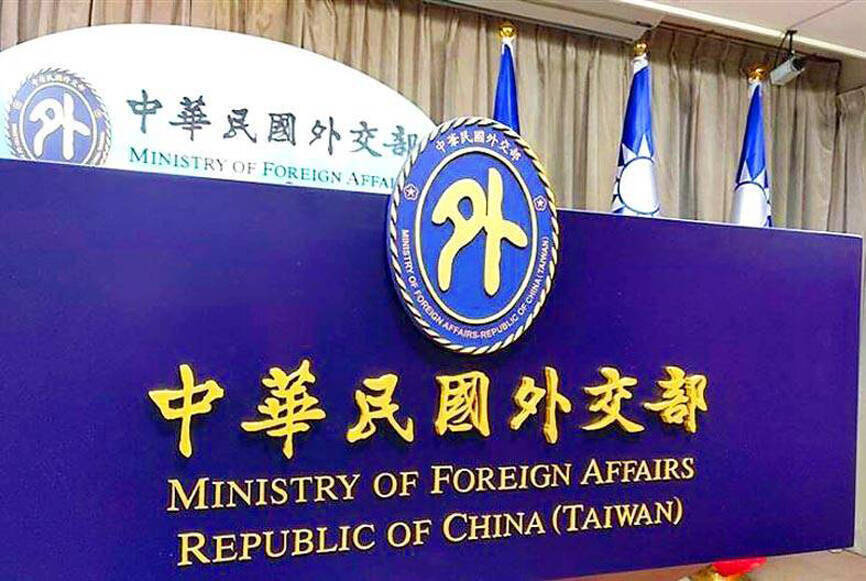
In a forceful rebuke, Taiwan’s Ministry of Foreign Affairs (MOFA) has condemned China for what it calls a deliberate distortion of truth regarding Taiwan’s sovereignty status, following Beijing’s release of a policy paper on Latin America and the Caribbean.
The dispute erupted after China’s Ministry of Foreign Affairs published “China’s Policy Paper on Latin America and the Caribbean” on Wednesday, reiterating its position that the “one China” principle forms the fundamental basis for China’s diplomatic relations with other nations.
The Chinese policy document specifically stated: “The Chinese government appreciates that the vast majority of LAC countries abide by the one China principle, recognize that there is but one China in the world, Taiwan is an inalienable part of China’s territory, and the government of the People’s Republic of China [PRC] is the sole legal government representing the whole of China, [and] oppose ‘Taiwan independence’ in any form.”
Taiwan’s foreign ministry responded with a sharp rejection of these claims, issuing a statement that expressed “strongest condemnation” of Beijing’s assertions. The ministry emphatically countered that “the Republic of China [ROC] is a country with independent sovereignty, and the ROC and the PRC are not subordinate to each other.”
MOFA further emphasized that the Chinese Communist Party has never exercised governance over Taiwan, describing this as “not only the objective status quo, but also a common fact accepted by the international society.” The ministry insisted that attempts to mischaracterize Taiwan’s sovereign status would not alter this reality.
The Taiwanese government pointed to its diplomatic relationships in Latin America and the Caribbean as concrete evidence contradicting China’s territorial claims. Taiwan currently maintains official diplomatic ties with several nations in the region, including Guatemala, Honduras, and Paraguay, though China has successfully persuaded other countries to switch diplomatic recognition in recent years.
In a pointed criticism of China’s international development initiatives, Taiwan’s foreign ministry accused Beijing of entrapping nations in debt “under the guise of cooperation.” The statement suggested that the global community has grown increasingly skeptical of China’s overtures, characterizing them as “meretricious, sugar-coated poison.”
This diplomatic clash highlights the ongoing tensions in the Taiwan Strait, which have intensified in recent years as China has ramped up military exercises around the island and increased pressure on Taiwan’s remaining diplomatic allies to isolate Taipei internationally.
Taiwan, officially known as the Republic of China, has been governed separately from mainland China since 1949 when the Chinese civil war resulted in Communist forces taking control of the mainland while the defeated Nationalist government retreated to Taiwan. The People’s Republic of China has never ruled Taiwan but considers the island part of its territory and has not renounced the use of force to achieve unification.
The dispute over the policy paper emerges against a backdrop of China’s growing influence in Latin America and the Caribbean, regions traditionally within the United States’ sphere of influence. China has dramatically expanded its economic presence in these areas through trade, investment, and infrastructure projects under its Belt and Road Initiative.
MOFA concluded its statement with a call for international solidarity against what it termed China’s “persistent malicious lies,” pledging that “Taiwan will not succumb to the threats and diplomatic suppression by China’s authoritarian regime.” The ministry reaffirmed Taiwan’s commitment to protecting democratic values and collaborating with allies and like-minded nations to maintain peace and stability in the Taiwan Strait and broader Indo-Pacific region.
As cross-strait relations continue to deteriorate, this latest diplomatic confrontation underscores the fundamental disagreement over Taiwan’s status that remains at the heart of one of Asia’s most volatile geopolitical flashpoints.
Fact Checker
Verify the accuracy of this article using The Disinformation Commission analysis and real-time sources.

8 Comments
This is a concerning development. China’s policy paper seems to be a clear attempt to undermine Taiwan’s independence and international recognition. Taiwan’s foreign ministry is right to strongly condemn these false claims.
Absolutely. China’s one-China principle is a political stance, not an objective fact. Taiwan has its own democratically-elected government, military, and international presence. Ignoring these realities is disingenuous.
It’s concerning to see China continuing to make false claims about Taiwan’s sovereignty. Taiwan is a democratic, independent country, not part of China’s territory. I hope the international community stands firm in supporting Taiwan’s right to self-determination.
I agree, Taiwan’s status is a complex issue and China’s aggressive posturing is worrying. Countries should respect Taiwan’s sovereignty and avoid getting dragged into this geopolitical dispute.
This is a textbook example of China flexing its geopolitical muscle. Attempting to unilaterally claim sovereignty over Taiwan through a policy paper is an aggressive move that disregards Taiwan’s actual status. I’m glad to see Taiwan pushing back.
Agreed. China’s actions here seem designed to isolate Taiwan diplomatically. It’s important for democratic nations to stand up to such blatant attempts to undermine another country’s autonomy.
Taiwan’s forceful rebuke of China’s false claims is justified. As a thriving democracy, Taiwan deserves to have its sovereignty respected on the global stage. I hope the international community continues to support Taiwan’s independence.
China’s policy paper is a concerning escalation in its long-running efforts to assert control over Taiwan. Taiwan’s foreign ministry is right to strongly condemn these false claims about Taiwan’s sovereignty. Maintaining Taiwan’s independence is crucial.