


Listen to the article
Court Order Silences Pet Cemetery Redevelopment Critic in Surrey
It’s a story of alleged lies about what lies beneath.
A B.C. Supreme Court judge has issued a consent order banning a local cat sitter from making defamatory claims about the owners of a former pet cemetery in Surrey and the site itself, which is slated for redevelopment.
Kristin Schumacher was sued by Turnberry Developments and owner Lynn Weir after she allegedly made false claims about the half-acre property located at the corner of 147A Street and 78 Avenue, including assertions that human remains were buried alongside pet remains at the site.
The court order prohibits Schumacher from publishing or republishing any defamatory statements about Turnberry Developments, Weir, or the property under her name or any aliases. She must also remain at least 100 meters away from the property and is barred from contacting Weir or the company. The order dismissed all claims against Schumacher without costs.
In a letter obtained by CBC News, Schumacher expressed regret for her statements: “I said things about the Property, especially in regards to the presence of human remains, based on information I had gathered but which was not based on solid or reliable evidence or anything that provides proof positive of these propositions.”
Turnberry Developments welcomed “the resolution of this matter and the clarity it brings to the public record,” according to an emailed statement.
A Cemetery Born from Love
The pet cemetery has a history dating back 70 years. According to a 1981 article in The Province, Nellie and Daniel Blair established the cemetery in 1952 after struggling to find a dignified resting place for their beloved Pomeranian, Tootsie.
“My husband had to go out to the city dump,” Nellie was quoted as saying. “He gave the man a couple of bucks to let him bury her under a tree where she would be undisturbed for a while. We were very upset and thought a lot of other people would feel the same way about having to treat dead pets as a garbage disposal problem.”
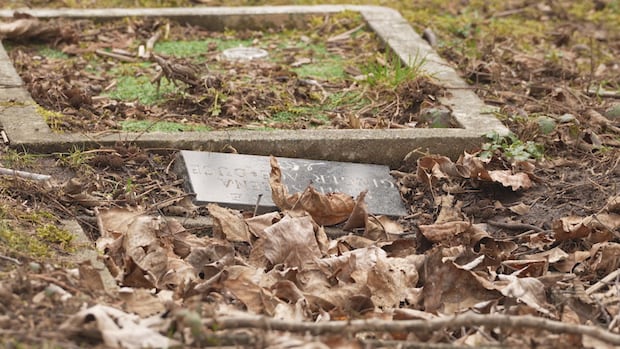
For approximately 40 years, the cemetery accepted deceased pets. Even today, weathered memorials to animals like Spokey, Terry, and Dahlia remain visible. One headstone for a pet who lived from 1976 to 1986 simply states, “Dahlia. We miss you.”
Development Plans and Property Rights
Turnberry purchased the site along with several surrounding acres in 1993, developing most of the land as single-family homes while preserving the pet cemetery. According to court documents, the company maintained the site and paid taxes on it for decades.
The lawsuit states that in 1995, Turnberry attempted to donate the property to the City of Surrey as parkland, but city officials declined the gift. The company also noted in court filings that the pet cemetery was unregulated and that “there is no legal impediment or prohibition to Turnberry developing the property, or otherwise dealing with it, as permitted under the applicable zoning.”
In 2023, Turnberry applied to subdivide the site into three residential lots, a process they claim was carried out “lawfully and respectfully in light of its historic use as a pet cemetery.” This included communication with cemetery regulator Consumer Protection B.C., which confirmed the site was never a place of human interment, and offering past pet owners the opportunity to claim headstones and remains.
The property’s value has increased substantially in recent years, with B.C. Assessment valuing it at $942,000—up approximately 50 percent since 2021.
The Campaign Against Development
According to Turnberry’s lawsuit, Schumacher engaged in a “campaign of defamation, harassment and interference” against the property. She started an online petition opposing the redevelopment, contacted elected officials, and sought legal guidance to stop the project.
The statement of claim alleged that Schumacher spread “misinformation and falsehoods” about the property’s history, its lawful uses, and made false assertions about human remains being present on the site.
One passage from her petition read: “The total disregard for this cemetery and those buried in it, (yes meaning also the supposed humans buried here as well), is a hideous display of a sick mind. In effect they have desecrated graves that possibly have human remains in them…. Is this not the attempt to tamper with human remains?”
Turnberry claimed Schumacher’s actions caused economic harm by delaying development of the property.
In her initial response to the lawsuit, Schumacher denied wrongdoing, arguing she had “a right to engage in the democratic process” and citing legal precedents protecting fair comment and public interest discourse. However, her later letter of apology expressed contrition: “I did not mean to attack Ms. Weir’s morals or character but I was very upset when I stated certain things. Now, after spending many hours of self-analysis, I can see that I was wrong and I am sorry.”
Legal Status of Cremated Remains
A 1969 story in The Province reported that one man’s ashes were buried with his three dogs in 1962, and former owner Nellie Blair had planned to have her ashes scattered there as well.
However, Consumer Protection B.C. clarified that provincial law treats cremated human remains differently from “human remains,” which refers to a dead human body in any stage of decomposition. Ashes do not legally designate land as a cemetery or protect it from being sold or redeveloped.
“The Cremation, Interment and Funeral Services Act says a person must not disinter or remove human remains from the place they are interred unless the removal is in accordance with the Act, or permitted under the Heritage Conservation Act,” a spokesperson explained. “Pet remains are not included under our legislation.”
Daniel Reid, a defamation law specialist not involved in the case, noted that the strong emotional connections people have with pets likely intensified the conflict. He observed that he and other defamation lawyers are seeing more cases arising from online postings, including petitions and fundraisers.
“I can understand, given how close we are to the United States, so much of our social media comes out of the United States, how people are used to seeing a certain way of talking online,” Reid said. “The takeaway should be, for everyone, be careful about what you say online because Canadian law protects reputation.”
The City of Surrey has confirmed that the land has now been subdivided, and construction and utility permits for the lots can be applied for.
Fact Checker
Verify the accuracy of this article using The Disinformation Commission analysis and real-time sources.

10 Comments
Interesting case about alleged false claims regarding a pet cemetery redevelopment. It’s important to respect the legal process and not make unsubstantiated statements, even if well-intentioned. Curious to learn more about the evidence and facts behind this dispute.
Agreed, the court order seems reasonable to prevent further defamatory claims without clear proof. Hoping the full facts come to light through proper channels.
Banning someone from making claims about a property is a serious step. I hope the court order was necessary and proportionate to the situation, based on a careful assessment of the facts.
Agreed, the court should only take such measures if the evidence clearly supports it. Protecting free speech is important, but so is preventing the spread of false or defamatory information.
The pet cemetery redevelopment saga raises important questions about preserving historical sites and respecting community concerns. I hope an amicable solution can be found that balances property rights and public interest.
Well put. Redevelopment projects often involve tricky tradeoffs. Transparent communication from all parties could go a long way in finding a fair compromise.
While the court order may seem heavy-handed, making unsubstantiated claims about buried remains is a serious matter. I hope the full facts come to light through proper legal channels.
Well said. Responsible reporting and civil discourse are key, even on sensitive topics like this.
This case highlights the challenges around making claims about buried remains, especially for sensitive sites like cemeteries. Rigorous evidence-gathering is crucial before making public allegations.
The pet cemetery redevelopment story raises complex issues at the intersection of property rights, historical preservation, and public interest. A nuanced, evidence-based approach is needed to balance these competing priorities.