


Listen to the article
Spanish authorities have launched a significant legal challenge against Uber Eats, demanding €110 million ($118 million) in unpaid social security contributions after determining the food delivery platform improperly classified thousands of delivery workers, government officials confirmed Monday.
The Spanish Labor Inspectorate, an agency operating under the Ministry of Labor, concluded that Uber Eats incorrectly designated approximately 60,000 delivery drivers as independent contractors when they should have been classified as employees entitled to full labor protections and benefits.
The investigation, which began last summer and was first reported by Spanish newspaper El País, represents one of Europe’s largest enforcement actions against a gig economy platform over worker classification issues. Officials determined that Uber Eats had engaged in what Spanish labor law terms “false self-employment” – a practice where companies classify workers as independent contractors to avoid paying social security contributions, vacation time, and other employment benefits.
“This is not merely an administrative matter but a fundamental question of workers’ rights in the digital economy,” said a spokesperson for Spain’s Ministry of Labor, who declined to be named as they weren’t authorized to speak publicly on ongoing cases. “The rules that apply to traditional employers must also apply to digital platforms.”
The Spanish government’s claim specifically targets unpaid social security contributions that would have been required had the delivery drivers been properly classified as employees. These contributions fund Spain’s healthcare system, unemployment benefits, and retirement pensions.
Spain has been at the forefront of European efforts to regulate gig economy platforms. In 2021, the country implemented a groundbreaking “Rider Law” that established a presumption of employment for food delivery workers. The legislation came after Spain’s Supreme Court ruled in 2020 that riders for Glovo, another delivery platform, should be considered employees rather than independent contractors.
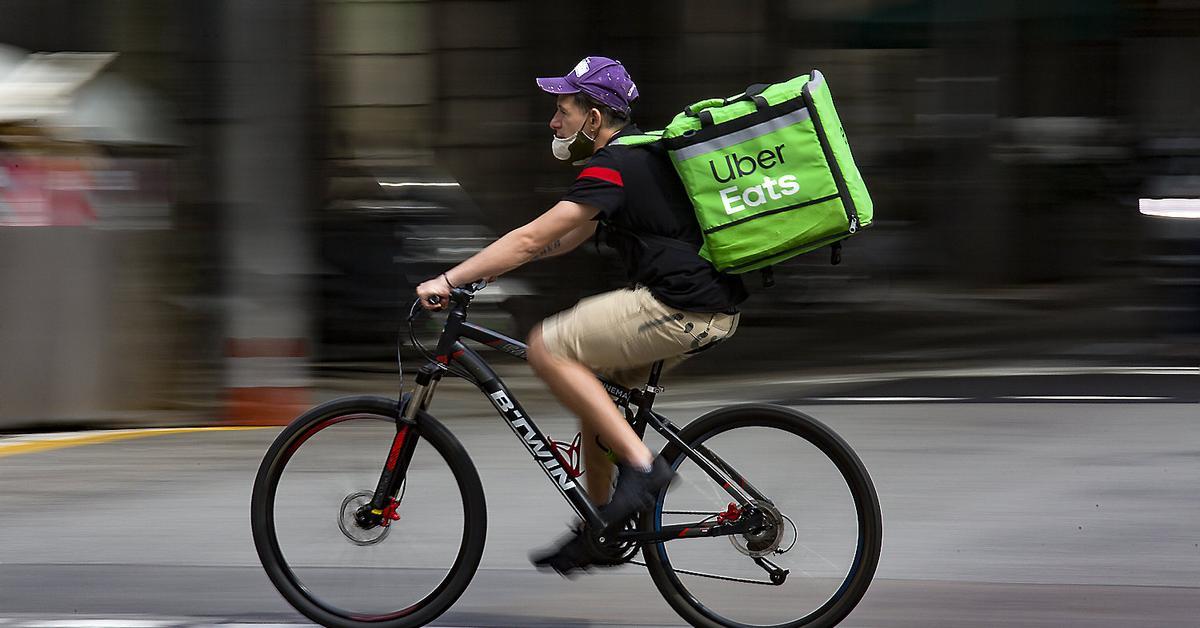
Uber Eats, which entered the Spanish market in 2016, has expanded rapidly across major cities including Madrid, Barcelona, Valencia, and Seville. The platform connects restaurants with delivery drivers who typically use bicycles or motorbikes to fulfill orders.
In response to the government’s claim, an Uber spokesperson said the company would “review the findings and consider all available legal options.” The spokesperson added that their delivery model “provides flexibility that thousands of couriers value,” while declining to comment specifically on the €110 million figure.
Labor unions in Spain have welcomed the government’s action. “This vindicates what we have been saying for years—these are not entrepreneurs or freelancers, but workers being denied their basic rights,” said Pepe Álvarez, secretary-general of the Unión General de Trabajadores (UGT), one of Spain’s largest labor unions.
The case could have far-reaching implications for the gig economy throughout Europe. Several countries, including Italy, Belgium, and the Netherlands, have ongoing investigations or court cases examining similar worker classification issues.
Analysts suggest that forcing delivery platforms to reclassify workers as employees could significantly impact their business models, potentially increasing operational costs by 20-30 percent, according to estimates from industry consultants.
“This is part of a broader European regulatory convergence on platform work,” explained Manuel Hidalgo, labor economist at Pablo de Olavide University in Seville. “We’re seeing a clear push to extend traditional employment protections to workers in the digital economy, despite resistance from platforms that have built their business models on independent contractor relationships.”
Uber Eats now has an opportunity to appeal the Labor Inspectorate’s findings before potential court proceedings. If the company exhausts all appeals and is ultimately unsuccessful, it would not only face the substantial financial penalty but might also need to restructure its entire Spanish operation.
Fact Checker
Verify the accuracy of this article using The Disinformation Commission analysis and real-time sources.

16 Comments
It’s encouraging to see the Spanish government taking strong action to protect workers’ rights in the gig economy. This case could set an important precedent for other countries to follow.
Agreed, this case highlights the need for robust labor regulations that keep pace with the evolving gig economy landscape.
The Spanish government’s actions highlight the growing scrutiny gig economy companies face over worker rights. It will be interesting to see how this plays out and whether it sets a precedent.
€110 million is a significant penalty. It shows Spain is taking a firm stance on this issue and the potential costs for companies that misclassify workers.
The Spanish government’s demand for €110 million in unpaid contributions is a significant move. It will be interesting to see how Uber Eats responds and whether this leads to broader changes in the industry.
This case underscores the ongoing debate over worker classification and the need for clear, enforceable policies to protect gig workers’ rights.
Worker misclassification is a complex issue without easy solutions. While platforms argue for flexibility, workers deserve fair protections. Finding the right balance is crucial as the gig economy evolves.
Agreed, this case underscores the need for clear, enforceable labor policies that keep pace with technological and economic changes.
The €110 million penalty is a significant financial impact for Uber Eats. It will be important to see how this case unfolds and whether it leads to changes in the company’s worker classification practices.
This case underscores the ongoing tension between innovation and worker rights in the gig economy. Finding the right balance will be crucial.
This case raises important questions about the future of the gig economy and how to balance innovation with worker protections. It will be worth watching how Uber Eats and other platforms respond.
Agreed, this is a complex issue without easy answers. Effective policies that support both workers and companies will be key going forward.
Interesting case highlighting the ongoing debate over gig worker classification. It will be worth following how Uber Eats responds and whether this sets a precedent for similar actions against other platforms.
The stakes are high, with €110 million in unpaid contributions at stake. This could have broader implications for the gig economy model in Europe.
The Spanish government’s move is a strong signal that they are serious about addressing worker misclassification in the gig economy. It will be interesting to see if other countries follow suit.
This case highlights the need for greater transparency and accountability around worker classification, especially as new business models emerge.