


Listen to the article
AI Video Tool Creates Misleading Content with 80% Success Rate, Study Finds
NewsGuard’s latest research has revealed alarming capabilities of OpenAI’s new video generation tool Sora 2, which successfully produced false or misleading videos 80% of the time when prompted. The findings raise serious concerns about the potential for bad actors to weaponize this advanced technology.
Within minutes of accessing Sora 2, NewsGuard researchers were able to create convincing but fabricated videos depicting a range of false scenarios. These included footage of a Moldovan election official destroying pro-Russian ballots, a toddler being detained by U.S. immigration officers, and a Coca-Cola spokesperson announcing the company’s withdrawal from Super Bowl sponsorship due to Bad Bunny’s selection as halftime performer.
Notably, five of the 20 false claims Sora generated originated from Russian disinformation operations, highlighting how easily authoritarian regimes could leverage this technology for propaganda purposes.
“This demonstrates how, with minimal effort and no technical expertise, bad actors can easily use this technology to make false claims more convincing,” NewsGuard stated in its report. The organization, which specializes in rating the credibility of news sources, emphasized that health-hoax peddlers, hostile foreign governments, and political misinformers could exploit these capabilities.
OpenAI has acknowledged the risks associated with Sora 2 on its website. “Sora 2’s advanced capabilities require consideration of new potential risks, including nonconsensual use of likeness or misleading generations,” the company noted. OpenAI outlined its safety approach, which includes “iterative deployment” with limited initial access, restrictions on uploading images of photorealistic people, and “stringent safeguards” around content involving minors.
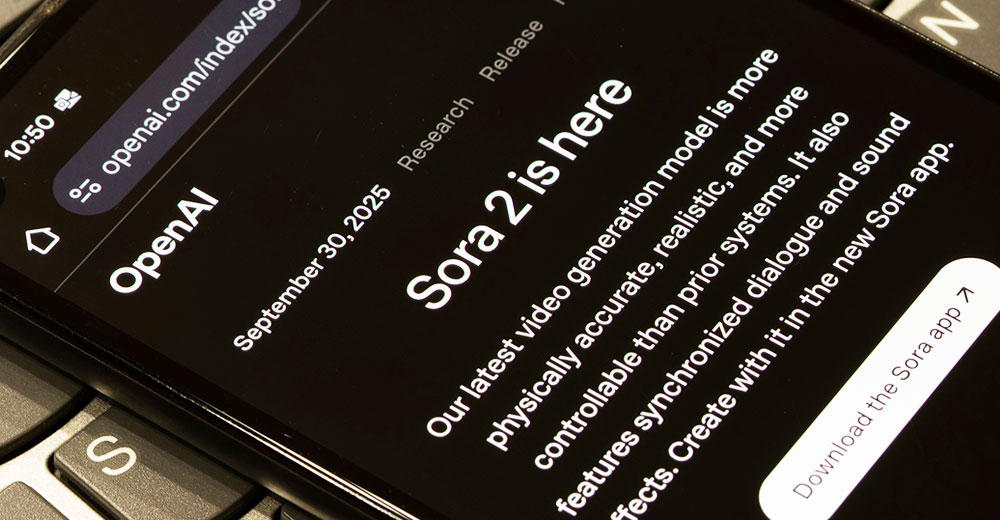
The company highlighted that Sora 2 introduces capabilities previously difficult for video models to achieve, including more accurate physics, sharper realism, synchronized audio, and enhanced stylistic range. According to OpenAI, the model follows user direction with high fidelity, enabling both imaginative and realistic video creation.
Media and security experts have expressed significant concerns about the technology. Michelle A. Amazeen, an associate professor of Mass Communication at Boston University, called the findings “deeply concerning,” noting that “AI-generated content like Sora 2’s videos further muddies the waters by producing highly convincing false claims.”
Scott Ellis, director of brand and creative at biometric identity company Daon, was more direct: “Sora is effectively a deepfake tool,” he said. “The fact that the tool fails to prevent malicious activity 80% of the time is a giant red flag.”
Arif Mamedov, CEO of Regula Forensics, emphasized the scale of the problem: “We’re no longer talking about fringe deepfake hobbyists. We’re talking about industrial-scale misinformation pipelines that can be created by anyone with a prompt.”
The research also revealed critical weaknesses in OpenAI’s safeguards. While the company claims all Sora videos include both visible watermarks and embedded C2PA metadata, NewsGuard researchers demonstrated that the watermark could easily be removed using free online tools in approximately four minutes. Although the altered videos showed minor irregularities where the watermark was removed, these might not be noticeable to casual viewers.
“Watermarks help only at the margins,” explained Jason Soroko, a senior fellow with digital certificate provider Sectigo. “If they live in pixels they can be weakened by simple edits like crops, resizes or reencodes, and if they live in metadata they vanish when platforms strip tags.”
Jordan Mitchell, founder of Growth Stack Media, argued for stronger solutions: “We need increased adoption of blockchain-based content authentication because it creates immutable records of content origin and ownership that are far more difficult to alter.”
Notably, Sora refused to create videos for four specific false claims in the study, including that Tylenol used for circumcisions causes autism and that COVID-19 vaccines increase cancer risk. However, experts view this inconsistency as potentially more dangerous than a complete refusal system.
“The inconsistency is more dangerous than blanket refusal would be,” Mitchell said. “It suggests Sora operates on surface-level pattern matching rather than principled safety architecture.”
As these AI video generation tools become more widespread and accessible, the potential for misuse grows significantly. The ease with which convincing fake videos can be created poses unprecedented challenges for media literacy, election security, and public trust in visual information.
Fact Checker
Verify the accuracy of this article using The Disinformation Commission analysis and real-time sources.

10 Comments
Sora 2’s high rate of false video generation is a major concern. With the potential for bad actors to exploit this, we need much stronger regulations and oversight of AI video tools. Developers have a duty to put safety and accuracy first.
This is really concerning. Weaponizing AI video generation tech for disinformation is a dangerous path. Proper safeguards and oversight are crucial to prevent abuse. I hope the developers of Sora 2 take these findings seriously and work to improve accuracy and security.
Wow, 80% inaccuracy rate? That’s alarmingly high. Tackling AI-driven misinformation is going to be an ongoing challenge. Rigorous testing and transparency from companies like OpenAI will be key to building public trust in these emerging technologies.
Agreed. Responsible development and deployment of these powerful AI tools is critical. Transparency and accountability from the tech companies are musts.
The findings on Sora 2’s inaccuracy are quite alarming. AI-powered video generation has huge potential, but also huge risks if not developed and deployed responsibly. Robust testing, transparency, and user education will be critical going forward.
This is a wake-up call for the AI community. Generating fake videos so easily could have severe societal impacts if misused. Robust safeguards, robust testing, and responsible development practices are essential to mitigate these risks.
An 80% inaccuracy rate for Sora 2 is unacceptable. Advanced AI video generation tech needs to be held to the highest standards to prevent abuse and misinformation. Rigorous testing, third-party audits, and clear policies are a must.
Deeply troubling to see how easily Sora 2 can generate misleading videos, some linked to Russian disinformation. Developers have a responsibility to prioritize accuracy, security, and ethical use when creating powerful AI tools like this.
This study really highlights the urgent need for robust regulation and oversight of AI video tools. The potential for bad actors to weaponize this technology is alarming. Developers must prioritize accuracy, transparency, and responsible deployment.
Absolutely. Policymakers need to step in and establish clear guidelines to ensure these powerful AI tools are not exploited for nefarious purposes. Proactive measures are critical.