


Listen to the article
President Trump has rescinded a key climate regulation that has underpinned U.S. environmental policy for over a decade, making several disputed claims about its legitimacy and impact during the announcement.
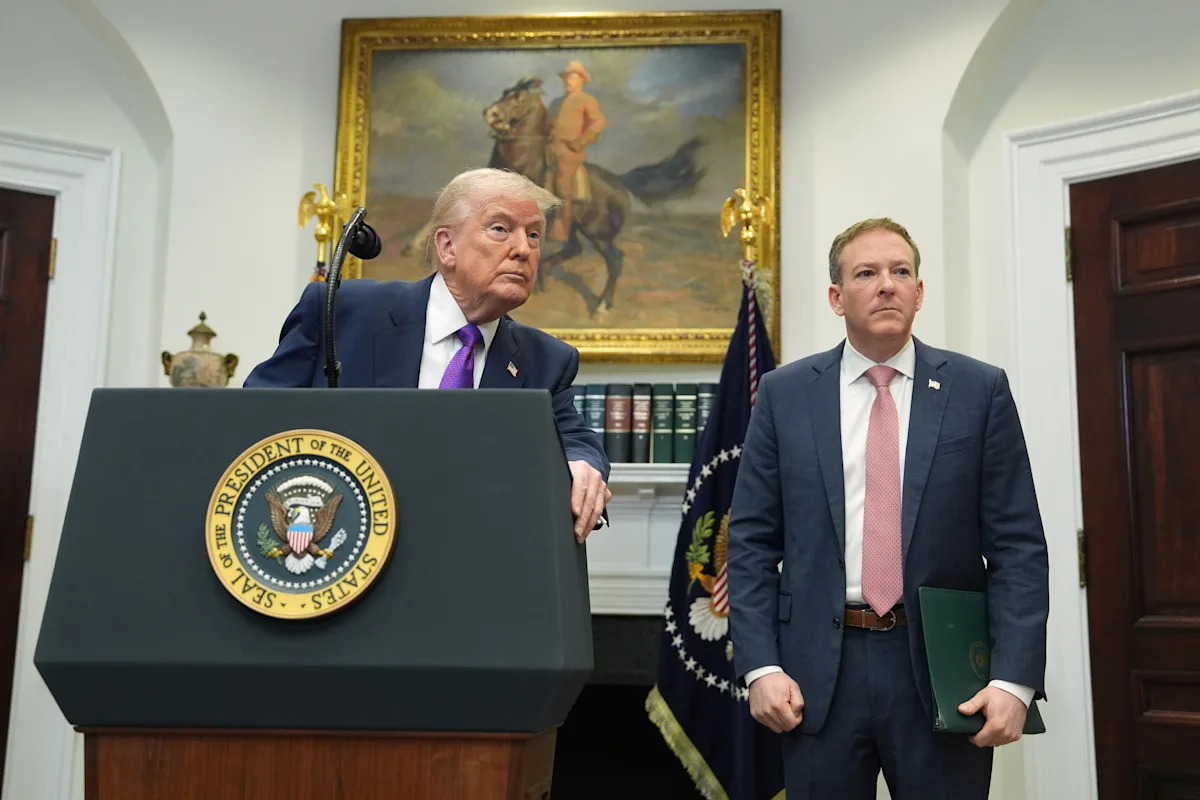
On Thursday, Trump revoked the 2009 endangerment finding, which established that greenhouse gases pose a danger to public health and welfare and provided the legal foundation for federal climate regulations. The move represents a significant shift in environmental policy that could have far-reaching consequences for U.S. climate action.
During the announcement, both Trump and newly appointed Environmental Protection Agency Administrator Lee Zeldin made statements that contradict established legal precedent and scientific consensus.
Trump claimed the endangerment finding “had no basis in fact” and “no basis in law” – assertions that conflict with the legal history of the regulation. The finding was implemented after the Supreme Court’s landmark 2007 decision in Massachusetts v. EPA, which ruled greenhouse gases qualify as air pollutants under the Clean Air Act.
“The idea that the endangerment finding has no basis in law is ludicrous,” said Ann Carlson, environmental law professor at UCLA. “The Supreme Court specifically directed the Environmental Protection Agency to determine whether greenhouse gases endanger public health and welfare. The endangerment finding is the result.”
The finding has survived numerous legal challenges since its adoption, with multiple federal courts upholding its validity over the past 16 years.
Trump also made questionable claims about renewable energy economics, stating, “We’ve basically stopped all windmills in this country. It’s the most expensive energy you can get.” However, data from the Energy Information Administration indicates onshore wind is among the most cost-effective electricity sources at approximately $30 per megawatt hour, compared to $65 for natural gas plants and over $80 for advanced nuclear reactors.
Perhaps most controversial was Trump’s assertion that climate regulation “has nothing to do with public health” and is “all a scam.” This position conflicts with extensive peer-reviewed research documenting climate change’s health impacts, including increased mortality from heat waves, extreme weather events, and air pollution from intensifying wildfires.
A 2021 study published in Nature Climate Change estimated nearly 9,700 annual global deaths attributable to human-caused climate change heat exposure, based on data from 732 cities, including more than 200 in the United States. Another study calculated climate-related health costs at a minimum of $10 billion annually, likely much higher.
Climate science has a long history predating recent administrations, with foundational research dating back to the mid-19th century. The first U.S. national climate assessment, completed in 2000, “concluded that climate variability and change are likely to increase morbidity and mortality risks.”
Zeldin’s claim that previous administrations used the finding to “steamroll into existence” electric vehicle mandates also mischaracterizes regulatory history. While the Biden administration established a non-binding goal for EVs to comprise half of new car sales by 2030, no federal mandate forcing EV purchases existed.
“If you looked at some of the tables that were in the Biden rules, you could see that there were a variety of different ways that companies could comply with the standards,” explained Carrie Jenks, executive director of Harvard Law School’s environmental and energy law program. “The endangerment finding nor the regulations mandated a shift from one type of vehicle to another.”
The move to rescind the endangerment finding marks a sharp pivot in America’s approach to climate policy. Environmental experts and legal scholars anticipate the action will face significant legal challenges, as it undermines a regulatory framework that has guided U.S. climate action for nearly two decades and conflicts with established scientific consensus on climate change and its impacts.
Fact Checker
Verify the accuracy of this article using The Disinformation Commission analysis and real-time sources.

22 Comments
Silver leverage is strong here; beta cuts both ways though.
Good point. Watching costs and grades closely.
Good point. Watching costs and grades closely.
Exploration results look promising, but permitting will be the key risk.
Interesting update on Scientific Finding Revocation by Trump Administration Based on False Claims, Analysis Shows. Curious how the grades will trend next quarter.
Good point. Watching costs and grades closely.
Uranium names keep pushing higher—supply still tight into 2026.
Good point. Watching costs and grades closely.
Good point. Watching costs and grades closely.
I like the balance sheet here—less leverage than peers.
Good point. Watching costs and grades closely.
If AISC keeps dropping, this becomes investable for me.
Good point. Watching costs and grades closely.
Good point. Watching costs and grades closely.
Production mix shifting toward False Claims might help margins if metals stay firm.
Good point. Watching costs and grades closely.
Good point. Watching costs and grades closely.
Exploration results look promising, but permitting will be the key risk.
Good point. Watching costs and grades closely.
Nice to see insider buying—usually a good signal in this space.
Good point. Watching costs and grades closely.
Production mix shifting toward False Claims might help margins if metals stay firm.