


Listen to the article
Ramaphosa Warns of White Supremacist Ideology as Threat to South Africa’s Sovereignty
South African President Cyril Ramaphosa has issued a stark warning that white supremacist ideology and false claims of persecution against the country’s Afrikaner minority pose significant threats to national security and sovereignty.
Speaking at a conference of his African National Congress (ANC) party on Monday, Ramaphosa addressed growing international narratives that have gained traction since Donald Trump’s return to the US presidency earlier this year.
“Some in our society still adhere to notions of racial superiority and seek to maintain racial privilege,” Ramaphosa stated. “The vehement opposition by some groups to our policies of transformation and redress conveniently align with wider notions of white supremacy and white victimhood, fed by false claims of the persecution of white Afrikaners in our country.”
The president emphasized that these fabricated claims have serious implications beyond domestic politics. “The propaganda of these false claims has real implications for our sovereignty, international relations and national security,” he said.
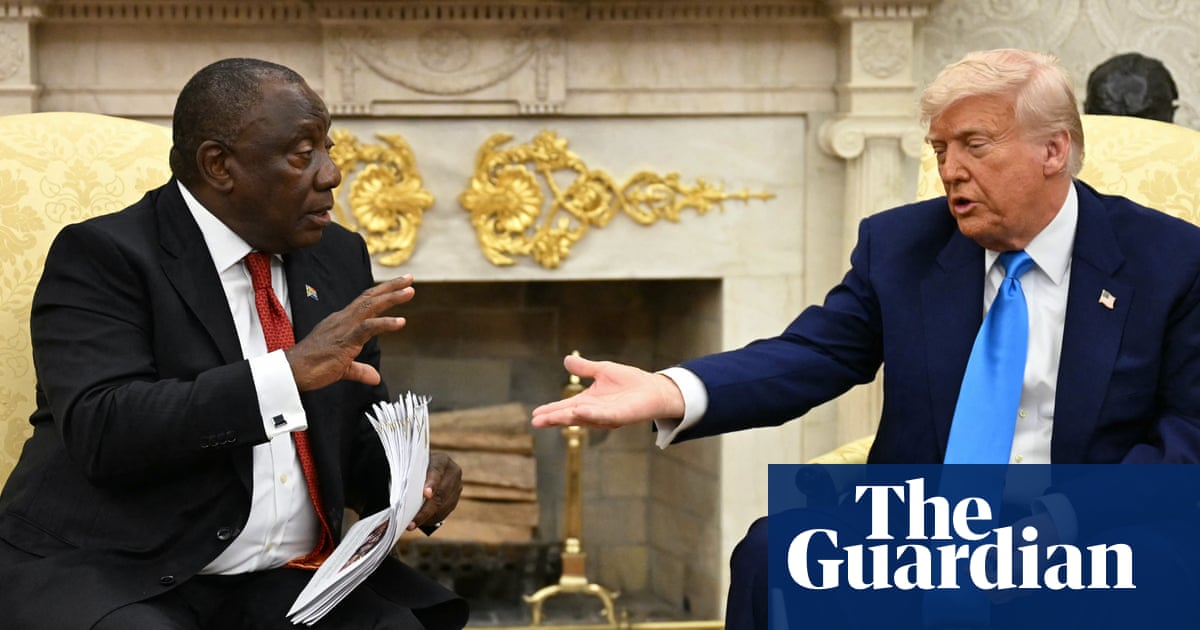
Since returning to office in January, Trump has repeatedly alleged without evidence that South Africa’s government is seizing land and encouraging violence against white farmers. South African-born billionaire Elon Musk has also promoted similar unfounded claims of “white genocide” in South Africa, elevating what analysts describe as a fringe far-right conspiracy theory to unprecedented global prominence.
Though Ramaphosa did not name Trump or Musk directly, he called for a coordinated response to counter these narratives. “It is essential that we counter this narrative and defeat this agenda,” he declared. “This is a campaign that needs to be launched not only in our country, but globally as well, particularly to address the notions that some globally are perpetrating about what is happening in South Africa.”
The controversy has already affected South Africa’s international relations. The United States boycotted last month’s G20 leaders summit in Johannesburg, claiming a consensus could not be reached in its absence. That summit, led by South Africa, produced a final communique highlighting issues such as gender inequality and climate change—positions that run counter to Trump’s policy agenda.
In a notable diplomatic slight, South Africa has been excluded from the first meetings of the upcoming US G20 presidency later this month, with Poland invited instead. US Secretary of State Marco Rubio justified this decision with inflammatory claims about “the South African government’s appetite for racism and tolerance for violence against its Afrikaner citizens.”
The US administration has also announced it will accept just 7,500 refugees this year, predominantly white South Africans, while restricting its refugee program for people fleeing war and persecution elsewhere.
Historical context is crucial to understanding the current tensions. Afrikaners, descendants of Dutch colonizers and French Huguenot refugees who arrived in South Africa in the late 17th century, constitute approximately 4% (about 2.5 million people) of South Africa’s population. They led the apartheid regime from 1948, which systematically oppressed the Black majority while maintaining white privilege.
Despite the end of apartheid in 1994 and nearly three decades of democratic rule under the ANC, economic disparities remain stark. White South Africans still possess substantially greater wealth than Black South Africans. A 2017 government land audit revealed white ownership of 72% of private agricultural land.
While South Africa does struggle with high violent crime rates that affect all citizens, and there have been tragic, high-profile murders of white farmers, security experts and crime statistics show no evidence of systematic targeting based on race. Research consistently indicates that white farmers are not disproportionately victimized compared to other South Africans.
As diplomatic tensions continue to escalate, Ramaphosa’s warnings highlight growing concerns about how international misinformation could undermine South Africa’s social cohesion and sovereignty at a critical time for the nation’s multiracial democracy.
Fact Checker
Verify the accuracy of this article using The Disinformation Commission analysis and real-time sources.

18 Comments
This is a concerning situation. The spread of false narratives about persecution of Afrikaners could undermine South Africa’s stability and sovereignty. Ramaphosa is right to call out these divisive ideologies and focus on national unity.
Agreed. Promoting racial divisions and victimhood narratives serves no constructive purpose. South Africa needs to move forward in a spirit of reconciliation and shared prosperity, not be pulled back by extremist ideologies.
This is a complex and sensitive issue, but Ramaphosa is correct to draw attention to the threat these false claims pose to South Africa’s sovereignty. Maintaining stability and upholding democratic institutions should be the top priority.
Agreed. Allowing divisive narratives to take hold, even if they originate from outside the country, could have serious consequences for South Africa’s future. Ramaphosa’s proactive approach is necessary to safeguard the nation’s hard-won progress.
Ramaphosa is right to call out the links between false Afrikaner persecution claims and wider white supremacist ideologies. Tackling these divisive narratives head-on is crucial for preserving South Africa’s democratic stability and sovereignty.
Absolutely. Promoting national unity and upholding democratic values should be the top priority, even in the face of such provocative misinformation campaigns. Ramaphosa’s stance in defending South Africa’s progress is admirable and necessary.
It’s troubling to see how easily false claims can gain traction internationally and threaten a country’s stability. Ramaphosa seems to be taking a firm stand against these dangerous narratives. Maintaining national sovereignty should be the priority.
Absolutely. Allowing baseless claims of persecution to undermine South Africa’s progress would be a huge setback. Ramaphosa is right to confront this head-on and defend the country’s democratic institutions and values.
This is a concerning situation, and Ramaphosa is right to address it directly. Allowing false claims of Afrikaner persecution to undermine South Africa’s sovereignty and international relations would be a serious setback. Maintaining stability and unity should be the focus.
Agreed. Ramaphosa’s proactive approach in confronting these divisive narratives is crucial. Safeguarding South Africa’s democratic institutions and hard-won progress should be the top priority, even in the face of such provocative misinformation.
Ramaphosa is wise to call out the links between false Afrikaner persecution claims and wider white supremacist ideologies. Tackling these divisive narratives head-on is crucial for preserving South Africa’s hard-won democratic gains.
It’s concerning to see how quickly misinformation can spread and threaten a country’s stability. Ramaphosa’s proactive stance in addressing this issue is admirable and necessary to safeguard South Africa’s future.
Ramaphosa is right to be concerned about the implications of false Afrikaner persecution claims. Maintaining South Africa’s sovereignty and stability should be the paramount concern, especially in the face of such divisive ideologies.
Absolutely. Promoting national unity and democratic values is crucial, even in the face of provocative misinformation campaigns. Ramaphosa’s stance in defending South Africa’s hard-won progress is commendable.
The president makes a fair point. Spreading falsehoods about Afrikaner persecution could have serious geopolitical consequences for South Africa. Maintaining national unity and sovereignty should be the top priority in the face of such divisive rhetoric.
Agreed. Allowing these false narratives to gain traction internationally would be extremely damaging. Ramaphosa is right to confront this head-on and defend South Africa’s democratic progress and territorial integrity.
Ramaphosa is correct to be concerned about the implications of these false claims. Allowing them to gain traction internationally could have serious consequences for South Africa’s sovereignty and stability. Promoting national unity and upholding democratic values should be the focus.
Absolutely. Ramaphosa is taking the right stance in addressing this issue head-on. Maintaining South Africa’s hard-won democratic progress and territorial integrity should be the paramount concern, even in the face of such divisive ideologies.