


Listen to the article
The political dispute over hydro development in Labrador intensified this week as the provincial opposition directly challenged Premier Tony Wakeham’s claims regarding employment provisions in a memorandum of understanding with Quebec.
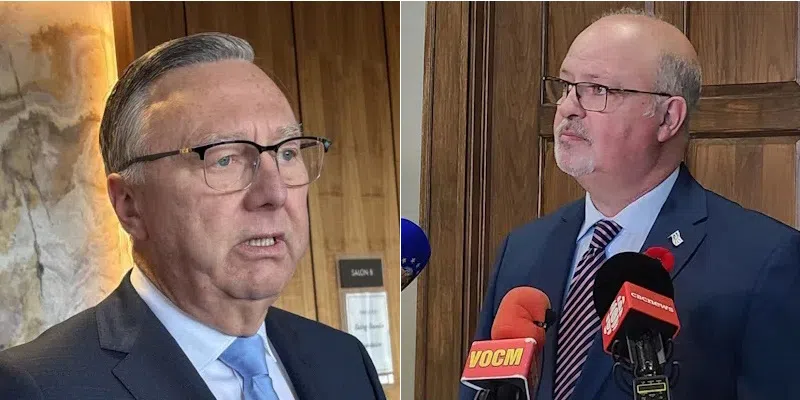
Conception Bay East-Bell Island MHA Fred Hutton, who serves as energy critic, described the Premier’s statements about local hiring priorities as “categorically false,” setting the stage for what appears to be an emerging battle over the interpretation of the document’s employment guarantees.
“The hiring regimen for Gull Island ensures that local preference comes first,” Hutton stated, directly contradicting the Premier’s assertion that the province failed to secure jobs for Newfoundland and Labrador residents in the agreement.
According to Hutton, the MOU explicitly establishes a clear hiring hierarchy for both the Gull Island project and the planned expansion of Churchill Falls. The priority sequence begins with Innu workers, followed by Labrador residents, then island residents, and finally people from elsewhere in Canada.
The Churchill Falls facility, completed in 1971, remains one of the largest underground hydroelectric powerhouses in the world. The Gull Island project would represent a significant expansion of Labrador’s hydroelectric capacity, with potential far-reaching economic implications for the region.
The future of the memorandum itself remains uncertain. Premier Wakeham’s Progressive Conservative government has not yet committed to moving forward with the agreement, which was negotiated by the previous administration. Wakeham has indicated that his government plans to conduct a thorough review of the tentative agreement before potentially putting it to a provincial referendum.
This dispute highlights the politically sensitive nature of resource development in Labrador, where hydroelectric projects have historically been contentious. The 1969 Churchill Falls contract with Hydro-Québec has long been criticized in Newfoundland and Labrador for its lopsided financial terms, which have allowed Quebec to reap billions in profits while the province receives comparatively minimal returns.
The employment provisions in any new hydro development agreement are particularly significant for Labrador communities, which have often felt marginalized in previous resource development projects despite their proximity to the resources. The prioritization of Innu workers reflects both recognition of Indigenous rights and the province’s duty to consult with Indigenous communities on projects affecting their traditional territories.
Energy development in Labrador has remained a complex political issue, balancing economic opportunities with concerns about local benefits, environmental impacts, and the province’s relationship with neighboring Quebec. Previous attempts to develop the Lower Churchill project have faced numerous obstacles, including disputes over transmission routes and market access.
Hydro development represents a potentially transformative economic opportunity for the province, which has faced fiscal challenges in recent years, particularly following downturns in the oil and gas sector. New hydroelectric capacity could provide both domestic energy security and valuable export opportunities.
The public disagreement between the Premier and the opposition over the interpretation of the MOU’s employment provisions suggests that hydroelectric development will remain a divisive political issue in the coming months, especially if the government proceeds with plans for a referendum.
As the debate continues, voters in Newfoundland and Labrador will likely seek greater clarity on both the specifics of the agreement and the government’s plans for ensuring local communities benefit from any future development in Labrador’s vast hydroelectric resources.
Fact Checker
Verify the accuracy of this article using The Disinformation Commission analysis and real-time sources.

8 Comments
This dispute raises important questions about accountability and oversight when it comes to major infrastructure projects. The public needs to have confidence that the terms of these agreements are being properly upheld and communicated.
This dispute highlights the importance of carefully negotiating and clearly documenting employment terms in major infrastructure projects. It’s good to see the opposition MHA pushing for more transparency so the public can understand the commitments made by the government.
I agree, the public deserves to know the details of these agreements. Clarity around hiring priorities is key, especially for projects that have significant local economic impact.
Interesting to see the dispute over the Premier’s claims about the hiring agreement. It seems like there are competing interpretations of the employment provisions in the MOU. I’d be curious to learn more about the specific details and how the local hiring priorities are defined.
Sounds like a complex political battle over the interpretation of this MOU. I’m curious to see how it plays out and whether the two sides can reconcile their differing views on the employment guarantees. Transparent communication will be essential.
Interesting to see the opposition challenging the Premier’s statements so directly. It will be important for the public to get a clear understanding of the specific hiring provisions in the MOU, as these types of employment commitments can have a big impact on local communities.
This looks like a complex issue with political implications. I appreciate the MHA’s transparency in directly challenging the Premier’s statements and providing more context around the hiring hierarchy laid out in the MOU. It will be important for the public to get a clear understanding of the employment guarantees.
The Premier’s statements seem to be at odds with the MHA’s claims about the local hiring priorities in the agreement. I wonder if there are any documents or sources that could help clarify the specifics and shed light on where the disagreement lies. Transparency around these types of deals is crucial.