


Listen to the article
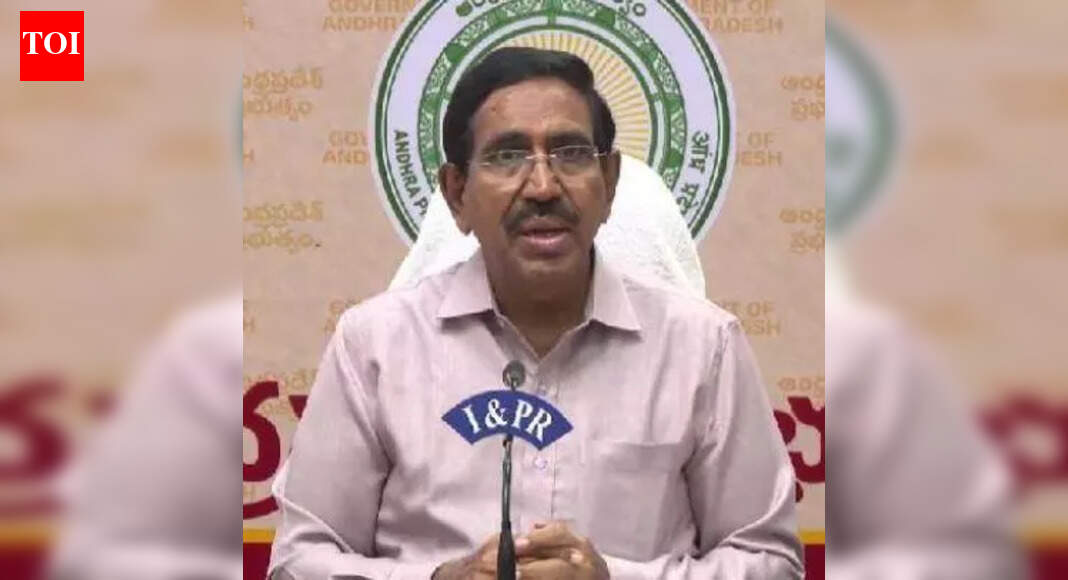
In a fiery rebuke that has intensified the ongoing capital city debate in Andhra Pradesh, Municipal Administration Minister Dr. P. Narayana has sharply criticized YSRCP chief Y.S. Jagan Mohan Reddy over his recent statements about the Amaravati capital project.
Dr. Narayana firmly declared that despite Reddy’s efforts, the development of Amaravati as the state capital would proceed unhindered. “No matter how many efforts Jagan makes, the construction of Amaravati as the state capital will not be stopped,” the minister stated.
The minister accused the opposition leader of deliberately spreading misinformation about the ambitious project. “Jagan is spreading false propaganda by claiming that constructions are being taken up in the riverbed. He is filing cases in courts to halt the progress,” Narayana said, adding that such tactics would not succeed “under any circumstances.”
At the heart of the dispute is Reddy’s allegation that development is occurring in environmentally sensitive areas. Narayana countered this by highlighting what he described as Reddy’s fundamental misunderstanding of the project’s geography. “Jagan should understand the Amaravati master plan before responding. Speaking with half-knowledge is wrong. He must know the difference between riverbed and river basin,” the minister explained.
The capital city project has been a contentious issue in Andhra Pradesh politics since the state’s bifurcation in 2014. When Jagan Mohan Reddy’s YSRCP government came to power in 2019, it had proposed a three-capital model, challenging the previous TDP government’s vision of developing Amaravati as the sole capital. However, with the TDP back in power, the focus has returned to consolidating the capital at Amaravati.
Narayana claimed the project is gaining momentum with growing support from local landowners. “Farmers are voluntarily coming forward for the second phase of land pooling. Within hours, hundreds of acres were handed over to the government,” he said. The minister suggested that this progress was the real reason behind Reddy’s criticism, describing it as jealousy over Amaravati’s advancement.
In a pointed political warning, Narayana predicted electoral consequences for the YSRCP if Reddy continues his opposition to the project. “If he continues this way—misleading people with false statements—his party’s current 11 seats will reduce to 0,” the minister declared.
Defending the single-capital model, Narayana emphasized its administrative efficiency. “Every state has one capital where ministers, secretaries, and officials reside to resolve public issues efficiently. Unlike district headquarters, the capital serves as the administrative hub,” he explained.
The minister also provided a timeline for key infrastructure developments in Amaravati, assuring that trunk roads would be completed within 18 months, layout roads within two-and-a-half years, and iconic government buildings within three years.
This exchange represents the latest chapter in Andhra Pradesh’s ongoing capital controversy, which has been central to the state’s political discourse since its reorganization. The debate touches on fundamental questions about regional development, resource allocation, and governance models in the southern state.
With both the ruling TDP-led coalition and opposition YSRCP deeply invested in their competing visions for the state’s administrative structure, the Amaravati issue is likely to remain a flashpoint in Andhra Pradesh politics for the foreseeable future, especially as construction work accelerates under the current administration.
Fact Checker
Verify the accuracy of this article using The Disinformation Commission analysis and real-time sources.

8 Comments
This dispute seems to be more about political point-scoring than finding pragmatic solutions. I hope the leaders involved can put aside their differences and focus on the best path forward for Andhra Pradesh, guided by evidence and inclusive dialogue.
Well said. Partisan bickering rarely leads to good public policy outcomes. A more collaborative, solution-oriented approach would serve the people much better in this case.
While it’s understandable that a large-scale project like this would be controversial, the rhetoric from both sides seems overly confrontational. I hope they can find a way to work collaboratively for the long-term benefit of the state and its residents.
The Amaravati capital plan is clearly a complex issue with valid concerns on both sides. Rather than trading accusations, the authorities should seek to engage all stakeholders in a transparent process to address environmental impacts and development priorities.
It’s concerning to see such heated political rhetoric around the Amaravati capital project. Both sides should focus on facts and work together to address any legitimate environmental or development concerns in a constructive manner.
Agreed, this dispute seems more about political grandstanding than finding practical solutions. Hopefully the authorities can rise above the partisan bickering and find a way forward that serves the interests of all Andhra Pradesh citizens.
The Amaravati project is a major undertaking, so it’s not surprising there are differing views on how it should proceed. A thorough, impartial environmental assessment would help clarify the facts and identify ways to address any genuine concerns.
That’s a reasonable suggestion. An objective, science-based evaluation could provide a more solid foundation for decision-making and reduce the political posturing we’re seeing.