


Listen to the article
In a firm rebuttal to growing international allegations, Mozambican President Daniel Chapo has dismissed claims that the country’s defense and security forces committed war crimes, torture, and enforced disappearances in the conflict-ravaged northern province of Cabo Delgado.
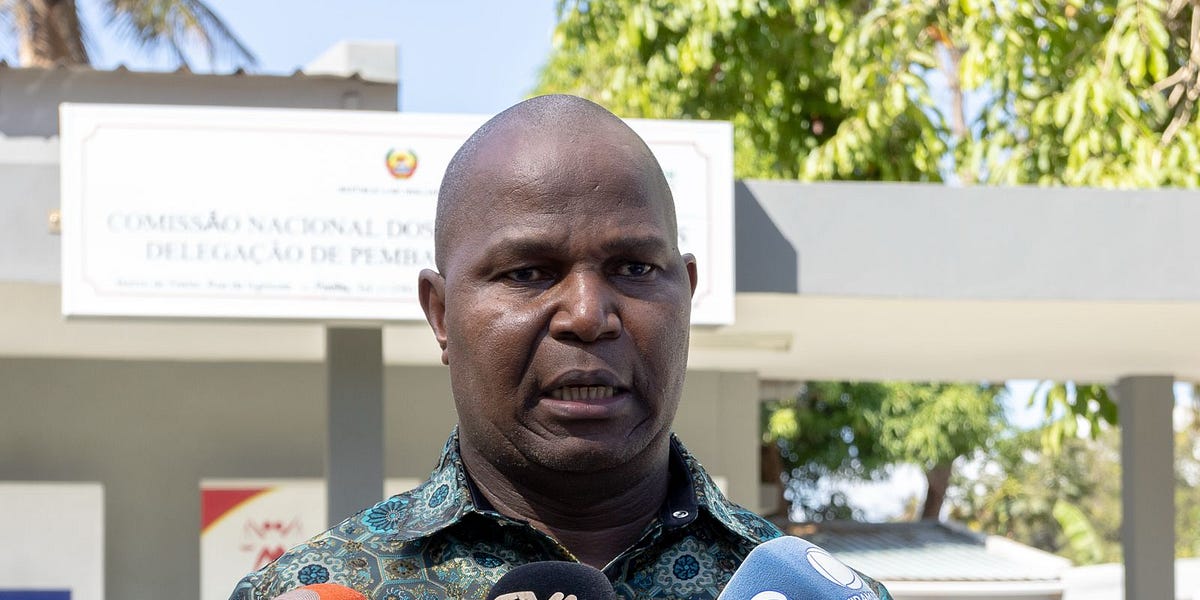
Speaking Saturday during an official visit to the newly opened provincial delegation of the National Human Rights Commission (CNDH) in Pemba, Chapo characterized the allegations as baseless misinformation designed to manipulate public opinion.
“When misinformation and manipulation of public opinion began to appear at the national and international level regarding respect for human rights in Cabo Delgado, the first thing we did was send the National Human Rights Commission to Cabo Delgado,” Chapo stated after meeting with military personnel. “They did not find the issues that newspapers and some who pose as international investigators are raising.”
The allegations resurfaced following a criminal complaint filed in France by the European Centre for Constitutional and Human Rights (ECCHR) against French energy giant TotalEnergies. The complaint accuses the company of complicity in atrocities allegedly committed by Mozambican soldiers tasked with protecting the company’s multibillion-dollar liquefied natural gas (LNG) installation on the Afungi peninsula in Palma.
Filed with the French National Anti-Terrorism Prosecutor’s Office (PNAT), the complaint alleges that TotalEnergies directly financed and provided material support to a special military unit known as the Joint Task Force (JTF). According to the ECCHR, this unit detained, tortured, and killed civilians between July and September 2021.
The allegations were initially published in late September by Politico under the headline “All must be beheaded: revelation of atrocities at French energy giant’s African stronghold.” PNAT has confirmed receipt of the complaint and is currently evaluating its merits.
The ECCHR complaint contains detailed accusations against the JTF, which was allegedly created under a 2020 memorandum between TotalEnergies and the Mozambican government. According to the document, dozens of civilians fleeing jihadist attacks were intercepted by soldiers and detained in metallic containers where they were beaten, starved, and tortured. At least five civilians were reportedly killed, while several others disappeared. In September 2021, 26 surviving detainees were released.
The ECCHR argues that TotalEnergies continued to support the JTF despite being aware of widespread allegations of human rights abuses committed by Mozambican forces.
President Chapo emphasized that the government has nothing to hide and noted that Mozambique’s Attorney-General’s Office (PGR), along with the CNDH and other bodies, has already been investigating these claims. He framed the establishment of the new provincial human rights office in Pemba as part of a strategic effort to “combat the national and international narrative that questions the observance of human rights in this province.”
“This is an unequivocal sign that, as a Government, we are committed to respecting human rights. We want to increasingly consolidate our Democratic Rule of Law,” Chapo stated.
Cabo Delgado, once celebrated for its vast natural gas reserves and precious ruby deposits, has been devastated by Islamist insurgency since 2017. Militants linked to the Islamic State—locally known as Al-Shabab—have conducted numerous attacks on villages and towns throughout the region. The conflict has resulted in more than 5,000 deaths and displaced over one million residents. Reports indicate that children are increasingly being abducted and subjected to extremist indoctrination.
The ongoing violence has significantly disrupted economic development in the resource-rich province. TotalEnergies, which leads the Mozambique LNG Project, is reportedly preparing to restart operations in “containment mode,” with workers transported exclusively by air or sea due to security concerns. Production is expected to resume by 2029, though this timeline remains uncertain given the volatile security situation.
Chapo insisted that the government’s priority is to protect civilians while countering misinformation that undermines Mozambique’s international standing. “We want to take advantage of this opportunity to say that we are giving priority to Cabo Delgado because we are facing the challenge of terrorism here,” he said, adding that the government remains committed to promoting and safeguarding human rights amid ongoing security operations.
Despite the president’s forceful rejection of the allegations, the ECCHR complaint continues to draw global attention, and PNAT’s ongoing evaluation signals that these serious accusations will likely remain in the international spotlight for the foreseeable future.
Fact Checker
Verify the accuracy of this article using The Disinformation Commission analysis and real-time sources.

15 Comments
This is a sensitive and polarizing issue that requires a measured, fact-based approach. The president’s rejection of the allegations is understandable, but impartial assessment by credible human rights bodies will be vital to uncover the truth. Protecting vulnerable populations while maintaining security must be the priority.
Well said. Establishing the facts through transparent, cooperative efforts is the only way to find a just and lasting solution to this conflict. All stakeholders must work together in good faith.
Mozambique’s security situation in Cabo Delgado is clearly challenging, but using force responsibly and respecting human rights must be a priority. The president’s comments are noted, but independent monitoring and reporting will be important to ensure accountability.
Absolutely. Balancing security needs with human rights is critical in conflict zones. Transparency and credible investigations are key to building trust and finding lasting solutions.
The human rights situation in Cabo Delgado is clearly complex and contentious. While the president’s rebuttal is noted, independent verification of the facts is essential. Thorough, impartial investigation and reporting will be crucial to upholding human rights and addressing the security challenges in the region.
This is a complex and delicate situation. While the president’s response is understandable, independent verification of the facts is crucial. Allegations of atrocities require a thorough, impartial investigation to uncover the truth and protect vulnerable populations.
You make a good point. Establishing the facts should be the priority, without rushing to judgment. A balanced approach that considers all perspectives is needed.
Allegations of human rights abuses are always concerning, but it’s important to get the full picture. Mozambique’s president seems to dispute the claims, and an independent human rights commission found no major issues. More transparency and thorough investigation from all sides would help clarify the situation.
Agreed, we need objective, fact-based reporting on this sensitive conflict. It’s critical to avoid exaggeration or politicization from any side.
This is a concerning situation that deserves careful, fact-based examination. The president’s rejection of the allegations is understandable, but independent monitoring and reporting will be crucial to determine the reality on the ground. Protecting human rights while addressing security threats is a difficult but essential balance.
Absolutely. Transparency and accountability from all sides are key to finding a just and lasting resolution to this conflict. Unbiased investigation of the facts should be the priority.
The conflict in Cabo Delgado is clearly a major challenge for Mozambique. The president’s response highlights the need for impartial investigation and transparent reporting on the human rights situation. Balancing security concerns with upholding human rights standards is critical in such volatile environments.
This is a delicate situation that requires nuanced handling. While the president’s rebuttal is notable, independent verification of the facts is crucial. Allegations of atrocities must be thoroughly investigated to uphold human rights and find a peaceful resolution to the conflict.
Well said. Balanced and objective analysis is essential when dealing with complex security and human rights challenges like this. All parties should cooperate to uncover the truth and protect vulnerable populations.
The allegations of human rights abuses in Cabo Delgado are troubling, but the president’s response deserves consideration. An impartial assessment by the national human rights commission could shed more light on the situation. Open dialogue and cooperation are needed to address this complex issue.