


Listen to the article
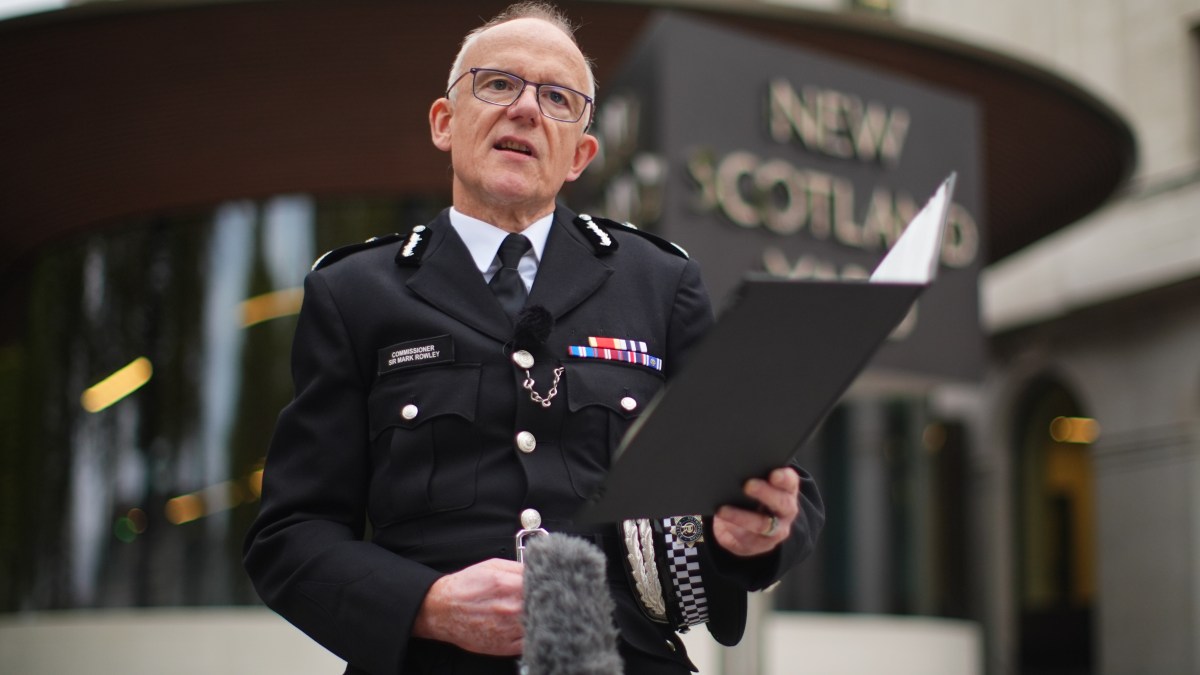
Police Commissioner Sir Mark Rowley has forcefully pushed back against misleading claims about London’s homicide rates, pointing to new statistics that show the capital has become safer under his leadership.
The Metropolitan Police chief revealed that London’s homicide rate has fallen by 20 percent since he took command in September 2022, a stark contrast to claims that the city is experiencing increasing violence. His comments come amid growing political debate over crime statistics and public safety in Britain’s largest city.
“We’re tackling more crime overall, arresting more people, and seeing real impacts on violent crime,” Sir Mark told reporters at Scotland Yard yesterday. “While I would never claim victory prematurely, the data shows clear progress in making London safer.”
The commissioner particularly took issue with misrepresentations of London’s crime statistics on social media and by certain political figures. He emphasized that homicide rates in London have dropped from 130 deaths in 2022 to 104 in 2023, with projections showing further decreases this year.
This reduction places London’s murder rate at 1.2 per 100,000 residents, significantly lower than many major American cities. By comparison, New York’s homicide rate stands at approximately 5.5 per 100,000, while Chicago’s exceeds 20 per 100,000.
Criminal justice experts attribute the improvements to the Met’s renewed focus on neighborhood policing and targeted operations against knife crime, which has been a persistent challenge in the capital. The force has increased stop-and-search operations in high-risk areas and enhanced its violence reduction initiatives across boroughs with historically higher crime rates.
Dr. Caroline Foster, a criminologist at University College London, noted that the improvements come after a difficult period for the Met. “The force has been implementing significant reforms following damaging reports about institutional culture and trust issues. These crime reductions suggest those reforms may be bearing fruit.”
The decline in homicides represents just one metric in London’s complex crime landscape. While violent crimes have decreased, the city continues to struggle with certain offense categories. Robbery increased by 12 percent last year, while theft offenses rose by approximately 8 percent, according to official statistics.
London Mayor Sadiq Khan welcomed the homicide reduction but stressed that more work remains. “Every life lost to violence is a tragedy. While I’m encouraged by these improvements, we must continue investing in both policing and prevention to address the root causes of crime,” Khan said in a statement.
The debate over London’s safety has intensified with approaching elections, as various candidates have made crime a central campaign issue. Conservative challengers have frequently criticized the current administration’s handling of public safety, occasionally using selective statistics to paint a grimmer picture of crime trends.
Sir Mark acknowledged these political dynamics but insisted that the Met’s focus remains on operational improvements rather than political debates. “Our job is to deliver results and communicate the facts clearly to Londoners,” he said.
Beyond the statistics, the commissioner highlighted structural changes within the force, including the recruitment of 1,200 new officers in the past year and the reallocation of resources to front-line policing. The Met has also expanded its digital investigation capabilities to combat the growing threat of online-facilitated crimes.
Community leaders have cautiously welcomed the improved statistics while emphasizing that perceptions of safety often lag behind statistical improvements. Reverend James Collins, who leads community safety initiatives in south London, observed: “The numbers are encouraging, but many residents still feel unsafe. Building trust takes time, especially in communities that have historically had difficult relationships with police.”
As London approaches a summer that typically brings seasonal increases in certain crime categories, Sir Mark has pledged to maintain the momentum of recent improvements while addressing emerging challenges such as youth violence and drug-related crime.
“We’re not claiming to have solved London’s crime problems,” he concluded. “But the data shows we’re heading in the right direction, and I’m determined to continue that progress.”
Fact Checker
Verify the accuracy of this article using The Disinformation Commission analysis and real-time sources.

8 Comments
Interesting to see the Met Commissioner refuting those misleading claims about London’s homicide rates. Good to hear the data shows a real decline in violent crime under his leadership. Transparency on these statistics is important for public trust.
The drop in London’s homicide rate under the new commissioner’s leadership is an encouraging sign. It’s important these positive trends are accurately reported, rather than allowing distorted claims to dominate the narrative.
Absolutely. Accurate, fact-based reporting on crime statistics is essential for having a meaningful public dialogue on issues of public safety and security.
It’s encouraging to see the homicide rate in London drop by 20% since the new commissioner took charge. Tackling crime and public safety is a major priority, so these figures suggest some positive progress is being made.
Kudos to the Met Commissioner for taking a firm stance against the false claims about London’s homicide rates. Transparency around these figures is crucial, and the data showing a real decline in violent crime is welcome news.
Glad to see the Met Commissioner pushing back against the false narratives about rising violence in London. The data shows the city is actually becoming safer, which is an important fact to highlight amidst the political debates.
I appreciate the Met Commissioner taking a strong stance in refuting the misleading claims about London’s crime statistics. Transparency and accurate reporting on these issues is crucial for public understanding.
Agreed. It’s good to see the commissioner providing clear data and evidence to counter the false narratives being pushed. Maintaining public trust requires this kind of open and factual approach.