


Listen to the article
The head of London’s Metropolitan Police has responded forcefully to what he characterizes as misleading narratives about crime trends in the British capital, pointing to statistics showing a significant reduction in homicide rates across the city.
Sir Mark Rowley, Commissioner of the Metropolitan Police Service, defended his force’s performance amid persistent public concerns about safety in London. According to recently released figures, the number of homicides in London has declined substantially over the past year, contradicting perceptions that violent crime is spiraling out of control.
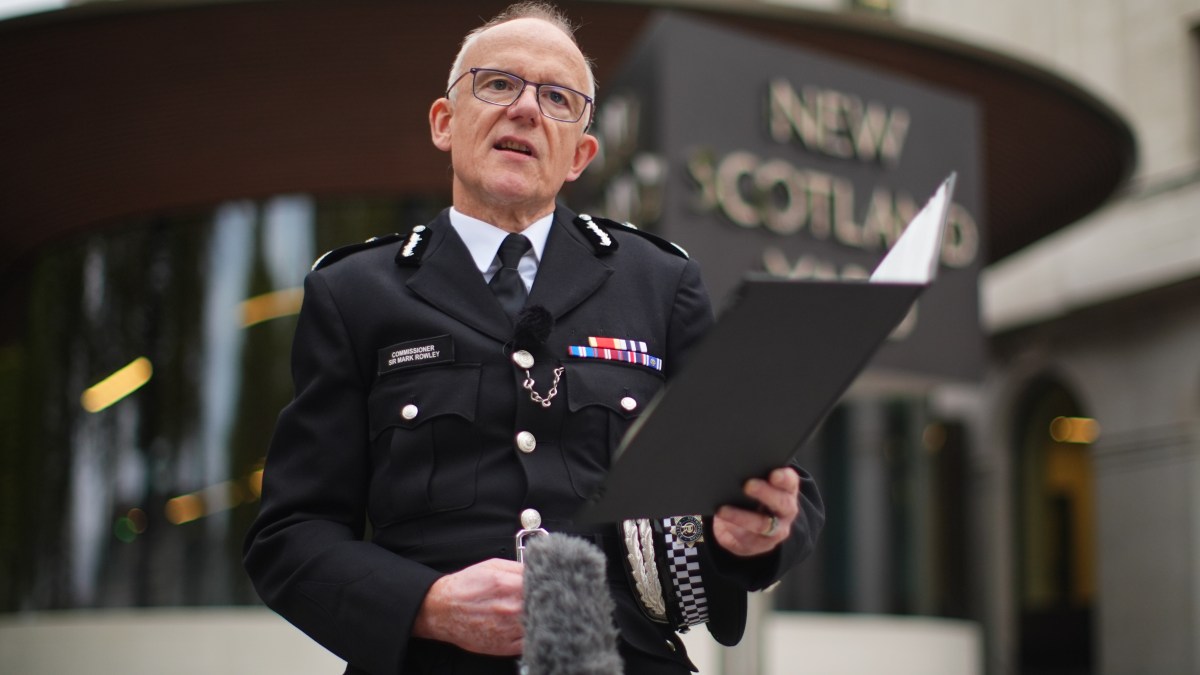
“The data clearly shows we’re making progress in our most serious crime categories,” Rowley stated during a press briefing at New Scotland Yard yesterday. “While even a single death is one too many, the downward trend demonstrates that our targeted strategies are having a measurable impact.”
Official statistics indicate that London recorded 107 homicides in the most recent 12-month reporting period, compared to 134 during the same period the previous year—a reduction of approximately 20 percent. This marks the lowest annual homicide total in the capital since 2014, a notable achievement given the population growth during that period.
The commissioner specifically addressed claims circulating on social media and in some media outlets suggesting London has become increasingly dangerous under the current mayoral administration. “These narratives are not only factually incorrect but potentially damaging to public confidence and community cohesion,” Rowley emphasized.
London’s homicide rate now stands at approximately 1.2 per 100,000 residents, significantly lower than many comparable global cities. New York City, for example, reported a rate of approximately 5.5 homicides per 100,000 residents last year.
Detective Chief Superintendent Caroline Baker, who heads the Met’s Homicide Command, attributed the decline to several factors, including improved intelligence gathering, targeted operations against organized crime networks, and more effective community policing strategies.
“We’ve restructured our approach to violent crime, focusing intensively on known hotspots and implementing early intervention programs in vulnerable communities,” Baker explained. “Additionally, our enhanced use of data analytics has improved our ability to predict and prevent potential incidents before they escalate to homicide.”
The reduction comes despite continuing challenges faced by British policing, including budget constraints and staffing shortages that have affected forces nationwide. The Met has been under particular scrutiny following a series of high-profile scandals in recent years that damaged public trust in the institution.
London Mayor Sadiq Khan welcomed the figures but emphasized the need for continued vigilance. “While these statistics represent significant progress, we cannot become complacent. Every life lost to violence is a tragedy, and we remain committed to addressing the root causes of crime across our city.”
Community activists have offered mixed responses to the announcement. Jamal Thompson, who leads the South London Anti-Violence Coalition, acknowledged the statistical improvement but cautioned against overlooking ongoing concerns in certain neighborhoods.
“The overall reduction is welcome news, but some communities are still experiencing disproportionate levels of violence,” Thompson noted. “We need to ensure these improvements are felt equally across all parts of London, not just in more affluent areas.”
Criminologists point out that the London trend mirrors broader patterns across the UK, where homicide rates have generally declined over the past decade despite periodic fluctuations. Dr. Eleanor Hargreaves, professor of criminology at King’s College London, suggests this reflects multiple factors beyond policing alone.
“Demographic shifts, improved emergency medical care that saves more victims of violent attacks, and evolving social patterns all contribute to homicide trends,” Hargreaves explained. “The challenge for police is maintaining this momentum as new crime patterns emerge.”
The Metropolitan Police Service has announced plans to build on this success with an expanded violence reduction strategy, focusing particularly on knife crime among younger Londoners, which remains a persistent concern despite the overall homicide reduction.
As London approaches local elections, the crime statistics will likely feature prominently in political debates about the city’s governance and public safety priorities. However, Sir Mark Rowley has urged all parties to engage with the facts rather than perpetuating narratives that don’t align with the statistical reality of crime in the capital.
Fact Checker
Verify the accuracy of this article using The Disinformation Commission analysis and real-time sources.

8 Comments
It’s refreshing to see the Met Commissioner taking a data-driven approach to refute misleading claims about London’s crime trends. A 20% drop in homicides is a meaningful improvement, though there’s still work ahead.
Agreed. Public perceptions don’t always align with the statistics. Fact-based reporting and open communication from the police are crucial to maintaining trust and public safety.
Glad to see the Met Commissioner addressing false narratives around London’s crime rates. The 20% decline in homicides is an encouraging sign that their strategies are working. Steady progress, but more work to be done to ensure public safety.
Absolutely, every life lost is a tragedy. But the data indicates the Met is heading in the right direction. Transparency and facts are key to addressing public concerns.
It’s heartening to see the Met Commissioner taking a proactive stance to counter misleading narratives about London’s crime rates. A 20% decline in homicides is a meaningful achievement, though there’s clearly more work to be done. Fact-based analysis and open communication are critical.
Kudos to the Met Commissioner for pushing back on false claims and highlighting the data-driven progress in reducing London’s homicide rate. Transparency and accountability are essential for public trust and effective crime reduction strategies.
Agreed. Perception often lags behind reality when it comes to crime trends. Relying on credible statistics and being upfront about both successes and challenges is the best approach.
The Met Commissioner’s response is a welcome counterpoint to the sensationalized narratives around London’s crime rates. A 20% decline in homicides is a positive step, though the job is far from done. Fact-based analysis is key to informed policy decisions.