


Listen to the article
Metropolitan Police Commissioner Sir Mark Rowley has forcefully rejected claims that London’s murder rate has risen under his leadership, presenting new data that shows homicide rates in the capital have actually declined over the past year.
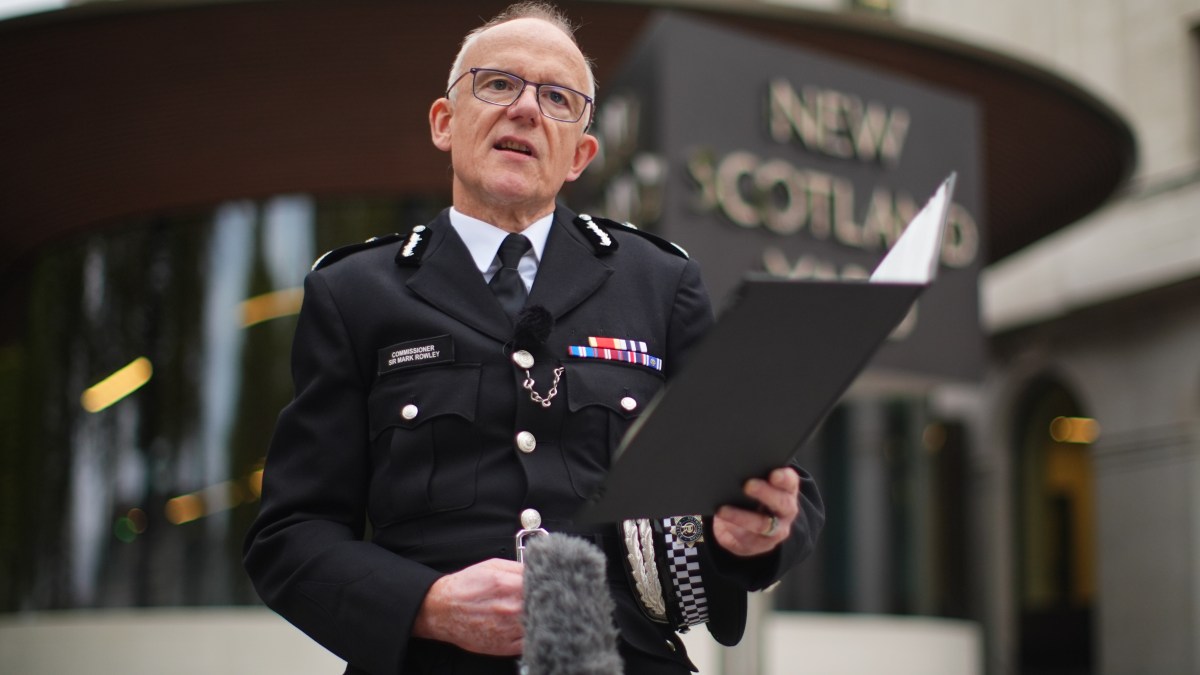
Speaking at a press conference at Scotland Yard yesterday, Sir Mark highlighted that London has recorded 105 homicides in the 12 months to September 2023, representing a 17 percent decrease from the previous year. This marks the lowest annual figure since 2014, when 91 homicides were recorded.
“There has been a concerning trend of misinformation about crime statistics in London,” Sir Mark said. “The facts show we are making progress in tackling violent crime, though there is still much work to be done.”
The Commissioner’s comments come amid growing political tensions over policing and public safety in the capital. Several politicians and public figures have recently claimed that London has become more dangerous, particularly citing knife crime as a growing epidemic.
Sir Mark directly addressed these claims, presenting evidence that knife crime resulting in injury has fallen by 21 percent compared to pre-pandemic levels. While acknowledging that knife-enabled offenses remain a serious concern, he emphasized that targeted policing operations have begun to yield results.
“We have increased stop and search in high-risk areas and focused on known offenders,” he explained. “This targeted approach is more effective than blanket measures and has contributed to the reduction we’re seeing.”
The Metropolitan Police has faced intense scrutiny in recent years following a series of scandals, including the murder of Sarah Everard by a serving officer and damning reports about institutional racism and misogyny within the force. Sir Mark, who took over as Commissioner in September 2022, has pledged to reform the organization while simultaneously tackling serious crime.
Crime statistics expert Professor Jennifer Marshall from King’s College London noted that the decrease in homicides should be viewed with cautious optimism.
“While the reduction in homicides is certainly positive news, we need to consider these figures in context,” she said. “London’s homicide rate of 1.2 per 100,000 population remains significantly lower than many major international cities, but higher than the UK average of 0.9.”
The reduction in London’s homicide rate comes as other major UK cities have reported mixed results. Manchester has seen a slight increase in homicides, while Birmingham has reported a modest decrease similar to London’s.
Mayor of London Sadiq Khan welcomed the statistics but emphasized that every life lost to violent crime represents a tragedy. “These figures show that our violence reduction strategies are beginning to work, but we cannot be complacent. Each homicide leaves families devastated and communities traumatized.”
The Metropolitan Police’s Violence Suppression Units, established in 2020, have been credited with contributing to the decline. These specialized teams focus on known violent offenders and high-risk locations, combining enforcement with prevention work.
Deputy Assistant Commissioner Martin Freeman, who leads the Met’s violent crime command, explained that the force has shifted resources to focus on the most prolific offenders. “We know that a small number of individuals are responsible for a disproportionate amount of violence. By focusing on these individuals, we can have the greatest impact.”
Despite the positive trends, challenges remain. The clearance rate for homicides in London stands at 68 percent, meaning nearly a third of cases remain unsolved—a statistic Sir Mark acknowledged needs improvement.
Community activists have cautiously welcomed the figures but stressed that statistical improvements do not always reflect lived experiences in the most affected neighborhoods.
Diane Reynolds, who leads the Mothers Against Violence community group in South London, said: “While we’re encouraged by these numbers, many communities still live with the daily fear of violence. The real measure of success will be when people feel safe walking their streets, not just what the statistics say.”
Sir Mark concluded by pledging continued focus on violent crime reduction while pursuing his broader reform agenda for the Metropolitan Police. “Reducing homicides is a priority, but so is rebuilding trust with Londoners,” he said. “We can and must do both.”
Fact Checker
Verify the accuracy of this article using The Disinformation Commission analysis and real-time sources.

15 Comments
It’s good to see evidence-based rebuttals of misleading crime narratives. Data transparency and honest assessments are crucial for addressing public safety concerns effectively.
Agreed. Reliable statistics and clear communication from police leadership can help counter harmful misinformation and build public trust.
I’m curious to learn more about the specific factors and policing strategies that contributed to the homicide rate reduction in London. Data transparency can inform evidence-based policymaking.
Interesting to see the homicide rate in London dropping to the lowest level since 2014. I wonder what specific strategies or initiatives have contributed to this progress in tackling violent crime?
The decline in homicides and knife crime injuries is certainly encouraging, though there’s still more work to be done. I appreciate the Commissioner’s commitment to addressing misinformation and presenting the full picture.
The decline in London’s homicide rate is an encouraging sign, though any loss of life is tragic. Continued focus on community-based approaches to violence reduction seems prudent.
Absolutely. Nuanced, data-driven solutions are needed to address the complex drivers of violent crime, rather than relying on alarmist rhetoric.
Glad to see the facts and figures backing up the Met’s claims. It’s important for the public to have accurate information, rather than relying on misleading political narratives. Transparency is key.
The Commissioner’s comments highlight the need for caution when it comes to claims about rising crime rates. Solid data and context are essential for understanding the true state of public safety in London.
It’s heartening to see evidence that London’s homicide rate has declined, though the work is far from over. Continued collaboration between police, policymakers, and communities will be key.
Agreed. Addressing the complex social and economic factors underlying violent crime requires a comprehensive, evidence-based strategy involving multiple stakeholders.
While any progress in public safety is welcome, it’s important to maintain vigilance and continue exploring ways to address the root causes of violence in urban communities.
Well said. Crime reduction efforts should balance targeted enforcement with proactive investment in social services, youth programming, and economic opportunity.
It’s good to see the Met Commissioner providing clear data to refute the false claims about rising crime in London. Transparency and fact-based reporting are crucial for public trust in law enforcement.
The Commissioner’s data-driven approach to refuting misleading claims about crime in London is commendable. Factual, nuanced communication is crucial for maintaining public trust.