


Listen to the article
The Metropolitan Police commissioner has strongly rejected claims that violence is spiraling out of control in London, pointing to new statistics showing a significant decline in homicide rates across the capital.
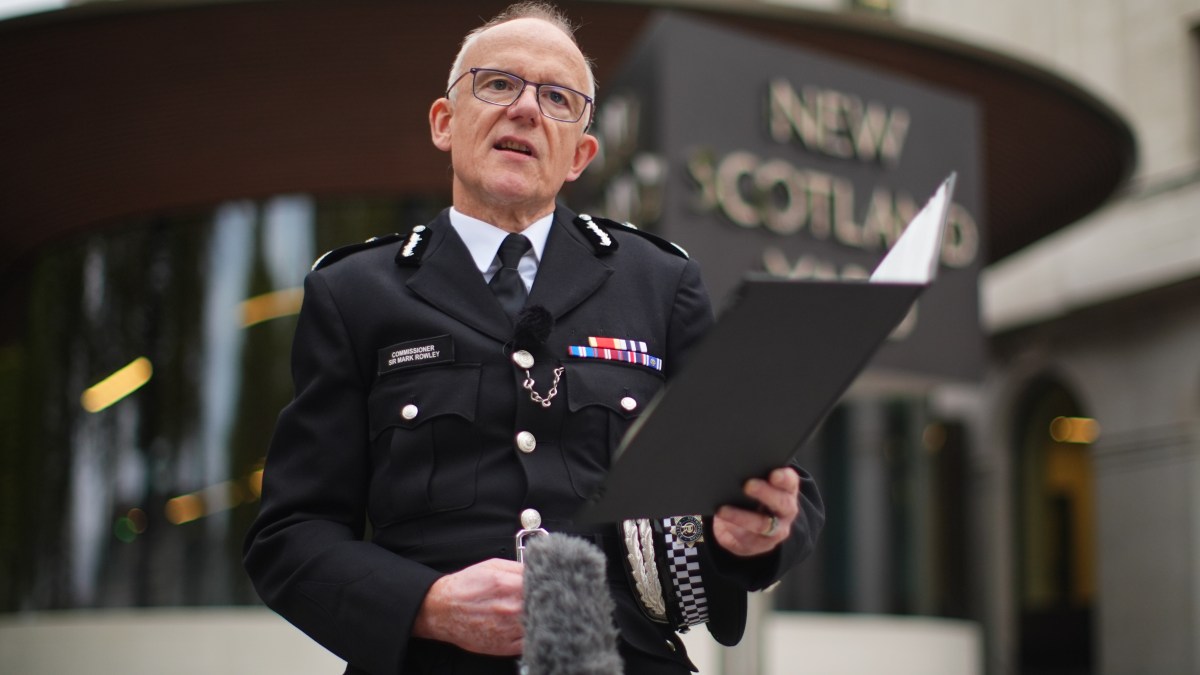
Sir Mark Rowley, speaking at a press conference yesterday, presented data revealing that London has recorded 97 homicides so far this year, compared to 111 during the same period in 2023. This 12.6 percent decrease comes despite recent high-profile incidents that have captured national headlines.
“The narrative that London is becoming more dangerous simply isn’t supported by the evidence,” Sir Mark stated. “While every homicide is a tragedy that we take extremely seriously, the overall trend shows our strategies are having a positive impact.”
The commissioner specifically addressed what he described as “misleading and alarmist” social media posts and news reports following several tragic incidents in recent weeks. He emphasized that isolated cases, while devastating for those involved, do not reflect the broader picture of crime in the city.
The Met’s data shows particularly encouraging progress in reducing knife crime, which has fallen by nearly 20 percent compared to pre-pandemic levels. This represents hundreds fewer victims across the capital and contradicts the perception of increasing knife violence.
“We’ve made tactical adjustments to how we deploy our officers, particularly in known hotspots, and the results are evident,” explained Detective Chief Superintendent Maria Williams, who heads the Met’s Violent Crime Taskforce. “Operations targeting knife carriers have removed over 4,000 dangerous weapons from London’s streets since January.”
The decline in London’s homicide rate mirrors similar trends in other major UK cities, with Manchester, Birmingham, and Liverpool all reporting reductions between 8 and 15 percent. Criminologists suggest this may reflect the success of public health approaches to violence that treat it as an epidemic requiring preventive measures rather than solely a law enforcement issue.
Professor Eleanor Harrington from King’s College London’s Crime Science Institute notes that the improvements come despite challenging circumstances. “The Metropolitan Police has achieved these reductions while facing budget constraints and increased demands in other areas. Their focus on evidence-based approaches appears to be paying dividends.”
The statistics also revealed notable demographic shifts in violent crime patterns. Youth homicides have decreased by nearly 30 percent, with 17 victims under 25 recorded so far this year compared to 24 during the same period last year.
Community leaders have cautiously welcomed the findings. Imran Ahmed, who runs a youth outreach program in Hackney, said: “We’re seeing positive changes on the ground, but there’s absolutely no room for complacency. One young life lost is still one too many.”
However, some opposition politicians and victim advocacy groups have questioned whether the statistics tell the complete story. London Assembly member Caroline Fisher called for greater transparency in how the figures are compiled. “We need to ensure these numbers fully capture the reality experienced by communities across London,” she said.
Sir Mark acknowledged ongoing challenges, particularly in tackling domestic homicides, which have not seen the same level of reduction as street violence. He announced plans for enhanced partnership working with domestic abuse services and additional training for frontline officers.
The commissioner also highlighted the force’s improved detection rates, with 96 percent of homicides now resulting in charges—up from 88 percent five years ago.
“While we should acknowledge progress, no one at the Metropolitan Police is declaring victory,” Sir Mark concluded. “We remain focused on further reducing violence across London and bringing offenders to justice. The families affected by these crimes deserve nothing less than our absolute commitment.”
Mayor of London Sadiq Khan welcomed the statistics but emphasized the need for sustained funding. “These improvements show what’s possible with the right resources and strategies. We must continue investing in both policing and prevention to build on this progress.”
The Metropolitan Police plans to publish a comprehensive violence reduction strategy next month, outlining its approach for the coming three years.
Fact Checker
Verify the accuracy of this article using The Disinformation Commission analysis and real-time sources.

11 Comments
Glad to see the Met pushing back on misleading claims about London’s safety. Transparent, evidence-based approaches are essential for maintaining public trust and effectively addressing complex public safety challenges.
Encouraging to see homicide rates declining in London despite recent high-profile incidents. The Met Commissioner’s data-driven approach to refuting misleading claims about rising violence seems prudent.
It’s understandable that high-profile incidents would raise concerns, but the statistics showing an overall decline in homicides are reassuring. Transparency and clear communication from the Met is key to maintaining public trust.
Absolutely, the Met’s willingness to directly address and refute misleading claims is commendable. Data-driven policymaking is critical for improving public safety.
The Commissioner’s emphasis on the broader trend, rather than just high-profile incidents, is a prudent approach. Maintaining public confidence requires transparency and a nuanced understanding of complex public safety challenges.
The Commissioner’s data-driven approach is commendable. It’s important to look at the broader trends rather than just high-profile incidents when assessing public safety. Continued progress on reducing knife crime and homicides is crucial.
It’s good to see the Met taking a proactive stance in refuting false narratives around London’s crime rates. Focusing on the data and overall trends is a responsible way to inform the public.
Curious to see the Met’s specific strategies that are driving the reduction in knife crime and homicides. Addressing root causes through evidence-based programs could have a lasting positive impact.
Glad the Met is taking a data-driven approach to public safety. Isolated tragedies shouldn’t obscure the broader trends, and it’s good to see progress being made on issues like knife crime.
Agreed, the nuance and context provided by the data is important. Media narratives can sometimes oversimplify complex public safety challenges.
The decline in homicides and knife crime is an encouraging sign, though of course every incident is a tragedy. Continued data-driven policymaking and clear communication from the Met will be crucial going forward.